



Executive Summary
- Utilization of historical telemetry and machine learning models to forecast future system states or user behaviors within autonomous pipelines.
- Integration into stateless automation to optimize resource allocation and trigger proactive API calls before threshold breaches occur.
- Enhancement of programmatic SEO through trend forecasting and automated content gap identification based on longitudinal data sets.
What is Predictive Analytics?
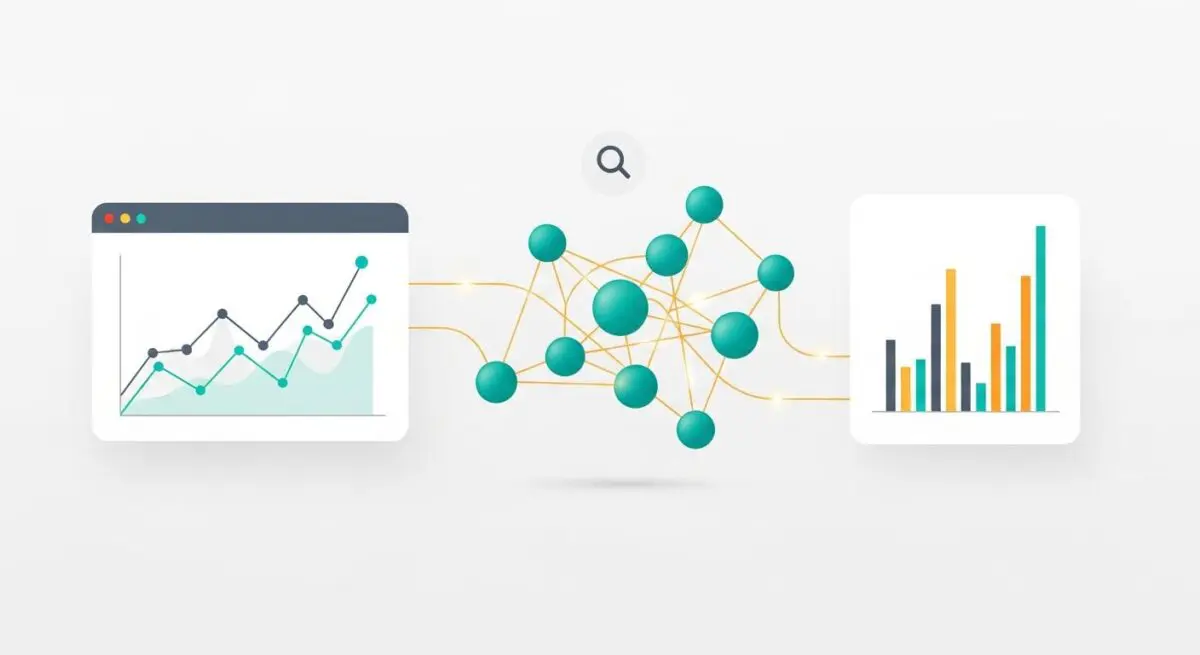
Predictive analytics is a branch of advanced data processing that utilizes historical data, statistical modeling, data mining techniques, and machine learning to identify the likelihood of future outcomes. In the context of AI Automations and Content Ops, it serves as the cognitive layer that transitions workflows from reactive execution to proactive optimization. By analyzing patterns in large datasets, predictive models can forecast user intent, system load, or content performance with high degrees of statistical confidence.
From an engineering perspective, predictive analytics involves the ingestion of structured and unstructured data into specialized algorithms—such as regression analysis, neural networks, or decision trees. These models are then deployed within autonomous workflows to make real-time decisions. For example, an automation engine might use predictive scores to determine whether to trigger a high-cost LLM API call or a lower-cost cached response based on the predicted complexity of a user query.
The Real-World Analogy
Imagine a sophisticated GPS navigation system that does more than just track your current location. Instead of merely reacting to a traffic jam once you are stuck in it, a predictive GPS analyzes historical traffic patterns, current weather conditions, and local event schedules to forecast a bottleneck ten miles ahead. It then automatically reroutes your vehicle before you ever see a brake light. In AI Automations, predictive analytics is that foresight, allowing systems to adjust their logic and resource consumption before a bottleneck or market shift occurs.
Why is Predictive Analytics Critical for Autonomous Workflows and AI Content Ops?
Predictive analytics is the cornerstone of scaling stateless automation and programmatic SEO. In high-volume content operations, relying on manual triggers or basic linear logic leads to inefficiencies and high API overhead. Predictive models allow for dynamic resource scaling, where serverless architectures can spin up instances in anticipation of traffic spikes rather than reacting to them, significantly reducing latency.
Furthermore, in the realm of AI-Search and GEO (Generative Engine Optimization), predictive analytics enables professionals to identify emerging semantic clusters before they become highly competitive. By analyzing the velocity of keyword growth and entity relationships, automated systems can programmatically generate content that captures early-mover advantages. This proactive approach ensures that API payloads are optimized for high-impact tasks, preserving budget and computational power for the most valuable segments of the data pipeline.
Best Practices & Implementation
- Data Normalization: Ensure all historical data ingested into predictive models is cleaned and normalized to prevent “garbage in, garbage out” scenarios that skew forecasting accuracy.
- Implement Feedback Loops: Create automated mechanisms where the actual outcome is compared against the predicted outcome to continuously retrain and refine the model’s precision.
- Edge Deployment: Deploy predictive logic as close to the data source as possible, such as via edge functions, to minimize the latency between prediction and execution in autonomous workflows.
- Monitor for Model Drift: Regularly audit predictive algorithms to ensure they remain aligned with changing market conditions or search engine algorithm updates, preventing performance degradation over time.
Common Mistakes to Avoid
A frequent error is over-reliance on small or biased datasets, which leads to inaccurate forecasting and flawed automation triggers. Another common pitfall is treating predictive analytics as a “set and forget” solution; without constant monitoring for model drift, the system’s efficacy will inevitably decline. Finally, many organizations fail to account for “black swan” events—unpredictable anomalies that historical data cannot account for—resulting in rigid automations that cannot handle sudden volatility.
Conclusion
Predictive analytics transforms AI Automations from simple task-runners into intelligent, self-optimizing systems capable of forecasting needs and optimizing resource allocation. For the modern technical SEO and automation architect, mastering these predictive layers is essential for maintaining a competitive edge in high-scale digital environments.