



Executive Summary
- Outcome-Based Monetization: The shift from seat-based licensing to value-driven outcomes requires roadmaps to be anchored in verifiable customer success signals rather than static feature requests.
- Agentic Orchestration: Utilizing Model Context Protocol (MCP) allows enterprises to bridge the reasoning gap between unstructured customer feedback and actionable product development.
- Operational Efficiency: Implementing AI-native synthesis can reduce roadmap prioritization time by up to 80%, provided organizations manage the marginal costs of token consumption and vector decay.
The Great SaaS Realignment: Why Insights are the New Currency
The software landscape is currently navigating a period of structural repricing, often referred to as the SaaSpocalypse. In early 2026, the market witnessed a significant evaporation of market cap among legacy incumbents as the traditional seat-based licensing model began to buckle under the weight of autonomous agents. For the modern executive, this shift signifies that the product roadmap is no longer a list of features to be shipped, but a strategic document that must guarantee specific business outcomes. Using customer insights to inform your product roadmap has transitioned from a best practice to a survival mechanism for maintaining valuation multiples in an increasingly skeptical market.
As autonomous agents begin to bypass traditional UI/UX interfaces, the data that informs product direction must become more granular and technically accessible. The goal is to move away from subjective stakeholder opinions and toward a system where every roadmap item is linked to a verifiable behavioral signal. This requires a fundamental rethink of how customer feedback is captured, synthesized, and translated into development priorities.
Architecting the Insight Pipeline: MCP and Agentic Orchestration
To effectively use customer insights, organizations must solve the problem of data fragmentation. Currently, a vast majority of corporate data remains unstructured, trapped in support transcripts, video recordings, and internal communications. This creates a reasoning gap where product teams have plenty of data but very little actionable intelligence. The solution lies in the adoption of the Model Context Protocol (MCP), which has emerged as a dominant standard for connecting large language models to internal data silos like SQL databases and CRM systems.
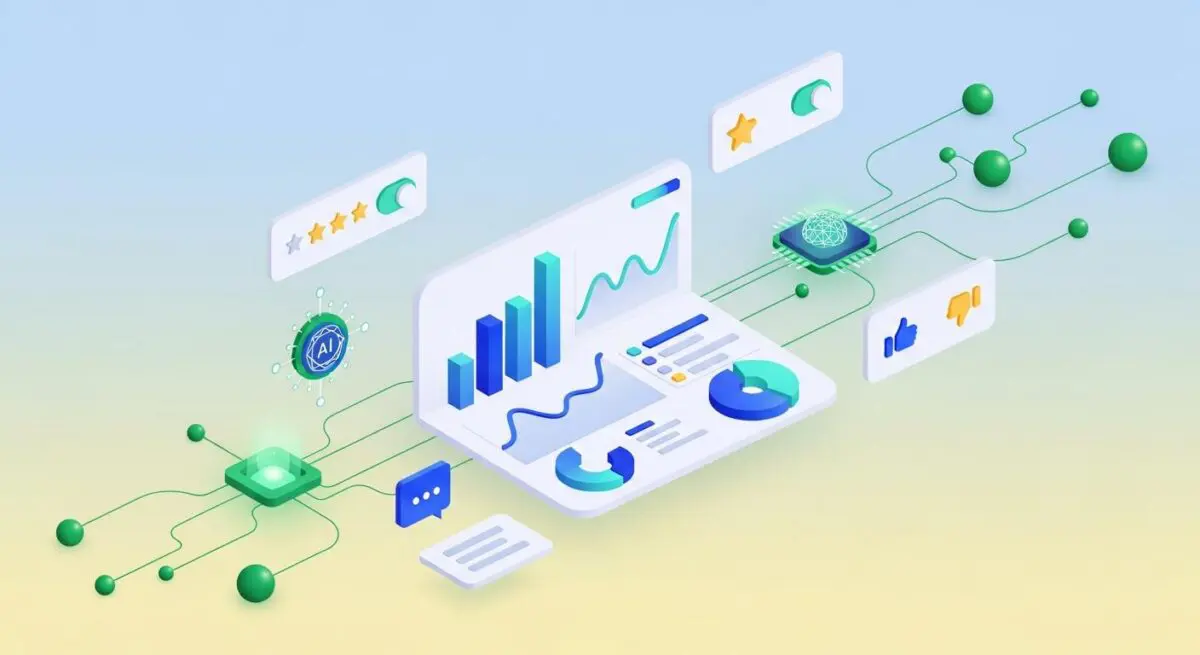
By implementing MCP, product teams can create a seamless flow between customer interactions and the roadmap. This technical infrastructure allows for the automated theming of feedback, identifying high-impact friction points without manual intervention. Furthermore, the rise of Agent-to-Agent (A2A) protocols enables cross-vendor discovery, where a customer’s autonomous agent can communicate its limitations directly to a product’s development agent. This creates a feedback loop that operates at machine speed, significantly reducing the latency between identifying a customer need and addressing it in the product cycle.
The Role of Edge AI and Small Language Models
A critical component of this infrastructure is the shift toward Edge AI. By processing customer data locally using Neural Processing Units (NPUs) and Small Language Models (SLMs), enterprises can reduce the costs associated with centralized cloud training. This architecture also addresses the issue of vector decay, ensuring that the insights used to inform the roadmap are based on the most recent and relevant data points. For the C-suite, this means a more efficient R&D spend and a reduction in the operational expenses that often balloon during large-scale AI implementations.
Building a product roadmap without real-time customer insights is like navigating a modern city with a static paper map; you might know where the buildings were, but you have no visibility into the traffic jams or road closures that actually determine how quickly you reach your destination.
The Economics of AI-Driven Roadmapping
While the benefits of an insight-led roadmap are clear, the transition involves new economic challenges. Enterprises are increasingly encountering token budgeting constraints, where the marginal cost of AI-driven reasoning becomes a significant OpEx factor. Internal competitions for inference budget are becoming common as companies realize that every automated query used to synthesize feedback has a literal price tag. Managing this budget requires a disciplined approach to prioritization, ensuring that the most valuable customer segments are given the most attention in the synthesis process.
Furthermore, the benchmark for a healthy business has shifted. A sustainable LTV:CAC ratio is now considered 3:1. Organizations that fail to integrate real-time feedback into their product evolution risk falling below a 1:1 ratio, indicating terminal margin erosion. The cost of acquiring a customer is simply too high to lose them due to a roadmap that is out of sync with their actual needs. Therefore, the roadmap must be viewed as a tool for maximizing Customer Lifetime Value through continuous, insight-driven refinement.
Citable Architecture and Generative Engine Optimization
As AI agents become the primary users of software, the product roadmap must also account for how the brand is perceived by generative engines. This involves creating a citable architecture, where product documentation and customer success stories are optimized for AI crawlers. By using high-density schema markup and structured data, companies can increase their citation rate—the frequency with which a brand is mentioned in AI-synthesized answers.
This technical layer of the roadmap ensures that as the product evolves, it remains discoverable and recommendable by the autonomous agents that customers now rely on for procurement and task execution. It is no longer enough to build a great product; the product must be architected in a way that makes its value propositions clear to both human users and the algorithms that serve them.
Andres’ Analysis: The Big Picture
From my perspective, the most significant shift in product strategy isn’t the technology itself, but the change in how we define progress. For years, product teams have been measured by tickets closed or features shipped—a metric I call the feature factory trap. In the current landscape, the only metric that truly matters is decision latency. How quickly can your organization take a raw customer signal and turn it into a strategic pivot? The winners in this era will be those who treat their roadmap as a living organism, powered by a high-fidelity stream of customer intelligence and supported by a robust technical stack.
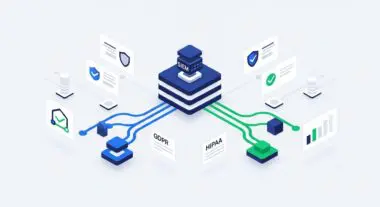
We must also recognize that the regulatory environment is tightening. With the enforcement of the EU AI Act, the burden of proof has shifted to the corporation to demonstrate due diligence in how they use sentiment analysis and biometric data. This means your insight-gathering tools must be as compliant as they are powerful. My advice to founders and CEOs is to stop looking at customer feedback as a qualitative nice-to-have and start treating it as the primary quantitative driver of your capital allocation. If a roadmap item cannot be traced back to a specific, high-value customer insight, it is likely a waste of your most precious resource: engineering time.
The Future of Insight-Led Growth
The integration of customer insights into the product roadmap is the final frontier of the customer-centric enterprise. By leveraging agentic orchestration, managing token budgets effectively, and prioritizing citable architecture, businesses can build products that not only meet current market demands but are also positioned to lead in an agent-first economy. The transition requires a blend of technical sophistication and strategic clarity, ensuring that every development cycle moves the needle on the only metric that ultimately counts: sustainable, profitable growth.
Navigating the intersection of generative search and operational efficiency requires more than just tools—it requires a roadmap. If you’re ready to evolve your strategy through specialized SEO, GEO, Adavanced Hosting Environments, or AI-driven automation, connect with Andres at Andres SEO Expert. Let’s build a future-proof foundation for your business together.”