




Executive Summary
- Agentic Commerce Transition: Market leadership has shifted from static recommendation engines to autonomous customer agents that optimize the entire consumer trajectory rather than individual clicks.
- Generative Engine Optimization (GEO): Retailers are moving away from HTML-heavy architectures toward structured, machine-readable data feeds (JSON/Schema) to satisfy AI-powered answer engines.
- Economic Performance: High-performing leaders in 1:1 personalization are generating 40% more revenue and achieving a 5x to 8x ROI on infrastructure implementation.
The Evolution Toward Agentic Commerce
The retail market climate in 2026 is no longer defined by who has the most products, but by who has the most actionable intelligence. We have moved beyond the era of static recommendation engines—those simple algorithms that suggest a pair of socks after you buy shoes. Today, the industry is witnessing the rise of Agentic Commerce. This shift represents a fundamental change where market leadership is determined by the ability to facilitate autonomous customer agents. These agents do not just suggest; they act, predict, and curate experiences across a distributed ecosystem.
Major players like Walmart and Amazon have already industrialized these agent-ready stacks, while emerging disruptors like Decentriq and Zeotap are focusing on confidential computing and deterministic identity resolution. The goal is no longer click-optimization. Instead, the industry has pivoted toward Trajectory Optimization. This involves analyzing the long-term path of a customer and providing the machine-readable metadata necessary for third-party AI agents to navigate that path on the consumer’s behalf. The valuation of a retail enterprise is now increasingly tied to its API maturity and data structure rather than its front-end user interface.
Infrastructure for Distributed Intelligence
To support these unique shopping experiences, the underlying tech stack has undergone a radical transformation. We are seeing a move from centralized cloud models to Distributed Intelligence Orchestration. This architecture relies on Multi-Agent Systems (MAS), often referred to as Swarm architectures. In this environment, specialized agents—each dedicated to a specific function like inventory, labor, fit, or sentiment—collaborate in real-time to resolve a single customer query.
A critical component of this new infrastructure is Generative Engine Optimization (GEO). As consumers increasingly use AI-powered answer engines like Perplexity or SearchGPT to find products, retailers must ensure their data is optimized for these machines. This means shifting from legacy, HTML-heavy web pages to structured data feeds. If an AI agent cannot read your real-time inventory or local pickup windows because the data is trapped in a non-standardized format, the transaction fails before it even begins. Furthermore, the adoption of Edge-AI is bringing this intelligence into physical spaces, allowing for latency-free personalized pricing and floor navigation through in-store sensors and biometric triggers.
Think of traditional e-commerce like a high-end vending machine: it responds to your buttons but doesn’t know you’re running late for a flight. Agentic commerce is the private concierge who has already checked your flight status, realized you’re hungry, and has a meal waiting at the gate before you even ask.
Overcoming the Machine-Readability Gap
Despite the clear advantages, significant friction points remain. Many enterprises are still tethered to legacy architectures where data silos prevent the real-time signal-to-action loops required for true personalization. Approximately 44% of enterprises report that these silos are their primary barrier to scaling agentic flows. This is often compounded by the Machine-Readability Gap. Most product data was originally optimized for human-centric SEO, not for the structured requirements of autonomous agents. When an agent fails to interpret availability or fit, the result is immediate cart abandonment.
There is also a notable talent deficit in the market. The demand for AI Pipeline Architects—professionals who can secure and deploy models at scale—has far outpaced the supply. Furthermore, while open-source models like Llama 4 and Mistral Large 3 are becoming the preferred choice for core logic to maintain digital sovereignty, the cost-per-inference for real-time video or voice personalization remains a high barrier for mid-market players. Success in this environment requires a strategic balance between proprietary high-reasoning models and cost-effective open-source alternatives.
The Economics of Trajectory Optimization
The financial justification for these advanced systems is compelling. Personalization efforts are currently delivering a 5x to 8x ROI on implementation costs. Brands that successfully implement cross-channel agentic orchestration report a 3.1x higher Customer Lifetime Value (LTV) and retention rate improvements of up to 90%. By transitioning from rule-based models to AI-agent models, businesses have reduced operational errors by 60% and lowered customer acquisition costs by half.
These metrics demonstrate that personalization is no longer a marketing luxury; it is a core driver of the balance sheet. In sessions where engagement occurs, personalized recommendations now account for nearly a third of total e-commerce revenue. The shift toward trajectory optimization allows brands to capture value at every stage of the customer journey, moving from a reactive sales posture to a proactive service model that anticipates needs before they are explicitly stated.
Navigating the Regulatory Guardrails
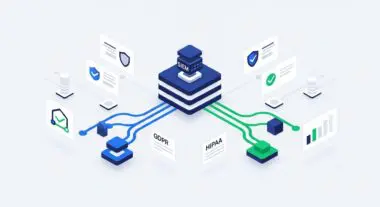
As businesses leverage deeper customer data, they must also navigate a tightening regulatory environment, most notably the EU AI Act. This regulation mandates that high-risk AI systems—including those used for customer profiling and biometric identification—must adhere to strict transparency and data governance standards. This is forcing a shift away from black-box algorithms toward Explainable AI (XAI) architectures. Compliance is no longer just a legal requirement; it is a prerequisite for maintaining consumer trust and avoiding significant financial penalties that can reach up to 7% of global turnover.
Andres’ Masterclass: The Big Picture
From my perspective, the real competitive moat in the coming years won’t be the specific AI model you use, but the proprietary data feeds you own and how effectively you expose them to the world. We are seeing a massive consolidation in the market, where Customer Data Platforms are being swallowed by activation layers. This tells us that data is useless if it cannot be activated in milliseconds. For the C-suite, the priority must be on breaking down the silos that prevent a unified view of the customer. If your inventory system doesn’t talk to your sentiment analysis agent, you are leaving money on the table.
We must also consider the concept of Digital Sovereignty. Relying solely on third-party APIs for your core business logic is a strategic risk. I advise my clients to build their foundational intelligence on open-source frameworks while using high-reasoning proprietary models only for non-sensitive, complex tasks. This approach ensures that you own your intellectual property and can scale without being held hostage by token-limit pricing. The future of retail is autonomous, and the winners will be those who build the most machine-friendly infrastructure today.
Building the Autonomous Future
The transition to agentic commerce represents the most significant shift in retail since the birth of the internet. By focusing on machine-readability, trajectory optimization, and distributed intelligence, brands can create shopping experiences that are not just unique, but indispensable. The path forward requires a blend of technical precision and strategic foresight.
Navigating the intersection of generative search and operational efficiency requires more than just tools—it requires a roadmap. If you’re ready to evolve your strategy through specialized SEO, GEO, Adavanced Hosting Environments, or AI-driven automation, connect with Andres at Andres SEO Expert. Let’s build a future-proof foundation for your business together.