Executive Summary
- NPS serves as a high-fidelity proxy for Customer Lifetime Value (CLV) and brand authority, directly influencing organic search signals and Generative Engine Optimization (GEO).
- Technical implementation requires a closed-loop feedback architecture integrated via REST APIs into CRM and Data Warehouse environments for real-time sentiment analysis.
- The metric facilitates the quantification of qualitative user experience data, allowing for the correlation of customer satisfaction with technical performance KPIs and conversion rates.
What is Net Promoter Score (NPS)?
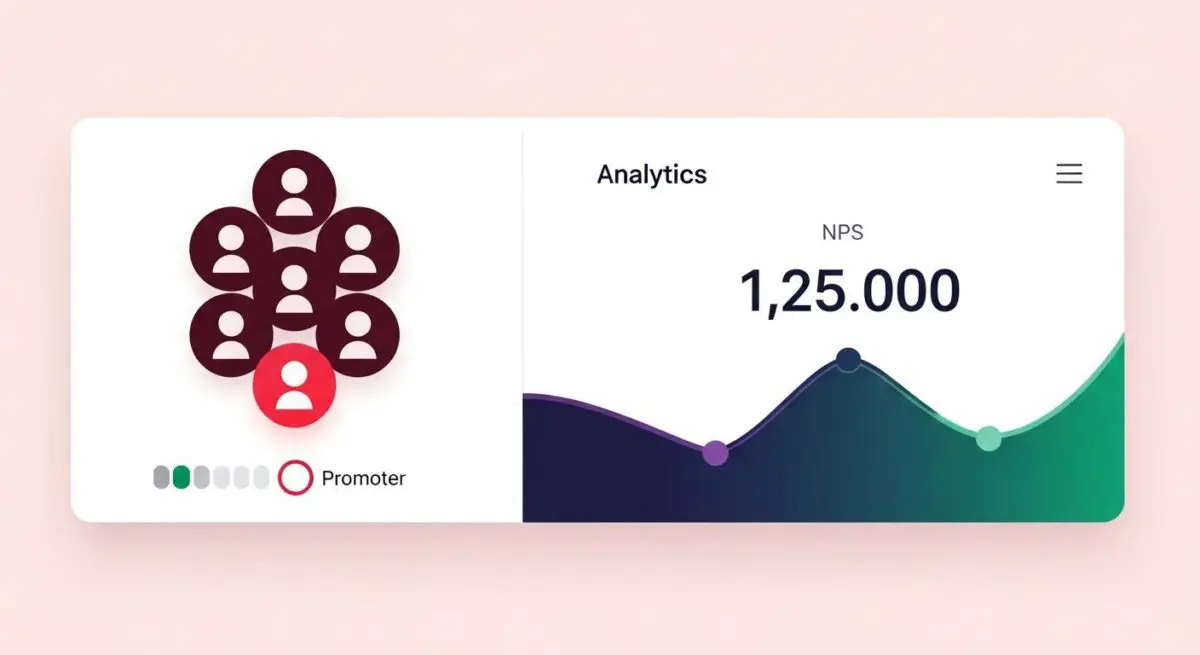
Net Promoter Score (NPS) is a standardized psychometric metric used to quantify customer loyalty and brand advocacy. Developed by Fred Reichheld, Bain & Company, and Satmetrix, it operates on a single-question survey methodology: “On a scale of 0 to 10, how likely are you to recommend our company/product/service to a friend or colleague?” Within a modern MarTech stack, NPS functions as a critical qualitative data layer that complements quantitative behavioral analytics. By segmenting respondents into Promoters (9-10), Passives (7-8), and Detractors (0-6), organizations can calculate a single score ranging from -100 to +100 by subtracting the percentage of Detractors from the percentage of Promoters.
From a technical perspective, NPS is more than a simple survey; it is a foundational element of Customer Experience (CX) architecture. In the era of AI-driven search and Generative Engine Optimization (GEO), NPS serves as an internal benchmark for brand sentiment, which often correlates with external signals used by Large Language Models (LLMs) and search algorithms to determine brand authority and trustworthiness. High NPS scores typically indicate a robust brand presence that generates positive digital footprints across third-party review platforms, social media, and forums, all of which are indexed and analyzed by search engines to establish E-E-A-T (Experience, Expertise, Authoritativeness, and Trustworthiness).
The Real-World Analogy
To understand NPS at an enterprise level, imagine a high-end architectural firm that relies entirely on its reputation to secure multi-million dollar contracts. If every client the firm works with not only pays their bill but also actively brings the firm’s blueprints to other developers, the firm has a high “Promoter” density. Conversely, if a client pays but privately warns others about structural flaws or poor communication, they are “Detractors” who create a silent deficit in the firm’s future pipeline. NPS is the formal mechanism that captures this “digital echo” before it manifests as a loss in market share. It is the difference between a customer who simply occupies a seat in a theater and one who stands up at the end to give a standing ovation, influencing everyone else in the room to buy a ticket for the next show.
How Net Promoter Score (NPS) Impacts Marketing ROI & Data Attribution?
NPS has a direct, measurable impact on Marketing ROI by influencing the two most critical levers of profitability: Customer Acquisition Cost (CAC) and Lifetime Value (LTV). A high NPS indicates a high propensity for organic referral growth. When Promoters advocate for a brand, they effectively lower the blended CAC by providing high-intent leads that bypass traditional paid acquisition funnels. In data attribution models, NPS data can be used as a weighting factor; users with high NPS scores are statistically more likely to have shorter conversion paths and higher average order values (AOV), allowing marketing teams to allocate budget more efficiently toward segments with similar behavioral profiles.
Furthermore, NPS provides a predictive lens for churn reduction. By identifying Detractors in real-time through transactional NPS (tNPS) surveys—triggered immediately after a specific interaction like a support ticket resolution or a product delivery—companies can implement automated “save” workflows. These workflows, often managed via API integrations between CX platforms (like Qualtrics or Delighted) and CRMs (like Salesforce or HubSpot), allow for immediate intervention. Reducing churn by even a small percentage through NPS-driven insights significantly boosts the LTV/CAC ratio, which is the primary metric for assessing the long-term scalability of a digital marketing strategy. In the context of SEO, high NPS scores often correlate with increased branded search volume, a signal that search engines interpret as a mark of authority, leading to improved rankings for non-branded, competitive keywords.
Strategic Implementation & Best Practices
- Implement Relational and Transactional Surveys: Deploy relational NPS surveys at regular intervals (e.g., quarterly) to gauge overall brand health, and transactional NPS (tNPS) surveys immediately following key touchpoints in the customer journey to identify specific friction points in the conversion funnel.
- Integrate with Data Warehousing: Stream NPS data into a centralized data warehouse (such as BigQuery or Snowflake) to correlate sentiment scores with technical performance metrics like Page Load Speed (LCP), Core Web Vitals, and server uptime to identify if technical debt is suppressing customer satisfaction.
- Leverage Natural Language Processing (NLP): Use NLP and sentiment analysis on the open-ended qualitative feedback that follows the NPS score. This allows for the automated categorization of feedback into themes (e.g., “pricing,” “UX/UI,” “customer support”), providing actionable insights for product and engineering teams.
- Close the Feedback Loop: Establish an automated workflow where any score below a 7 triggers a high-priority notification to the customer success team. Resolving a Detractor’s issue within 24 hours can often convert them into a Promoter, a phenomenon known as the “Service Recovery Paradox.”
Common Pitfalls & Strategic Mistakes
One of the most frequent errors in enterprise marketing is treating NPS as a vanity metric rather than an operational one. Brands often focus on the aggregate score while ignoring the qualitative “why” behind the numbers, leading to a lack of actionable intelligence. Another significant mistake is survey fatigue; over-surveying users at every micro-interaction can lead to biased data, as only the most frustrated or most satisfied users will respond, skewing the results and rendering the data statistically insignificant for broad strategic planning.
Additionally, many organizations fail to account for cultural bias in scoring. In certain regions, a ‘7’ or ‘8’ might be considered an excellent score, whereas the NPS methodology classifies these as “Passives.” Failing to localize the interpretation of NPS data can lead to incorrect assumptions about market penetration and customer loyalty in international segments. Finally, ignoring the “Passives” is a missed opportunity; while they do not actively harm the brand, they are highly susceptible to competitive poaching. Strategic marketing should focus on the incremental improvements required to move Passives into the Promoter category.
Conclusion
Net Promoter Score (NPS) is a vital instrument for quantifying brand equity and predicting long-term growth within a data-driven marketing architecture. By integrating NPS into the broader MarTech ecosystem, organizations can align technical performance with user sentiment, ultimately driving higher LTV and superior organic search visibility.