



Executive Summary
- Advertising Technology (AdTech) utilizes programmatic algorithms and real-time bidding (RTB) to automate the purchase and delivery of digital media across fragmented ecosystems.
- The integration of Demand-Side Platforms (DSPs) and Supply-Side Platforms (SSPs) via Ad Exchanges facilitates millisecond-latency transactions that optimize for target CPM and CPA.
- Modern AdTech architectures are shifting toward privacy-centric frameworks, emphasizing first-party data ingestion and server-side tracking to mitigate the loss of third-party cookies.
What is Advertising Technology?
Advertising Technology, commonly referred to as AdTech, is the comprehensive ecosystem of software, hardware, and data-driven protocols used by advertisers, agencies, and publishers to manage, deliver, and optimize digital advertising campaigns. At its core, AdTech facilitates the complex transaction between the buyer (the advertiser) and the seller (the publisher) through automated systems. This infrastructure is designed to handle massive volumes of data in real-time, ensuring that the right advertisement reaches the right user at the optimal moment within a specific digital context.
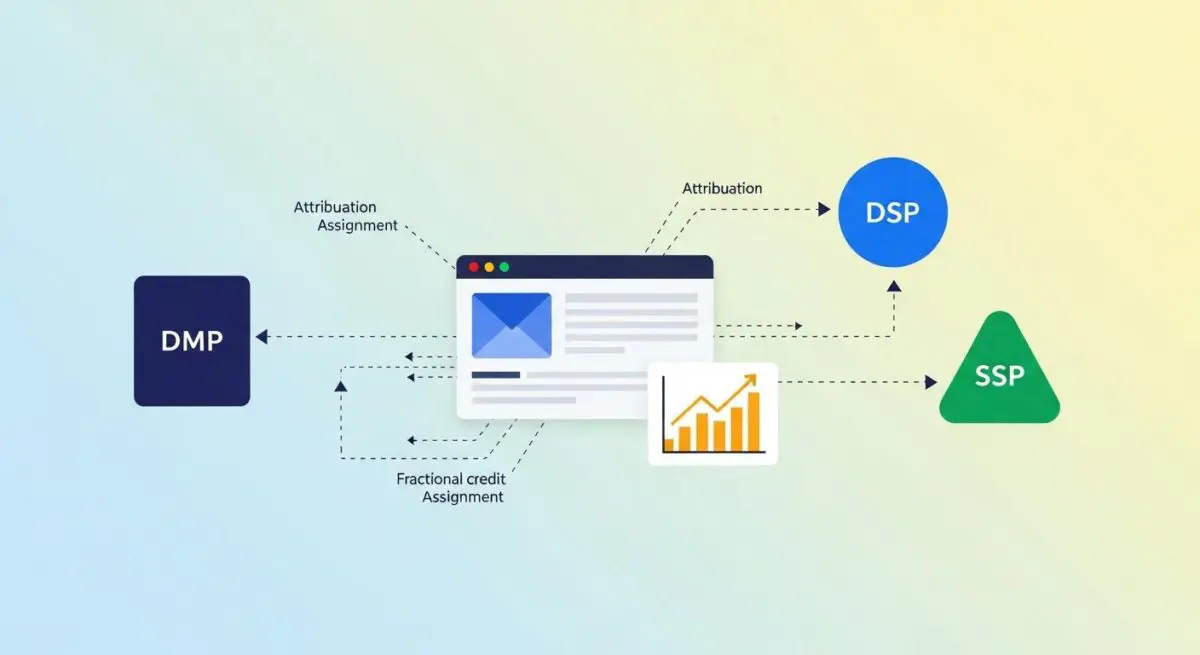
The technical architecture of AdTech is built upon several critical components: Demand-Side Platforms (DSPs), which allow advertisers to purchase inventory; Supply-Side Platforms (SSPs), which enable publishers to manage their ad space; and Ad Exchanges, which act as the marketplace for these transactions. Within a modern MarTech stack, AdTech serves as the execution layer for customer acquisition strategies, leveraging Data Management Platforms (DMPs) and Customer Data Platforms (CDPs) to refine audience segmentation. As the industry moves toward a post-cookie landscape, AdTech is increasingly focused on identity resolution, utilizing hashed emails, Unified ID 2.0, and Google’s Privacy Sandbox to maintain targeting efficacy while adhering to global privacy regulations like GDPR and CCPA.
The Real-World Analogy
To understand Advertising Technology, consider the operations of a high-frequency global stock exchange. In this analogy, the digital ad space is the stock being traded. The Demand-Side Platform (DSP) acts as the automated broker for the investor (the advertiser), programmed to buy specific assets only when they meet certain price and quality criteria. The Supply-Side Platform (SSP) represents the listing agent for the company (the publisher), seeking to sell shares at the highest possible market value. The Ad Exchange is the trading floor where thousands of these transactions occur every millisecond. Just as a stock exchange uses complex algorithms to match buyers and sellers based on real-time market fluctuations, AdTech uses programmatic bidding to match an advertiser’s creative asset with a user’s browser session, ensuring the transaction is completed before the webpage even finishes loading.
How Advertising Technology Impacts Marketing ROI & Data Attribution?
Advertising Technology is the primary driver of efficiency in modern digital marketing, directly influencing the Return on Investment (ROI) by reducing media waste. Through programmatic buying, AdTech eliminates the need for manual negotiations and insertion orders, allowing for granular control over budget allocation. By utilizing real-time data, advertisers can implement dynamic bidding strategies that adjust based on performance metrics such as Click-Through Rate (CTR), Conversion Rate (CVR), and Viewability. This level of automation ensures that capital is deployed toward the most productive inventory, effectively lowering the Customer Acquisition Cost (CAC).
From a data attribution perspective, AdTech provides the granular tracking necessary to map the customer journey across multiple touchpoints. Advanced AdTech configurations support Multi-Touch Attribution (MTA) models, which move beyond the simplistic last-click model to assign value to every interaction a user has with a brand. By integrating AdTech data with internal CRM systems via APIs, organizations can achieve a closed-loop reporting environment. This allows for the calculation of Customer Lifetime Value (LTV) relative to specific ad placements, enabling data scientists to build predictive models that forecast future performance based on historical bid data and audience behavior patterns.
Strategic Implementation & Best Practices
- Implement Server-Side Tracking: To bypass browser-based limitations and improve data accuracy, transition from client-side pixels to server-side GTM (Google Tag Manager) or direct API integrations (such as Meta’s Conversions API). This ensures that conversion data is captured even in the presence of ad blockers or restrictive privacy settings.
- Adopt Supply Path Optimization (SPO): Streamline the path between the DSP and the SSP to reduce intermediary fees and minimize the risk of ad fraud. By identifying the most direct and transparent routes to premium inventory, brands can increase their working media spend and improve overall campaign performance.
- Prioritize First-Party Data Integration: Leverage a Customer Data Platform (CDP) to ingest first-party signals into your DSP. This allows for high-fidelity lookalike modeling and retargeting based on actual purchase history rather than third-party inferences, which is critical for maintaining performance in a cookieless environment.
- Utilize Ads.txt and App-ads.txt: Ensure all publisher partners are authorized sellers by strictly enforcing IAB Tech Lab standards. This technical verification prevents domain spoofing and ensures that your advertising budget is not diverted to fraudulent or unauthorized inventory sources.
Common Pitfalls & Strategic Mistakes
One of the most frequent errors in enterprise AdTech strategy is the creation of data silos, where the insights generated within a DSP are not shared with the broader analytics or SEO teams. This lack of cross-functional visibility leads to redundant spending and inconsistent messaging. Another significant pitfall is the over-reliance on automated black-box algorithms without sufficient human oversight or custom bidding scripts. While AI-driven optimization is powerful, it can often prioritize low-quality placements that meet technical KPIs (like low CPM) but fail to drive actual business growth or brand equity.
Conclusion
Advertising Technology is the essential engine for scalable, data-driven growth, requiring a sophisticated integration of programmatic infrastructure and privacy-compliant data strategy. For the modern enterprise, mastering the AdTech stack is not merely about media buying, but about engineering a transparent, high-velocity pipeline that converts raw data into measurable marketing performance.