Key Points
- AI-Driven Credit Scoring: Advanced behavioral analytics are actively solving the systemic data void, transforming 1.4 billion unbanked individuals into a highly profitable, high-margin customer base.
- Regenerative Finance (ReFi): The seamless integration of IoT sensors and smart contracts is automating impact-linked credit issuance and green bond yields in real-time.
- Autonomous Impact Finance: Future financial ecosystems will rely heavily on AI agents to seamlessly optimize personal wealth for both financial yield and granular social KPIs.
Table of Contents
The Financial Tech Friction
According to projections from FinTecBuzz released in late 2025, the global ESG fintech sector is expected to attract a record $123.7 billion in strategic investments by the end of 2026. This growth is driven by a 22.4% compound annual growth rate in green financial technology adoption. This massive influx of capital signals a fundamental shift in how institutional investors view social utility.
Building inclusive and sustainable financial infrastructure is no longer viewed as a mere corporate social responsibility exercise. It has rapidly evolved into a massive, untapped liquidity opportunity for forward-thinking tech founders.
The legacy banking system has historically ignored the bottom of the economic pyramid. This exclusion was driven by the high operational costs and low customer lifetime value associated with traditional banking models. Legacy mainframes and manual underwriting processes simply could not scale to serve micro-economies efficiently.
As a result, billions of individuals were left outside the formal financial system. This created a massive vacuum of uncaptured economic energy.
Today, disruptive technologies are entirely flipping that outdated equation. Smart money is aggressively targeting the friction points of financial exclusion to unlock entirely new, high-margin revenue streams.
By deploying agile, cloud-native architectures, modern fintechs are bypassing the structural limitations of legacy banks. They are actively engineering systems where social impact and aggressive revenue growth are perfectly aligned.
The integration of decentralized ledgers and artificial intelligence is creating a borderless financial ecosystem. This new paradigm allows capital to flow seamlessly into emerging markets without the friction of traditional intermediaries.
We are witnessing the birth of a financial system that inherently rewards sustainable practices and inclusive growth. For technology architects, the mandate is clear: build systems that generate both exceptional yield and measurable global impact.
Market Intelligence & Capital Flow
Market Intelligence & Data
FinTech Revenue Benchmark
Global fintech revenues reached $650 billion in 2025, significantly outpacing the growth of the broader $15 trillion financial services industry according to McKinsey research.
AI Adoption Surge
As of early 2026, AI integration within fintech operations has surged 68% year-over-year, primarily driven by the need for advanced fraud detection and alternative credit scoring, per Emapta’s 2026 Market Outlook.
Digital Bond Dominance
ESG-linked tokenized bonds accounted for 28% of total European digital bond issuance volume, signaling a shift toward blockchain-based impact transparency as reported by Tokenizer Estate.
Asset Tokenization Potential
PwC estimates that the tokenization of global illiquid assets, including green bonds and social impact projects, could reach $16 trillion by 2030.
The data presented above reveals a stark reality for legacy financial institutions that refuse to adapt. As global fintech revenues reached $650 billion in 2025, the growth trajectory aggressively points toward specialized, impact-driven platforms.
Capital allocators are no longer interested in generic payment gateways or basic neobanks. They are actively hunting for late-stage fintechs that demonstrate a perfect balance of social utility and proven unit economics.
Major industry players like Ant International and Nubank are already dominating emerging market infrastructure by offering hyper-localized digital services. Meanwhile, venture capital giants such as Sequoia and a16z have significantly increased their strategic allocations.
They are pouring capital into startups that provide localized, AI-driven credit scoring for historically unbanked populations. This aggressive pivot is fundamentally reshaping the competitive landscape of the financial sector.
Specialized green neobanks and infrastructure firms like Ethic and Flowcarbon are emerging as formidable disruptors. These agile entities are now integrating directly into Tier-1 bank cores via highly composable APIs, forcing traditional banks to upgrade their legacy systems.
The flow of capital clearly indicates that the market values technological infrastructure that can prove its social impact mathematically. Investors demand real-time transparency, which is driving the rapid adoption of blockchain-based tracking systems.
The institutions that fail to integrate these transparent, impact-driven data streams will find themselves starved of institutional capital in the coming years.
The FinTech Deep Dive: Engineering Social Utility
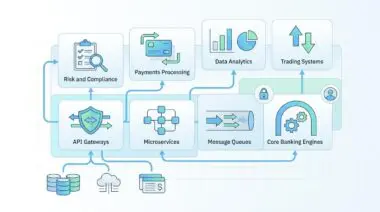
To truly understand the business case for social impact, we must examine the underlying architecture driving this revolution. The transition from passive ESG reporting to active, tech-driven social utility requires a massive overhaul of backend systems.
It demands a shift away from siloed databases toward interoperable, decentralized networks. This is where the true engineering challenge lies for modern financial architects.
The focus has shifted toward building systems that can autonomously verify and reward positive social behaviors. This requires a complex orchestration of artificial intelligence, cryptography, and alternative data ingestion.
By mastering these technologies, fintechs can unlock entirely new demographic segments that were previously deemed too risky to underwrite.
Solving The Data Void With AI
Social impact fintech is actively solving the systemic data void for the world’s 1.4 billion unbanked individuals. Legacy credit bureaus rely heavily on outdated, highly biased scoring models that completely fail in emerging markets.
Innovative startups are replacing these archaic legacy systems with sophisticated AI-driven behavioral analytics and decentralized identity protocols. This technological leap effectively eliminates the high operational costs previously associated with serving low-value customers.
Data from the United Nations’ 2026 Financing for Sustainable Development Report indicates that mobile money penetration in developing markets has surged to 32%. This tenfold increase over the last decade fundamentally expands the total addressable market for impact-linked digital finance.
This surge provides the raw data necessary for machine learning algorithms to accurately assess micro-credit risk. Furthermore, blockchain-based remittance rails have successfully compressed cross-border transaction fees to under one percent.
This completely bypasses the notoriously inefficient legacy correspondent banking networks that have historically drained wealth from developing nations. By lowering the cost of capital movement, fintechs are injecting much-needed liquidity directly into local micro-economies.
The combination of decentralized identity and alternative credit scoring transforms financial inclusion into a highly scalable business model. Users can now build immutable credit histories based on utility payments, mobile top-ups, and daily transactional behavior.
This localized data empowers AI models to offer hyper-personalized financial products that dynamically adjust to the user’s real-time risk profile.
Tokenizing Real-World Assets For Impact
The 2026 financial landscape is largely defined by the rapid transition from passive ESG reporting to Regenerative Finance. This movement is powered by Agentic AI and the blockchain-based tokenization of real-world assets.
High-fidelity satellite imagery and remote IoT sensors now feed live environmental data directly into automated smart contracts. This real-time data ingestion allows for the automated issuance of impact-linked credit and dynamic green bond yields.
Financial experts recognize that the tokenization of global illiquid assets could reach $16 trillion by 2030. This creates unprecedented liquidity for sustainable infrastructure projects worldwide.
This massive tokenization effort effectively democratizes access to institutional-grade green investments. Financial institutions are moving far beyond simple back-office automation to capture this new market.
They are actively deploying autonomous AI agents that manage complex micro-investments and carbon-offset portfolios for retail users in real-time. This level of automation ensures that capital is constantly routed to the most efficient and impactful sustainable projects available on the network.
Naturally, integrating these decentralized digital assets into Tier-1 banking cores requires strict adherence to evolving global regulatory frameworks. Financial tech architects must ensure that their smart contract deployments natively comply with cross-border anti-money laundering protocols and localized digital asset regulations to avoid institutional friction.
The Strategic Action Plan
Strategic Trajectory
- Execute the shift toward ‘Autonomous Impact Finance’ models within the next 12-24 months.
- Deploy AI agents to optimize personal wealth for dual-objective financial yield and granular social KPIs without human intervention.
- Implement quantum-secure tokenized payment systems to ensure long-term transaction integrity in a post-quantum landscape.
- Integrate sovereign identity wallets into national digital infrastructures to facilitate decentralized identity management.
- Enable frictionless, permissionless access to global liquidity for micro-entrepreneurs across Latin America, Africa, and Southeast Asia.
Over the next 12 to 24 months, the financial industry will experience a massive, irreversible shift toward Autonomous Impact Finance. Forward-thinking executives must prioritize the deployment of sophisticated AI agents within their core product offerings.
These agents must be capable of optimizing personal wealth for both financial yield and granular social KPIs seamlessly and without human intervention. The mainstreaming of quantum-secure tokenized payments will be absolutely critical for long-term platform viability.
As computational power increases, securing impact-linked financial data against future cryptographic threats is a non-negotiable architectural requirement. Institutions that delay this security upgrade risk catastrophic data breaches and a total loss of institutional trust.
Furthermore, integrating sovereign identity wallets into national digital infrastructures will enable frictionless access to global liquidity pools. This infrastructure is especially vital for empowering micro-entrepreneurs across Latin America, Africa, and Southeast Asia.
By providing permissionless access to capital, fintechs can accelerate global economic parity while capturing immense transactional volume. Founders and institutional investors must move decisively to secure their technical foothold in this rapidly evolving landscape.
The technology powering regenerative finance is no longer theoretical; it is actively being deployed at scale by market leaders. Delaying infrastructure modernization is no longer a conservative strategy; it is a direct path to market obsolescence.
Conclusion
The business case for integrating social impact into the FinTech industry is mathematically and strategically undeniable. Inclusive and sustainable financial infrastructure has officially become the new bedrock of global economic expansion.
By aggressively leveraging artificial intelligence, blockchain tokenization, and decentralized identity, we are actively rewiring the fundamental flow of global capital. This architectural shift is not merely about fulfilling corporate social responsibility quotas.
It is about capturing massive market share in previously untapped, high-growth economies. The smart money has already made its move toward regenerative finance and sovereign technology.
The institutions that build the most resilient, transparent, and inclusive financial rails today will dictate the economic landscape of tomorrow.
Navigating the intersection of financial technology, institutional capital, and market psychology requires a sharp strategy. To future-proof your FinTech architecture and scale with precision, connect with Andres at Andres SEO Expert.
Frequently Asked Questions
What is the growth outlook for the global ESG fintech sector?
The global ESG fintech sector is projected to attract $123.7 billion in strategic investments by the end of 2026, driven by a 22.4% CAGR. This growth reflects a shift toward inclusive and sustainable financial infrastructure as a primary liquidity opportunity rather than just a social responsibility exercise.
How does AI improve financial inclusion for unbanked populations?
AI addresses the data void for 1.4 billion unbanked individuals by replacing outdated credit scoring with behavioral analytics and decentralized identity protocols. These technologies accurately assess micro-credit risk using mobile money data, which has seen a tenfold increase in penetration over the last decade.
What role does asset tokenization play in sustainable infrastructure?
Tokenization of real-world assets (RWA) is expected to reach $16 trillion by 2030. By using blockchain-based smart contracts and IoT sensors, financial institutions can automate the issuance of impact-linked credit and green bonds, providing unprecedented liquidity for sustainable global projects.
What is Autonomous Impact Finance?
Autonomous Impact Finance is an emerging model that uses sophisticated AI agents to optimize wealth for both financial yield and granular social KPIs. This approach operates without human intervention, ensuring capital is continuously routed to the most efficient and impactful sustainable projects.
How do blockchain-based remittance rails benefit emerging markets?
Blockchain-based remittance rails compress cross-border transaction fees to under one percent, bypassing inefficient legacy correspondent banking networks. This reduction in costs injects vital liquidity into local micro-economies and facilitates greater economic parity across Latin America, Africa, and Southeast Asia.
Why is quantum security important for the future of fintech?
As computational power grows, quantum-secure tokenized payment systems are essential to maintain transaction integrity. Securing impact-linked financial data against future cryptographic threats is a critical architectural requirement for long-term trust and the viability of decentralized financial platforms.