Key Points
- Agentic infrastructure is replacing static dashboards by utilizing Large Action Models to autonomously manage personal balance sheets as a single liquid pool.
- Venture capital is aggressively prioritizing systems of action over legacy systems of record, fundamentally shifting how retail brokerages operate.
- The transition to Zero-UI finance requires local-LLM architectures to ensure privacy while negotiating real-time institutional liquidity.
Table of Contents
The Financial Tech Friction And The AI Shift
According to the 2026 EY Global AI Sentiment Survey, 49% of global consumers now utilize AI agents to guide their primary savings and investment decisions. This signals a definitive shift toward autonomous wealth management. This sweeping behavioral change exposes a massive liquidity opportunity in the consumer market.
The era of fragmented banking apps, disconnected brokerages, and manual fund transfers has officially ended. We are now entering the age of the Autonomous Personal Finance Stack.
This transition is not just a conceptual shift, but a profound technological disruption. It is turning static balance sheets into self-driving financial engines. For years, the average consumer has suffered from extreme fragmentation friction.
Moving capital between checking accounts, high-yield savings, and investment portfolios required manual intervention. This resulted in lost time and diminished returns. The modern consumer demands a unified ecosystem where capital works relentlessly in the background.
By leveraging advanced artificial intelligence, the new financial stack acts as a sovereign agent. It monitors, allocates, and optimizes capital without requiring the user to tap a single button.
This evolution represents the ultimate fin-tech ecosystem for the modern listener and consumer alike. It bridges the gap between institutional-grade wealth management and everyday retail banking. The friction of the past is being entirely erased by programmable rails and intelligent automation.
Market Intelligence And Capital Flow
Market Intelligence & Data
Agentic AI Adoption
Over half of financial services firms have moved beyond experimental pilots to active, production-grade adoption of agentic AI in 2026, according to the Cambridge Centre for Alternative Finance.
Autonomous Finance Market
The global market size for autonomous finance technologies has reached $29.7 billion in 2026, expanding at a CAGR of 17.2% as reported by Research Nester.
Operational Cost Reduction
Automation in financial processes is now delivering up to 30% reductions in operational costs for consumer-facing platforms, per research from Market Research Future.
Onboarding Friction Reduction
The integration of account abstraction features in digital wallets is estimated to reduce consumer onboarding friction by 90% in 2026, according to Bitget industry analysis.
The data above illustrates a relentless migration of smart money toward agentic infrastructure. Institutional capital is no longer interested in passive dashboards or static ledger systems. They are aggressively hunting for programmable ecosystems that execute autonomously and scale infinitely.
This massive influx of venture capital is fundamentally reshaping the underlying architecture of consumer banking. The global market size for autonomous finance technologies is expanding rapidly as a direct result of this shift.
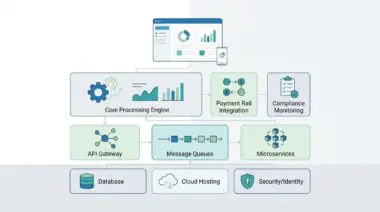
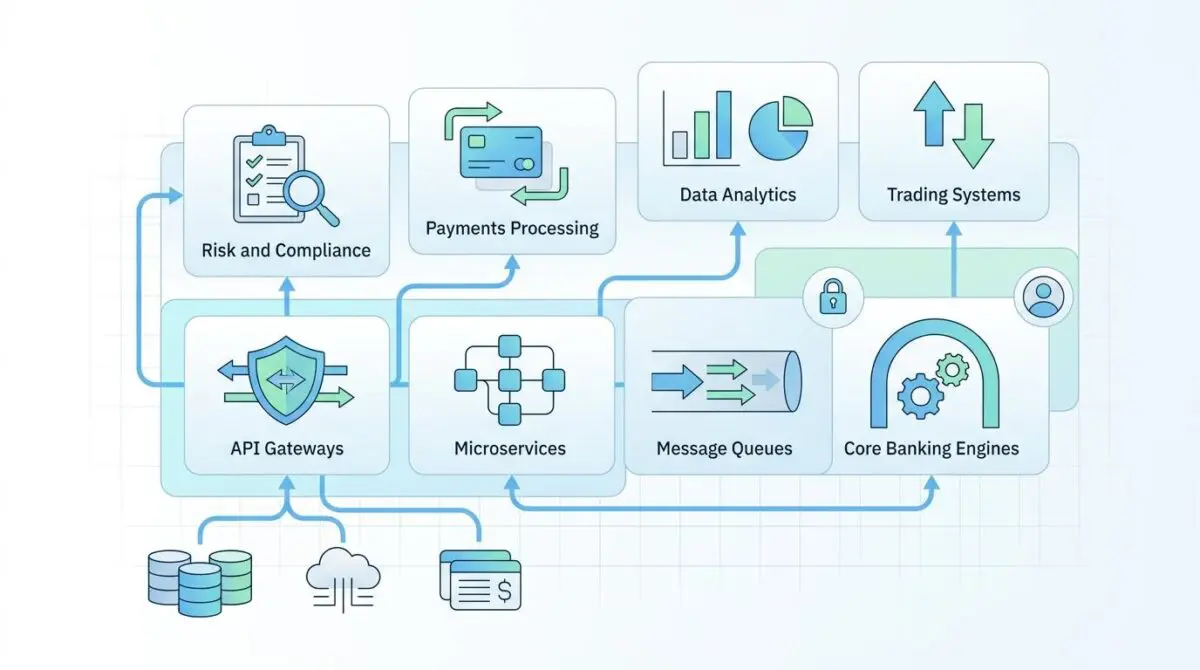
Capital flow is heavily favoring platforms that consolidate payments, ledgering, and compliance into a single sovereign operating system. Furthermore, the reduction in onboarding friction is accelerating user acquisition at an unprecedented rate.
When a platform can abstract the complexities of cryptographic security and identity verification, adoption skyrockets. The financial industry is realizing that the user interface of the future is essentially no interface at all.
This operational efficiency translates directly to the bottom line. By eliminating manual compliance bottlenecks and streamlining fraud detection, platforms can scale their user base without proportionally scaling their headcount.
The smart money understands that autonomous systems are the only viable path to hyper-growth in the modern financial landscape.
Deep Dive Into Agentic Infrastructure
Eliminating Yield Drag With Programmable Rails
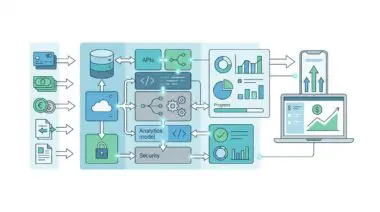
The modern financial stack is built on Large Action Models (LAMs) that manage personal balance sheets as a single liquid pool. These advanced models do not just analyze data; they execute complex, multi-step financial commands across disparate networks.
This infrastructure completely eliminates the manual effort and time delays inherent in moving funds. Yield drag has historically been the silent killer of retail wealth.
When capital sits idle in a checking account awaiting manual transfer, it loses purchasing power to inflation. Programmable rails solve this chronic problem by autonomously sweeping idle cash into high-yield protocols the millisecond it clears.
By deploying these intelligent rails, the stack ensures that every single dollar is optimized for maximum return. It calculates risk-adjusted yields across traditional banking products and decentralized finance protocols simultaneously.
The user benefits from institutional-grade treasury management without needing a background in quantitative finance. Moreover, these systems are fundamentally altering the economics of consumer platforms.
Agentic fraud detection systems have drastically reduced compliance-related false positives, addressing the massive $190 billion global fraud challenge. This automated precision helps consumer-facing platforms reduce operational costs by up to 30% while seamlessly integrating new asset classes.
The Mechanics Of Account Abstraction And FedNow
To truly understand the power of the Autonomous Personal Finance Stack, one must look at the underlying cryptographic and settlement layers. Account Abstraction (AA) is the silent revolution powering this seamless user experience.
It effectively hides the complex private key management that previously bottlenecked digital asset adoption. The integration of real-time settlement rails further supercharges this architecture.
The core components of this ecosystem include:
- Account Abstraction: Decouples the cryptographic key from the user interface to provide invisible, frictionless security.
- Large Action Models: Translates natural language intent into executable smart contract functions across multiple chains.
- FedNow Integration: Provides instant fiat settlement across traditional banking layers, eliminating multi-day clearing delays.
When Account Abstraction is combined with FedNow settlement hooks, the result is a perfectly fluid financial ecosystem. A user can liquidate a tokenized asset and have the fiat equivalent available for a point-of-sale transaction in milliseconds.
This interoperability bridges the historical divide between traditional finance and decentralized ledgers. This architecture also allows for granular permissioning.
A user can grant their sovereign agent the authority to execute trades up to a specific dollar amount, or restrict its actions to purely risk-free yield generation. The control remains entirely with the user, but the execution is entirely abstracted.
Real-World Assets And Retail Liquidity
The integration of tokenized Real-World Assets (RWAs) into retail brokerage accounts is another massive catalyst for the autonomous stack. Historically, retail investors were locked out of institutional-grade private credit, commercial real estate, and high-yield treasury funds.
This exclusion was largely due to high minimums and illiquidity. Tokenization fractures these massive assets into micro-shares that can be traded instantly on programmable rails.
The autonomous stack leverages LAMs to continuously scan the RWA landscape for arbitrage opportunities and yield optimization. It effectively democratizes access to the world’s most lucrative financial instruments.
As these assets become tokenized, they also become programmable. A sovereign agent can use a fractional share of commercial real estate as collateral to secure a micro-loan.
It can instantly utilize the liquidity to execute a tax-loss harvesting strategy. All of this occurs in the background, executing flawlessly without manual user input.
Venture Capital And Systems Of Action
Venture capital is aggressively funding this transition toward vertical AI platforms. J.P. Morgan’s 2026 Sector Spotlight reveals that AI-enabled startups now command significant valuation premiums at Series B and C.
Investors prioritize systems of action over legacy systems of record in the personal finance vertical. Industry titans like a16z and Sequoia are doubling down on this exact thesis.
They recognize that the future belongs to platforms that do the work for the user, rather than simply displaying historical data. Market leaders are pivoting rapidly to align with this new reality.
Plaid, for example, has aggressively unbundled agentic credit scoring, moving away from simple bank connectivity. Meanwhile, Bitget is dominating the consumer space with programmable wallets that leverage Account Abstraction.
The entire industry is racing to build the definitive operating system for the individual. The focus is entirely on systems that autonomously optimize yield, execute tax-loss harvesting, and manage credit utilization.
The companies that successfully build these systems of action will capture generational wealth. Legacy institutions that cling to systems of record will slowly fade into obsolescence.
The Strategic Action Plan
Strategic Trajectory
- Prepare for the transition to ‘Zero-UI’ finance where biometric identity and voice-based intent replace legacy dashboards.
- Invest in the development of ‘Sovereign Financial Agents’ that prioritize user autonomy and direct institutional engagement.
- Implement local-LLM architectures for financial processing to ensure rigorous data privacy and security.
- Enable automated real-time rate negotiation between personal technology stacks and institutional liquidity providers.
- Optimize the financial stack for the next 12-24 months of rapid evolution toward agentic, non-custodial intelligence.
The next 12 to 24 months will dictate the winners and losers of the Zero-UI finance era. Dashboards, charts, and manual input fields are being rapidly replaced by biometric identity and voice-based intent.
Founders and executives must pivot their product roadmaps immediately to support this frictionless future. Implementing local-LLM architectures is a critical step in this evolution.
Consumers demand the power of AI, but they are increasingly wary of sending their personal financial data to centralized cloud servers. Localized processing ensures rigorous data privacy while still enabling highly complex financial reasoning.
These local models will power Sovereign Financial Agents that act exclusively in the best interest of the user. These agents will possess the capability to negotiate rates directly with institutional liquidity providers in real-time.
This entirely bypasses the traditional banking middleman, returning the spread directly to the consumer. To survive this disruption, institutions must build APIs that are designed to be consumed by machines, not humans.
The financial stack must be optimized for agentic, non-custodial intelligence. Those who fail to adapt to this machine-to-machine financial economy will find themselves cut off from the next wave of consumer liquidity.
Conclusion
The Autonomous Personal Finance Stack represents the apex of consumer financial technology. It fundamentally transforms idle capital into an active, intelligent force that works relentlessly for the user.
By merging Large Action Models with real-time settlement rails, the industry has finally solved the friction of fragmented banking. The transition from systems of record to systems of action is not a passing trend.
It is the new baseline for consumer expectations. Those who build the infrastructure for this agentic future will capture the lion’s share of the market. The era of the self-driving financial engine has arrived.
Navigating the intersection of financial technology, institutional capital, and market psychology requires a sharp strategy. To future-proof your FinTech architecture and scale with precision, connect with Andres at Andres SEO Expert.
Frequently Asked Questions
What is an autonomous personal finance stack?
An autonomous personal finance stack is a unified financial ecosystem powered by Large Action Models (LAMs) that treats a user’s entire balance sheet as a single liquid pool. It acts as a sovereign agent to monitor, allocate, and optimize capital across traditional and decentralized accounts without requiring manual user intervention.
How does AI eliminate yield drag in banking?
AI eliminates yield drag through programmable rails that automatically sweep idle cash into high-yield protocols the moment funds clear. This prevents capital from losing purchasing power to inflation while sitting in low-interest checking accounts awaiting manual transfer.
What is the difference between systems of record and systems of action?
Systems of record are legacy financial platforms that simply display and store historical data. Systems of action are AI-enabled platforms that execute complex tasks for the user, such as autonomous tax-loss harvesting, credit utilization optimization, and real-time rate negotiation with institutions.
How do Account Abstraction and FedNow improve fintech infrastructure?
Account Abstraction hides the complexity of cryptographic security for the user, while FedNow provides instant fiat settlement. Together, they bridge the gap between traditional finance and digital assets, allowing for the near-instant liquidation and spending of tokenized assets.
What are the benefits of tokenized Real-World Assets (RWAs) for retail investors?
Tokenization fractures institutional-grade assets like commercial real estate and private credit into micro-shares. This democratizes access to high-yield instruments that were previously gated by high minimums and allows autonomous agents to use these assets as collateral for real-time financial strategies.
What is Zero-UI finance?
Zero-UI finance refers to a future where legacy dashboards and manual inputs are replaced by biometric identity and voice-based intent. It relies on local-LLM architectures to process financial data privately while sovereign agents execute background operations to optimize a user’s wealth.