Key Points
- AI-Driven Underwriting: Academic Performance Trajectory analytics are replacing static legacy credit scores to underwrite previously invisible learners.
- Skill-Securitized Assets: Institutional investors are shifting toward Outcome-as-a-Service models to fund high-demand career tracks for fractional future earnings.
- Embedded Financial Infrastructure: Global tech giants and decentralized protocols are merging digital wallets with academic credentials to create a Universal Trust Score.
Table of Contents
The Financial Tech Friction
According to Fortune Business Insights, the global EdTech market is projected to reach $214.58 billion by the end of 2026. This marks a significant transition as digital learning platforms evolve into comprehensive financial hubs. For decades, the financial infrastructure supporting global education has relied on antiquated and highly static lending models.
Traditional banking institutions have historically treated student financing as a high-risk and low-visibility asset class. This legacy approach has resulted in massive capital inefficiencies. It also created a widening gap between human potential and institutional liquidity.
Enter Learner Finance (Edu-FinTech), a radical technological disruption that completely reimagines the underlying economics of education. This is not merely an incremental upgrade to the traditional student loan system. It is the absolute financialization of human capital through advanced data architecture.
By treating skills acquisition as a quantifiable and highly securitized asset, early adopters are capturing unprecedented market liquidity. The intersection of ed-tech and FinTech is actively creating a new economic ecosystem. In this space, academic achievement directly dictates real-time creditworthiness.
We are moving away from an era where education was simply a consumer service. Today, it operates as a dynamic, investable asset class powered by sophisticated algorithmic underwriting.
Market Intelligence & Capital Flow
Market Intelligence & Data
Total Addressable Market
The projected global valuation of the EdTech sector by late 2026, according to Fortune Business Insights.
Blockchain Credentialing
The current market value for blockchain in education, focused on securing academic records and credentials, per Stratistics MRC.
Approval Rate Boost
The reduction in loan rejection rates for traditionally ‘unscorable’ borrowers when using alternative data models, according to Harvard Business School research.
AI Vertical Growth
The annual growth rate of the AI-specific education segment, outperforming the general EdTech market by nearly 3x, according to New Market Pitch.
The data presented above illustrates a fundamental and aggressive shift in how institutional capital views the education sector. We are witnessing a massive, coordinated reallocation of funds away from traditional debt instruments. Capital is now flowing directly toward embedded financial infrastructure.
The total addressable market represents a watershed moment for decentralized finance protocols and institutional venture capitalists alike. When analyzing the broader macroeconomic trajectory, the global ecosystem is projected to reach $214.58 billion by the end of 2026.
This valuation is driven largely by the rapid integration of blockchain credentialing and alternative credit models. Smart money is no longer looking at ed-tech as a simple software-as-a-service play. Instead, visionary founders and capital allocators are viewing it as a highly lucrative alternative lending vertical.
The staggering growth in AI-specific education segments proves that algorithmic efficiency is the new baseline. Institutions that fail to adopt these data-driven lending models will quickly find themselves priced out of the modern human capital market.
The FinTech Deep Dive
Embedded Learner Finance
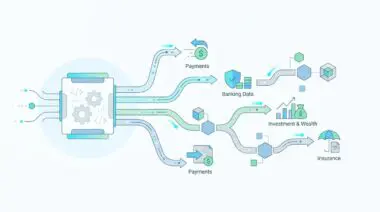
The current innovation landscape is defined by the absolute dominance of Embedded Learner Finance. We have moved entirely beyond the reliance on static, backward-looking credit scoring systems. These outdated metrics have been aggressively replaced by Academic Performance Trajectory analytics.
This AI-driven infrastructure leverages real-time data streams from Learning Management Systems to evaluate borrower risk instantly. By analyzing highly granular data points, modern financial institutions can now offer hyper-personalized tuition financing at scale.
Automated micro-scholarships are deployed programmatically based on real-time academic milestones and verified skill acquisition. This creates a continuous, dynamic feedback loop between academic effort and immediate financial reward. Furthermore, decentralized finance protocols are increasingly powering peer-to-peer educational endowments.
This shift removes the traditional banking middleman entirely. Smart contracts are revolutionizing the enforcement of Income Share Agreements across the globe. These blockchain-based protocols ensure that repayments are tethered directly to verified payroll data via secure institutional APIs.
The friction of manual loan servicing and collections is completely eliminated by this architecture. Capital is deployed, tracked, and recouped with absolute mathematical certainty. This level of automation allows lenders to scale their operations globally without a corresponding increase in overhead costs.
Solving Credit Blindness
This technological convergence directly solves the critical issue of Credit Blindness among the global student population. Historically, millions of high-potential individuals were routinely rejected by traditional banks due to thin or non-existent credit files. Legacy underwriting models simply lacked the computational capacity to measure future earning potential accurately.
Learner Finance (Edu-FinTech) dismantles this barrier entirely by utilizing non-traditional data streams. Fintech startups have successfully reduced loan processing times from several weeks to mere milliseconds. Algorithms now analyze course completion rates, coding repository activity, and biometric-verified exam performance.
This data is used to generate dynamic, highly predictive risk profiles. A January 2026 Experian study of over 200 financial institution leaders found that 89% now consider AI as a critical component of the lending lifecycle. This specific application is crucial for underwriting credit invisible student borrowers.
These individuals fall entirely outside legacy banking models. By leveraging machine learning, lenders can identify prime borrowers who were previously categorized as subprime by outdated systems. This algorithmic approach also actively mitigates the massive $1.7 trillion global student debt crisis.
Fintech innovators are introducing Dynamic Interest models that adjust in real-time based on verified outcomes. As students hit specific academic or professional milestones, their interest rates automatically decrease. This aligns the lender’s risk mitigation strategy perfectly with the borrower’s career progression.
Market Disruptors and Capital
Major institutional capital is currently flowing directly into infrastructure plays like Convera and Accredible. These platforms serve as the critical technological bridge between academic achievement and financial liquidity. Venture firms, particularly Owl Ventures and HolonIQ, are aggressively funding Outcome-as-a-Service startups.
These innovative business models securitize actual, verified skills rather than issuing traditional, unsecured debt. Simultaneously, massive tech giants including Google and Microsoft are disrupting the space from the top down. They are embedding digital wallets and credit-building tools directly into their proprietary professional certification ecosystems.
By controlling both the education platform and the financial rails, these corporations are effectively becoming the new primary lenders for the global workforce. This creates a highly lucrative closed-loop economy where the platform trains, certifies, and finances the user simultaneously.
The secondary market for these securitized skills is already beginning to take shape among institutional buyers. This convergence of big tech and financial services is rapidly accelerating the obsolescence of traditional student loan providers. Navigating the regulatory landscape for these alternative data models requires stringent compliance frameworks and rigorous oversight.
Fintechs must ensure that AI-driven underwriting adheres strictly to global anti-discrimination laws and consumer data privacy mandates. Robust identity verification protocols remain absolutely essential. This is particularly true when biometric data and decentralized finance mechanisms are utilized to underwrite human capital.
The Strategic Action Plan
Strategic Trajectory
- Capitalize on the 12–24 month emergence of Skill-Securitized Tokens (SSTs) to bridge institutional capital with high-demand vocational tracks.
- Enable institutional investors to fund specialized career paths like Quantum Computing and AI Ethics in exchange for fractional future earnings.
- Implement comprehensive integration of biometric identity with blockchain-based academic credentials for secure record management.
- Establish a ‘Universal Trust Score’ spanning from primary education to professional tenure to quantify long-term creditworthiness.
- Facilitate instant global portability of learner skills and financial reputation to eliminate geographic barriers in the workforce.
The next 12 to 24 months will be defined by the rapid rise and institutional adoption of Skill-Securitized Tokens. Institutional investors will gain the unprecedented ability to fund specific, high-demand career tracks directly. Imagine deploying capital directly into a cohort of Quantum Computing or AI Ethics students in exchange for a fractional share of their future earnings.
This mechanism transforms human potential into a highly liquid, tradable asset class on the open market. We also anticipate the total, seamless integration of biometric identity with blockchain-based academic credentials. This infrastructure will generate a Universal Trust Score for every learner globally.
This immutable financial and academic reputation will follow individuals from primary school directly into the professional workforce. Ultimately, this facilitates the instant, global portability of both verifiable skills and quantifiable creditworthiness. Founders who build the infrastructure to support this global trust network will command massive market share in the coming decade.
Conclusion
The rapid evolution of Learner Finance (Edu-FinTech) represents one of the most profound wealth generation opportunities of this technological decade. By replacing legacy debt models with dynamic, AI-driven underwriting, the financial sector is unlocking trillions in untapped human capital.
The institutions that secure the infrastructure for this transition will undoubtedly dominate the next era of global finance.
Navigating the intersection of financial technology, institutional capital, and market psychology requires a sharp strategy. To future-proof your FinTech architecture and scale with precision, connect with Andres at Andres SEO Expert.
Frequently Asked Questions
What is Learner Finance (Edu-FinTech)?
Learner Finance, or Edu-FinTech, is a technological disruption that treats education as a quantifiable and securitized asset. It replaces antiquated lending models with advanced data architecture, allowing academic achievement to directly influence real-time creditworthiness through algorithmic underwriting.
How does AI improve student loan approval rates?
AI improves approval rates by utilizing non-traditional data streams, such as real-time academic milestones and skill acquisition. Research indicates that these alternative data models can reduce loan rejection rates by up to 70% for traditionally ‘unscorable’ or ‘credit blind’ borrowers.
What are Skill-Securitized Tokens (SSTs)?
Skill-Securitized Tokens (SSTs) are emerging financial instruments that allow institutional investors to fund high-demand vocational tracks. In this model, investors provide capital for specialized education in exchange for a fractional share of the learner’s future earnings.
How do blockchain-based Income Share Agreements (ISAs) work?
Blockchain-based ISAs use smart contracts to automate repayments by tethering them directly to verified payroll data via secure APIs. This eliminates manual loan servicing friction and ensures that repayments are based on absolute mathematical certainty and verified employment outcomes.
What is the projected size of the EdTech market by 2026?
According to Fortune Business Insights, the global EdTech market is projected to reach a valuation of approximately $214.58 billion by the end of 2026 as digital learning platforms increasingly evolve into comprehensive financial hubs.
How does Edu-FinTech solve ‘credit blindness’ for students?
Edu-FinTech solves credit blindness by replacing static, backward-looking credit scores with Academic Performance Trajectory analytics. By analyzing granular data points like course completion rates and biometric-verified exam performance, lenders can accurately measure future earning potential for students with thin credit files.
What is a Universal Trust Score in the context of global education?
A Universal Trust Score is an immutable financial and academic reputation generated through the integration of biometric identity and blockchain-based credentials. It follows an individual from primary school to their professional career, providing instant global portability for their skills and creditworthiness.