Key Points
- Agentic log-aware ticket routing instantly analyzes unstructured telemetry to bypass manual human filters and eliminate the escalation chasm.
- AI copilots utilize Retrieval-Augmented Generation to match real-time error logs against historical patterns, achieving up to a 40 percent reduction in resolution times.
- The industry is rapidly shifting toward autonomous remediation, where intelligent agents not only route tickets but also test and suggest code-based pull requests.
Table of Contents
- The Agony of the Escalation Chasm
- The True Cost of Misrouted Telemetry
- Bypassing the Human Filter for Faster Responses
- Copilots That Read Terabytes of Telemetry
- Silencing the Noise of Distributed Microservices
- Securing PII Against Agentic Crawlers
- The Financial Shift to Per-Resolution Pricing
- Autonomous Remediation and Self-Healing Code
- Proactive Support Loops and the Next Era of Triage
The Agony of the Escalation Chasm
Picture this: it is 2:00 AM on a Friday, and a critical cloud-native service is quietly degrading in the background. The monitoring system fires off an alert, generating a massive, cryptic error log that lands squarely in a frontline technical support queue. The support agent stares at terabytes of raw telemetry data, completely unable to decipher the underlying root cause.
They bounce the ticket to the next tier, who then blindly forwards it to a random engineering pod, hoping someone recognizes the stack trace. This manual game of ticket ping-pong is exactly why complex system failures now average an agonizing 82 hours to resolve. It creates a systemic delay known as the escalation chasm, where critical time is wasted just trying to find the right person to look at the problem.
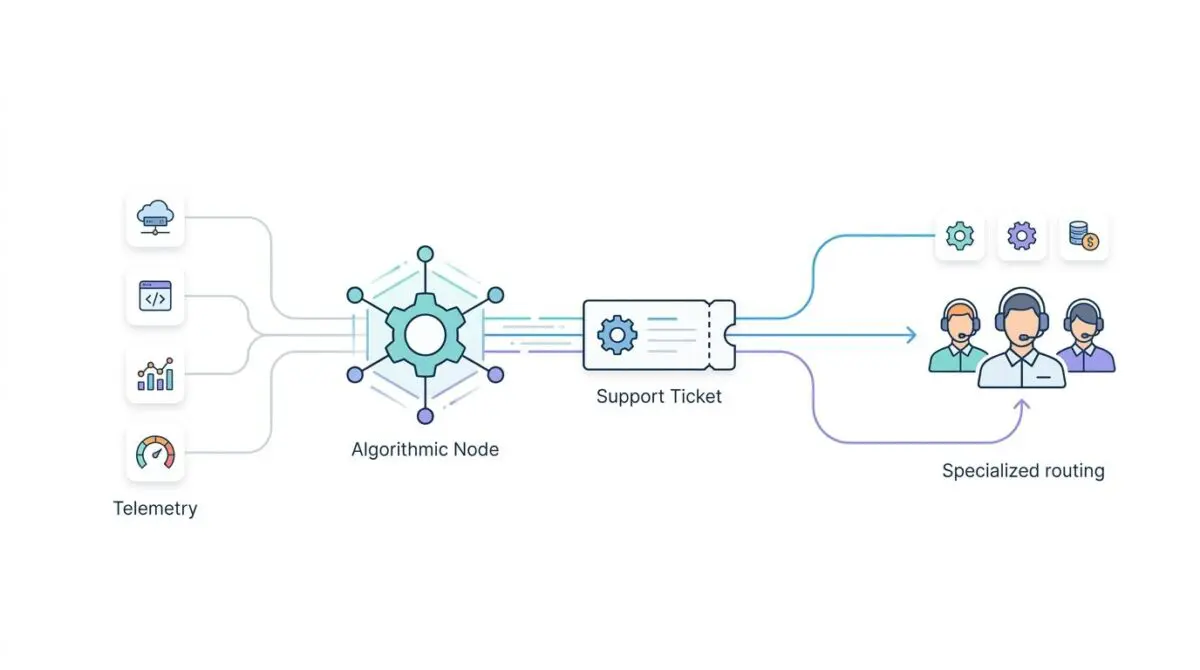
The ultimate antidote to this operational burnout is Agentic Log-Aware Ticket Routing. By deploying specialized AI models to instantly analyze unstructured error logs the millisecond they are generated, organizations can completely eliminate manual triage. These intelligent systems read the telemetry, understand the technical context, and route the issue directly to the exact engineering pod equipped to fix it.
The True Cost of Misrouted Telemetry
Market Intelligence & Data
MTTR Reduction
According to a 2025/2026 Rootly DevOps Trend report, AI incident automation consistently delivers a 40% reduction in Mean Time to Resolution across enterprise environments.
Labor Cost Savings
A 2026 Gartner forecast predicts that conversational AI and automated ticket routing will reduce global contact center labor costs by $80 billion this year.
AI Agent Adoption
Salesforce’s State of Service report (Nov 2025/2026) indicates that 66% of customer service organizations now use AI agents, up from 39% just one year prior.
Manual Misrouting Rate
Verified 2026 research from Unthread shows that up to 30% of support tickets are misrouted in manual workflows, emphasizing the need for AI-driven classification.
The 40 percent reduction in Mean Time to Resolution is not just a vanity metric for dashboards. When an AI agent parses error logs instantly, it removes the human bottleneck of reading through endless lines of code. This immediate context delivery means engineers start fixing the problem the moment they open the ticket, rather than spending hours investigating.
The financial implications of this shift are staggering for enterprise operations. A Gartner forecast predicts that conversational AI will reduce global contact center labor costs by $80 billion this year alone. By automating the heavy lifting of log analysis, companies can reallocate human capital toward proactive system improvements rather than reactive damage control.
Adoption rates are soaring as organizations realize the sheer necessity of these autonomous tools. Recent industry reports indicate that 66 percent of customer service organizations now use AI agents, up from 39 percent just twelve months ago. This rapid deployment underscores a fundamental industry pivot away from manual triage and toward autonomous, agentic workflows.
Finally, the 30 percent misrouting rate in traditional workflows highlights a massive structural flaw in how we handle technical support. Every misrouted ticket represents lost revenue, frustrated customers, and burned-out engineers. Intelligent log-aware routing directly attacks this inefficiency by ensuring the right data reaches the right specialist on the very first try.
Bypassing the Human Filter for Faster Responses
In the traditional escalation model, frontline support acts as a necessary but deeply flawed human filter. They simply lack the deep technical context required to parse complex server logs or understand microservice dependencies. This creates the infamous ticket ping-pong effect between support and engineering teams.
Customers are left waiting in the dark while internal teams argue over service ownership and request additional diagnostic files. Modern platforms like Zendesk Advanced AI and DevRev have introduced features like Intelligent Triage to solve this exact bottleneck. These systems scan incoming logs for hidden intent and technical sentiment before a human ever sees the request.
By completely bypassing traditional frontline human filters, smarter routing engines are improving enterprise response times by up to 60 percent. The workflow is remarkably elegant and completely frictionless. When a user submits a support request with an attached crash report, the AI instantly reads the unstructured data.
It extracts the relevant stack trace, identifies the failing microservice, and routes the ticket directly to the specialized pod responsible for that exact feature. This ensures that the first human eyes on the problem belong to the person who actually wrote the failing code.
Copilots That Read Terabytes of Telemetry
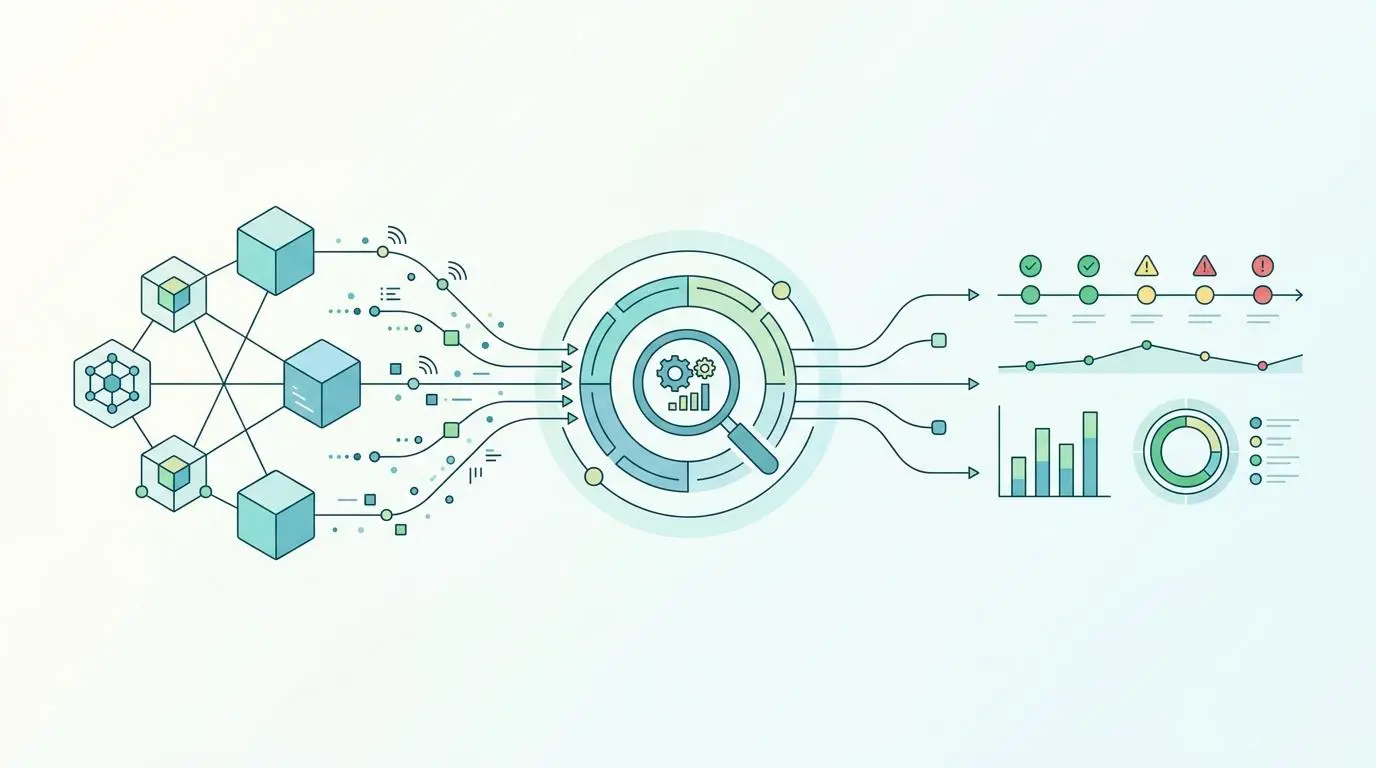
The sheer volume of telemetry data generated by modern cloud infrastructure is staggering. Engineers face immense cognitive overload when forced to manually parse terabytes of background noise to find a single root cause. It is akin to searching for a needle in a digital haystack while the haystack is actively on fire.
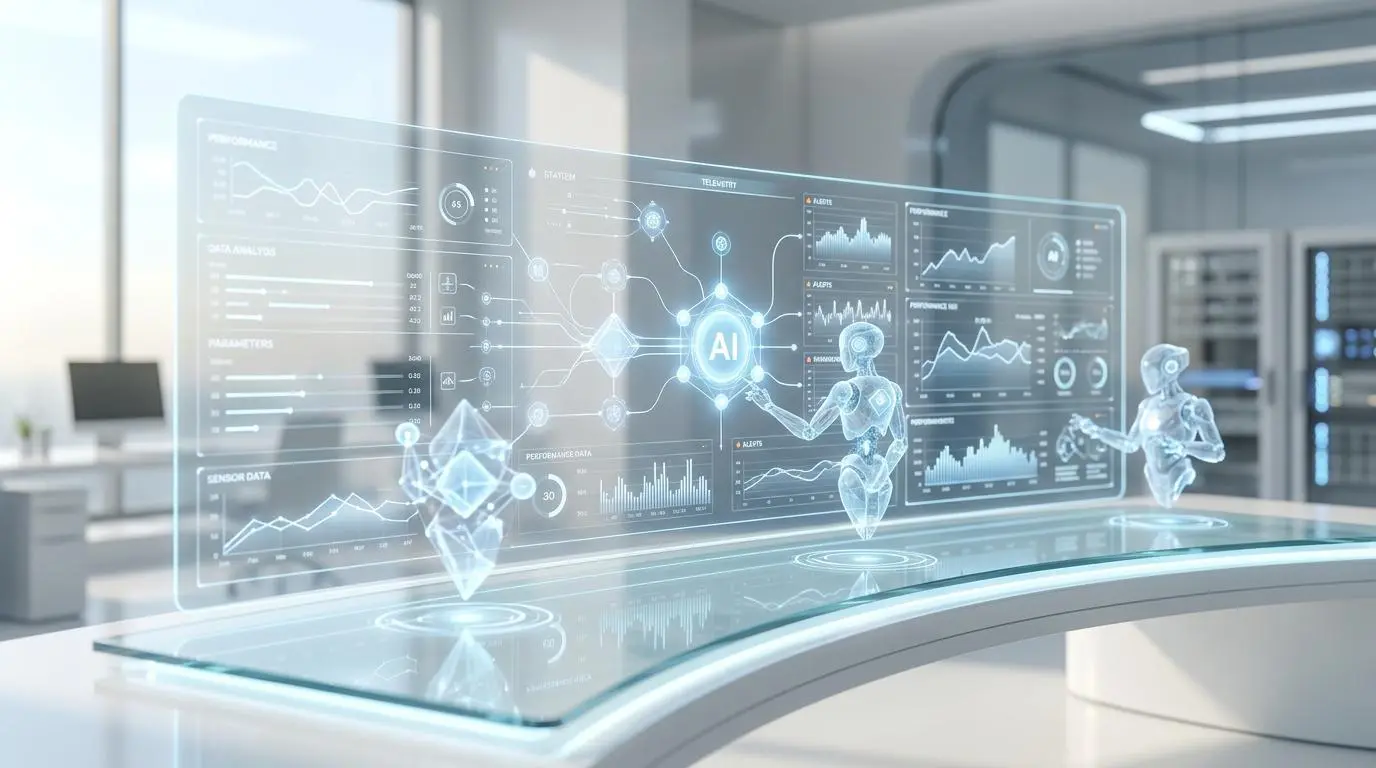
Specialized AI agents like Microsoft’s Triangle and Uber’s Genie copilot are fundamentally changing this dynamic. These tools connect directly to observability platforms to analyze unstructured log data in real-time. They act as tireless technical assistants that never suffer from alert fatigue or cognitive exhaustion.
These systems utilize advanced methodologies to process data instantly:
- Retrieval-Augmented Generation: Matches incoming error logs against historical incident patterns instantly.
- Direct Observability Hooks: Connects natively to platforms like Datadog to pull live system metrics.
- Contextual Code Mapping: Cross-references stack traces with GitHub repositories to identify the exact failing microservice.
If a specific memory leak crashed the server three months ago, the agent instantly recognizes the identical signature in today’s logs. Microsoft’s Triangle system has already achieved a 97 percent triage accuracy and a 91 percent reduction in time-to-engage using this exact correlation mapping.
Silencing the Noise of Distributed Microservices
Site Reliability Engineers currently face an epidemic of silent failures across their infrastructure. These are insidious scenarios where AI workloads and microservices degrade significantly without actually crashing the system. Traditional monitoring tools often miss these subtle anomalies entirely because the server technically remains online.
Manual log parsing is now considered practically impossible for highly distributed, cloud-native systems. The background noise generated by thousands of containers spinning up and down masks the critical signals of impending failure. This creates extreme operational burnout for on-call engineers who must constantly guess where the problem lies.
Agentic routing solves this by acting as a highly sensitive, automated seismograph for your infrastructure. It continuously listens to the telemetry streams, filtering out the operational static to isolate genuine anomalies. When a silent failure is detected, the agent bundles the exact log lines and routes them to the correct on-call rotation instantly.
Securing PII Against Agentic Crawlers
Opening up highly sensitive system logs to autonomous AI models introduces a terrifying new vector for data breaches. Protecting Personally Identifiable Information within these logs is paramount, especially when troubleshooting customer-specific crashes. You cannot simply feed raw, unredacted telemetry into a public language model without violating compliance laws.
Nearly 87 percent of EU companies now use localized AI implementations to automate GDPR compliance and redact sensitive data before it ever reaches the routing engine. This ensures that the agent can analyze the technical failure without exposing user emails, passwords, or session tokens. It is a delicate balance of deep technical visibility and strict data privacy.
To maintain this balance, organizations are deploying specific safeguards:
- Localized AI Models: Deploying on-premise engines to ensure sensitive data never leaves the corporate network.
- Automated Redaction: Stripping out identifiable markers before the log reaches the routing logic.
- Zero-Trust Authentication: Preventing unauthorized AI crawlers from spoofing developer credentials.
The security landscape is rapidly evolving as agentic traffic increases by thousands of percentage points. This surge raises severe risks of unauthorized AI crawlers attempting to access restricted log repositories. Implementing a zero-trust architecture is now a mandatory requirement for any agentic routing deployment.
The Financial Shift to Per-Resolution Pricing
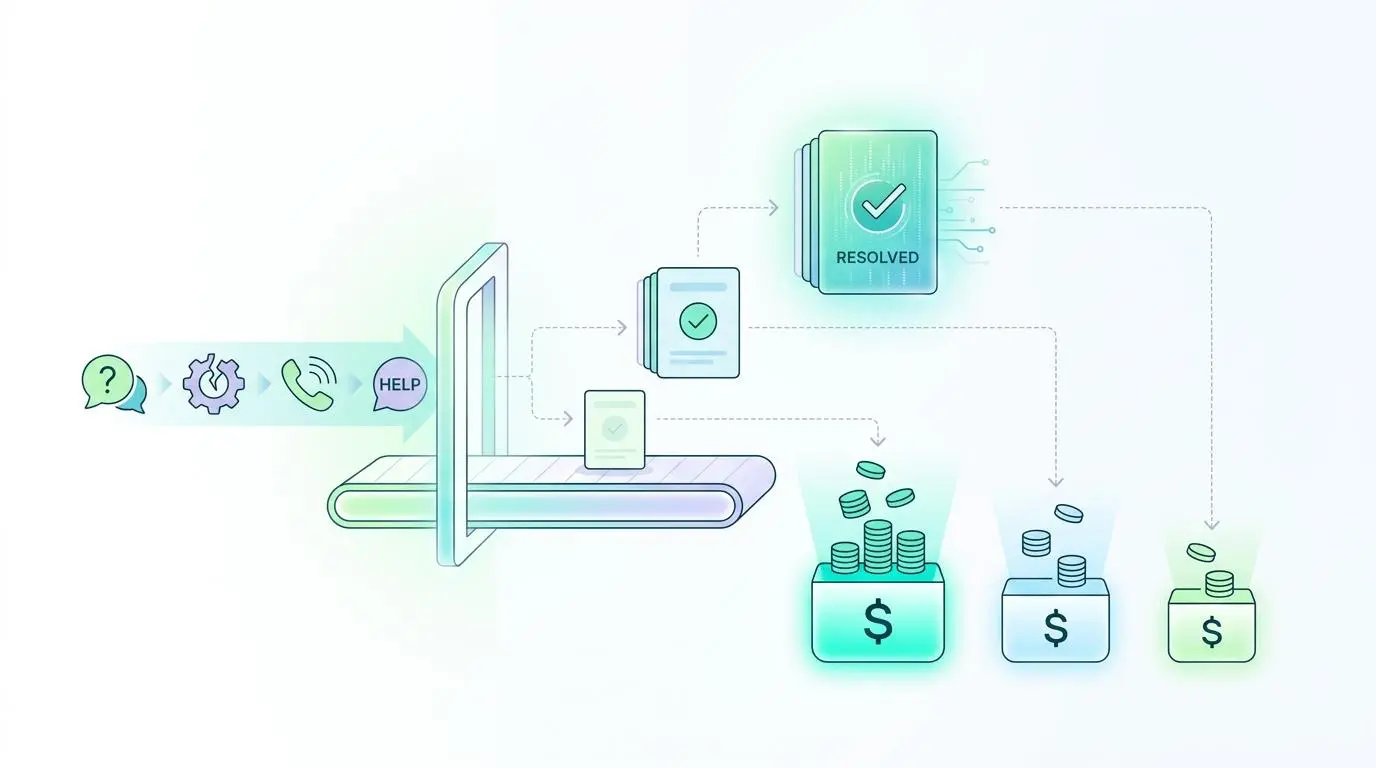
The economic argument for agentic log routing is impossible to ignore in today’s market. Traditional human-assisted support is incredibly expensive, averaging roughly thirteen dollars and fifty cents per contact. When you multiply that by thousands of highly technical, misrouted tickets, the financial drain on an engineering department becomes catastrophic.
AI-native platforms like Lorikeet and Twig are shattering this cost structure by achieving massive first-contact resolution rates. They are driving average handle times down to under three minutes by instantly providing engineers with the exact logs and context they need. Automated self-resolution drops the cost per contact to a mere fraction of a dollar.
This massive efficiency gain is fundamentally altering software procurement models across the industry. Organizations are rapidly shifting away from traditional per-agent licensing seats that penalize growth. Instead, they are adopting per-resolution pricing models, paying only for the specific tickets that the AI successfully routes or resolves.
Autonomous Remediation and Self-Healing Code
We are rapidly approaching a threshold where routing a ticket is only the first step in a much larger autonomous workflow. By late 2026, the industry is projected to fully embrace autonomous remediation. AI agents will no longer just alert the engineering pod; they will actively begin fixing the problem.
When an error log is generated, the agent will analyze the stack trace, identify the faulty code, and automatically generate a fix. It will then suggest and test pull requests in a sandbox environment before a human engineer even opens their laptop. This completely bridges the historical gap between issue identification and the actual deployment of a code-based fix.
This evolution represents the holy grail of site reliability and software engineering. Engineers will transition from reactive firefighters to strategic overseers. They will simply review and approve the automated pull requests generated by their agentic counterparts, drastically accelerating the pace of innovation.
Proactive Support Loops and the Next Era of Triage
The transition from reactive triage to proactive support loops is fundamentally rewriting the rules of technical operations. AI agents are now continuously monitoring live telemetry to detect and fix infrastructure anomalies before a customer even realizes a service disruption has occurred. This predictive capability is on track to resolve the vast majority of routine interactions seamlessly.
We are leaving behind the era of manual log parsing and entering an age of intelligent, self-healing infrastructure. Agentic log-aware ticket routing is the critical bridge to this future, allowing organizations to scale their engineering output without burning out their most valuable talent. The companies that embrace this architecture will dominate their respective markets through sheer operational velocity.
Navigating the intersection of technology, workflows, and operational efficiency requires a sharp strategy. To future-proof your business architecture and scale with precision, connect with Andres at Andres SEO Expert.
Frequently Asked Questions
What is Agentic Log-Aware Ticket Routing?
Agentic Log-Aware Ticket Routing is an AI-driven system that uses specialized models to analyze unstructured error logs the moment they are generated. By understanding technical context and telemetry, it routes issues directly to the specific engineering pod equipped to fix them, eliminating manual triage and the ‘ticket ping-pong’ effect.
How does AI incident automation reduce Mean Time to Resolution (MTTR)?
AI incident automation reduces MTTR by as much as 40 percent by removing human bottlenecks. It parses log data instantly, allowing engineers to receive immediate context and start remediation efforts the moment they open a ticket rather than spending hours on manual investigation.
How does agentic routing protect sensitive PII in telemetry logs?
To protect Personally Identifiable Information (PII), organizations use localized AI implementations that redact sensitive data before it reaches the routing engine. This includes stripping identifiable markers like emails or session tokens and implementing zero-trust architecture to prevent unauthorized AI crawlers from accessing logs.
What is the ‘escalation chasm’ in technical support workflows?
The escalation chasm is a systemic delay in manual support workflows where critical time is wasted as tickets are bounced between tiers due to a lack of technical context. This inefficiency is a primary reason why complex system failures can take an average of 82 hours to resolve.
What technologies do AI agents use to parse massive telemetry data?
AI agents like Microsoft’s Triangle use Retrieval-Augmented Generation (RAG) to match error logs against historical incidents, direct observability hooks to pull live system metrics, and contextual code mapping to cross-reference stack traces with specific code repositories.
What is the future of autonomous remediation in site reliability?
By late 2026, the industry is expected to shift toward autonomous remediation where AI agents not only route tickets but actively fix problems. These agents will analyze stack traces, identify faulty code, and generate tested pull requests for human engineers to review and approve.