Key Points
- Eliminating the Synchronization Gap: Automated CAD-to-MES workflows bypass manual engineering change orders, ensuring shop floors manufacture the correct revisions instantly.
- Democratizing Integration: Low-code PLM connectors empower non-technical managers to build custom data pipelines without relying on expensive IT consultants.
- Standardizing Digital Twins: The adoption of OpenUSD allows rich 3D design data to stream seamlessly across systems, enabling simulation-first manufacturing and autonomous tooling adjustments.
Table of Contents
- The Invisible Tax of Disconnected Engineering
- Quantifying the Shift to Connected Ecosystems
- Eradicating the Daily Documentation Grind
- Empowering the Shop Floor with Low-Code
- Building Resilient Data Pipelines
- Stopping the Bleed of Unplanned Downtime
- Copilots on the Factory Floor
- The Dawn of Autonomous Manufacturing
- Forging the Future of Digital Continuity
The Invisible Tax of Disconnected Engineering
The invisible tax on modern manufacturing isn’t found in raw material costs, but in the agonizing delay between a brilliant engineering update and its actual execution on the shop floor. Every minute a design revision sits in an engineer’s inbox waiting to be manually exported, your production line is bleeding efficiency.
This synchronization gap creates a dangerous environment where expensive scrap and obsolete parts become the accepted norm.
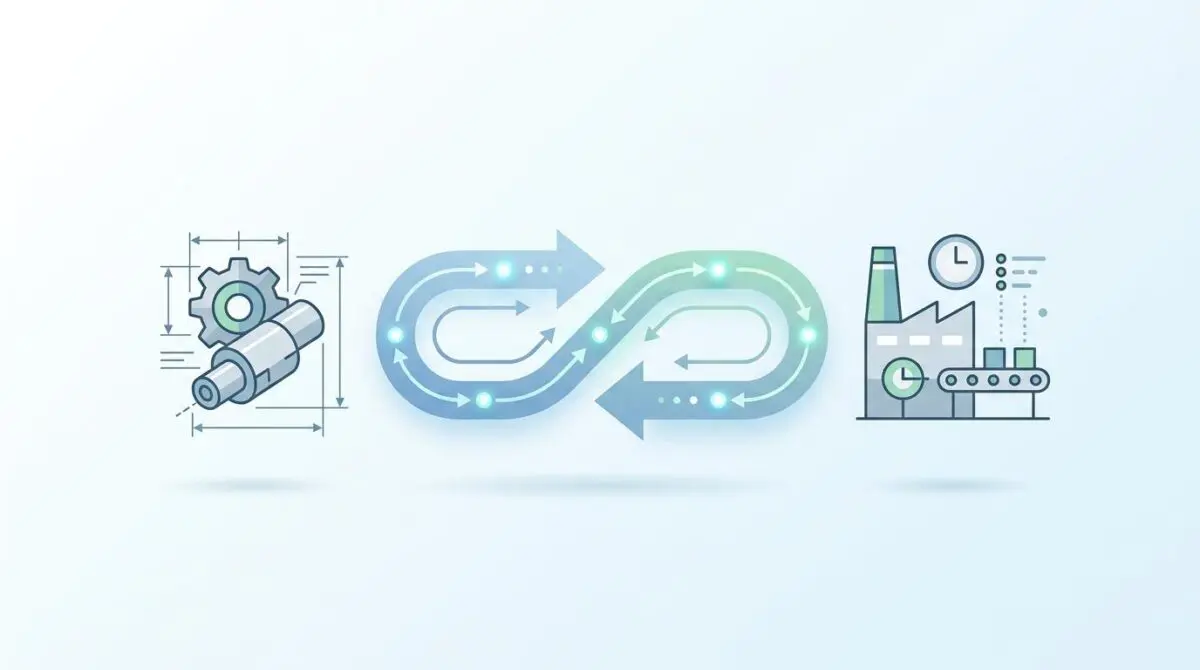
To break this cycle, forward-thinking manufacturers are turning to closed-loop CAD-to-MES digital thread integration. This isn’t just a software upgrade; it is the ultimate operational connective tissue.
By automating the instant synchronization of CAD design updates to manufacturing execution systems, you reclaim thousands of lost hours.
Imagine a world where the moment an engineer clicks approve, the entire factory floor instantly pivots. That is the power of true digital continuity.
Quantifying the Shift to Connected Ecosystems
Before we dissect the mechanics of real-time synchronization, we must look at the hard numbers driving this industrial shift.
Market Intelligence & Data
Reduction in Time-to-Market
According to a 2025 Verified Market Research report, aerospace and defense firms utilizing integrated simulation loops between design and production saw a 15% faster product delivery cycle.
AI-Enhanced PLM Spending
According to Dataintelo’s 2026 market analysis, AI-powered functionality now accounts for 12% of the total global spending on Product Lifecycle Management (PLM) software.
Industry 4.0 Commitment
A 2026 Dataintelo study found that 67% of large manufacturing enterprises have committed to full Industry 4.0 investments, specifically targeting connected CAD-to-MES ecosystems.
Cloud-Based PLM Growth
According to a 2026 Mordor Intelligence report, the cloud-based segment of the PLM market is growing at a 10.96% CAGR as manufacturers ditch on-premise silos for real-time sync capabilities.
A 15% reduction in time-to-market is a massive competitive advantage for aerospace and defense firms. When integrated simulation loops between design and production are established, the traditional lag of manual approvals evaporates.
Products move from concept to physical reality with unprecedented speed.
The 12% allocation of global PLM spending toward AI-enhanced functionality reveals a deeper trend. Companies are no longer just storing files; they are demanding intelligent systems that actively translate engineering changes into actionable manufacturing data.
This AI adoption is turning static repositories into dynamic engines of production.
It is no surprise that 67% of large manufacturing enterprises are doubling down on full Industry 4.0 investments. The focus is squarely on connected CAD-to-MES ecosystems that bridge the historical divide between the carpeted offices and the concrete factory floor.
A major breakthrough in 2026 is the integration of PTC Windchill with NVIDIA Omniverse DSX, which allows AI-driven factory digital twins to stay perfectly synchronized with evolving engineering data.
Finally, the shift away from fragile, on-premise servers is accelerating rapidly. The cloud-based segment of the PLM market is growing at a 10.96% CAGR as manufacturers ditch isolated silos for real-time sync capabilities.
Cloud infrastructure is the non-negotiable foundation for seamless data flow across global facilities.
Eradicating the Daily Documentation Grind
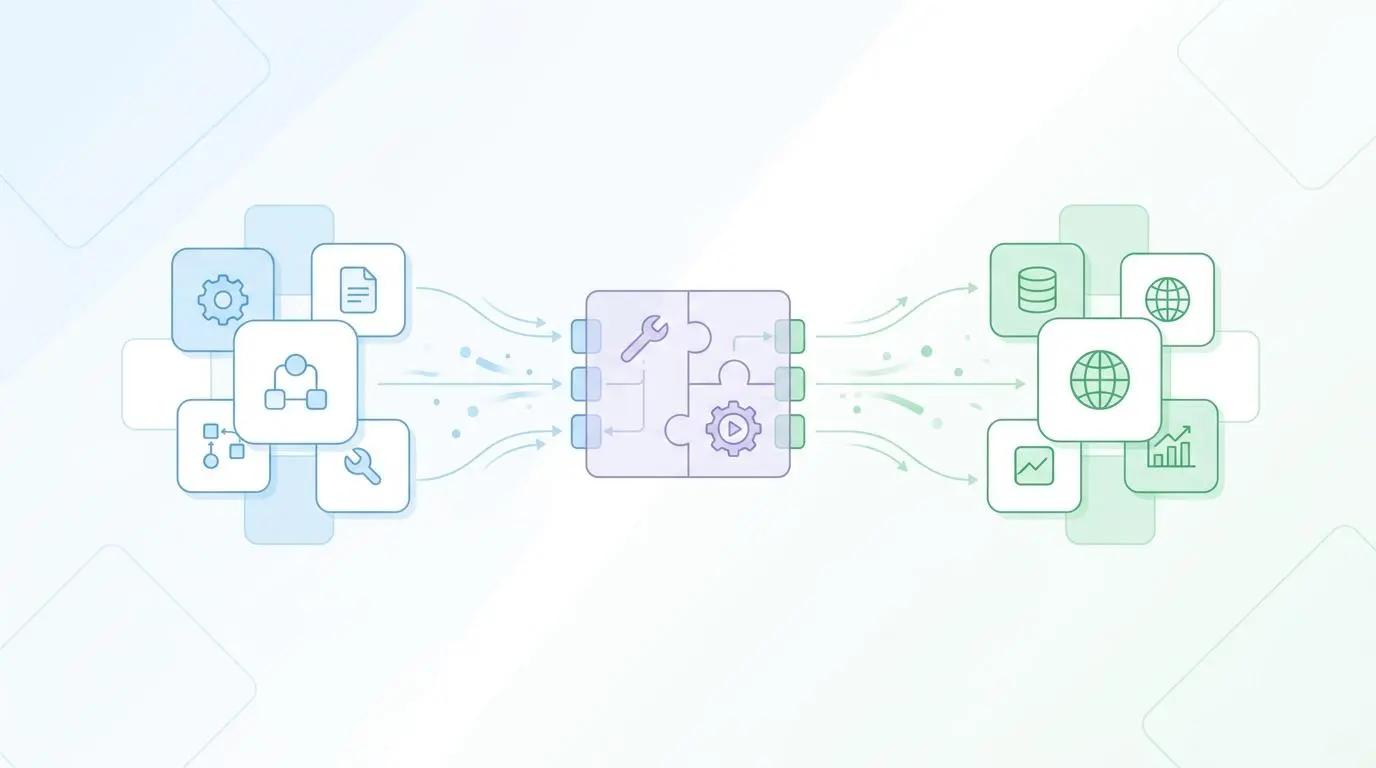
Manual engineering change orders are the primary bottleneck choking modern production lines. Engineers currently spend up to 30% of their valuable time managing documentation, exporting PDFs, and chasing down approvals rather than actually designing.
This administrative heavy lifting creates a dangerous lag where production teams often manufacture ghost revisions simply because the latest CAD file hasn’t reached the MES.
To solve this, industry-leading tools like Siemens Teamcenter and Dassault Systèmes 3DEXPERIENCE are deploying real-time automation triggers. These triggers actively monitor the PLM environment and push updates directly to shop-floor tablets the exact second an engineering change is approved.
The days of walking paper drawings down to the assembly line are officially over.
By bypassing traditional manual export steps, the closed-loop CAD-to-MES digital thread integration ensures absolute single-source truth. The shop floor is always building the right part, at the right time, with zero guesswork.
Empowering the Shop Floor with Low-Code
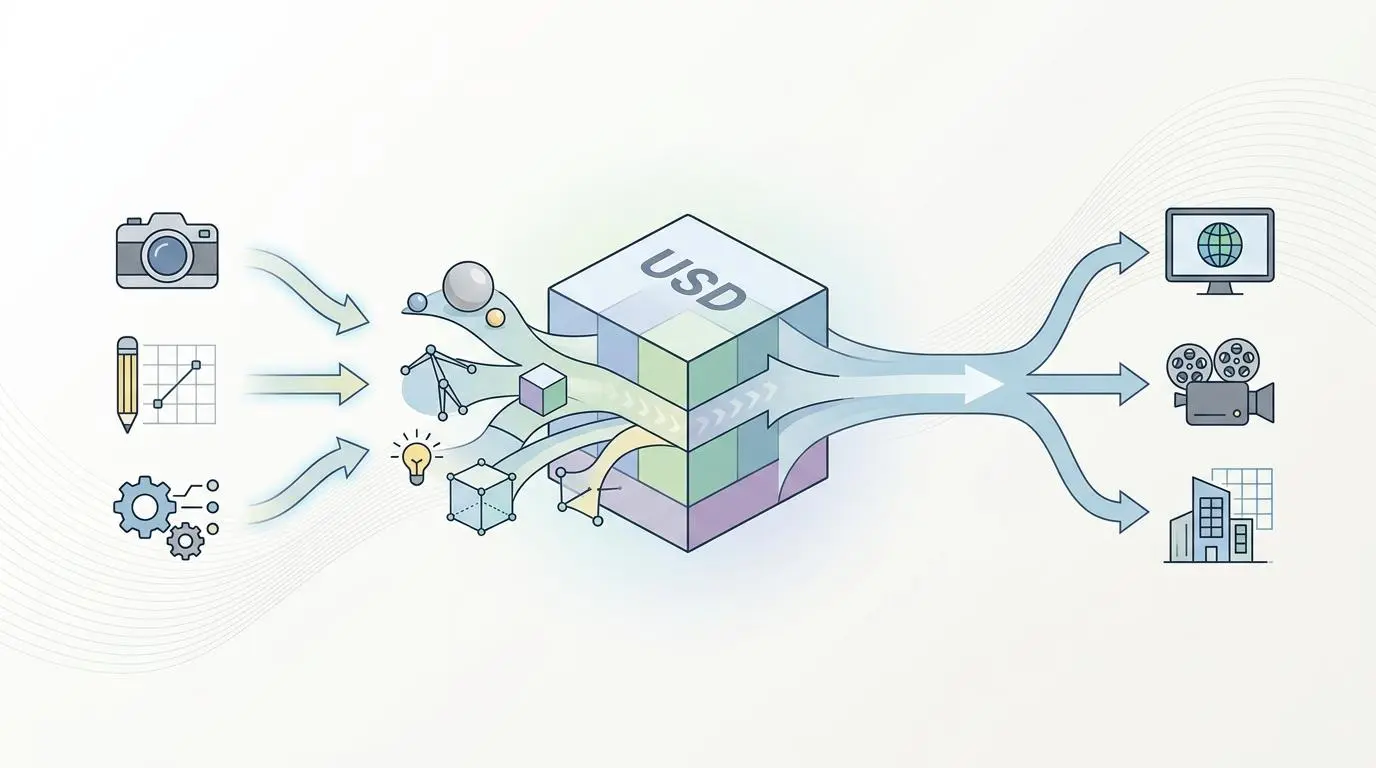
Historically, connecting legacy CAD databases to modern cloud-based MES software required expensive IT consultants and months of custom middleware development. This high barrier to entry left many mid-sized manufacturers stranded in data silos.
The friction of writing specialized ETL code meant that integrations were brittle and prone to breaking during routine software updates.
The landscape shifted dramatically in 2025 when platforms like Tulip and Mendix introduced specialized PLM connectors. These low-code tools democratize integration, allowing non-technical shop managers to build custom applications using simple drag-and-drop interfaces.
You no longer need a computer science degree to pull complex CAD metadata directly into digital work instructions.
This no-code revolution puts the power of automation directly into the hands of the people who actually run the factory. It allows for rapid, iterative improvements to the CAD-to-MES pipeline without waiting on a backlogged IT department.
Building Resilient Data Pipelines
Proprietary file formats have long created a localized data gravity that prevents the real-time streaming of changes to manufacturing equipment. When data is locked inside closed ecosystems, it requires clunky translation software that strips away vital metadata.
This fragmentation makes true digital continuity nearly impossible to achieve.
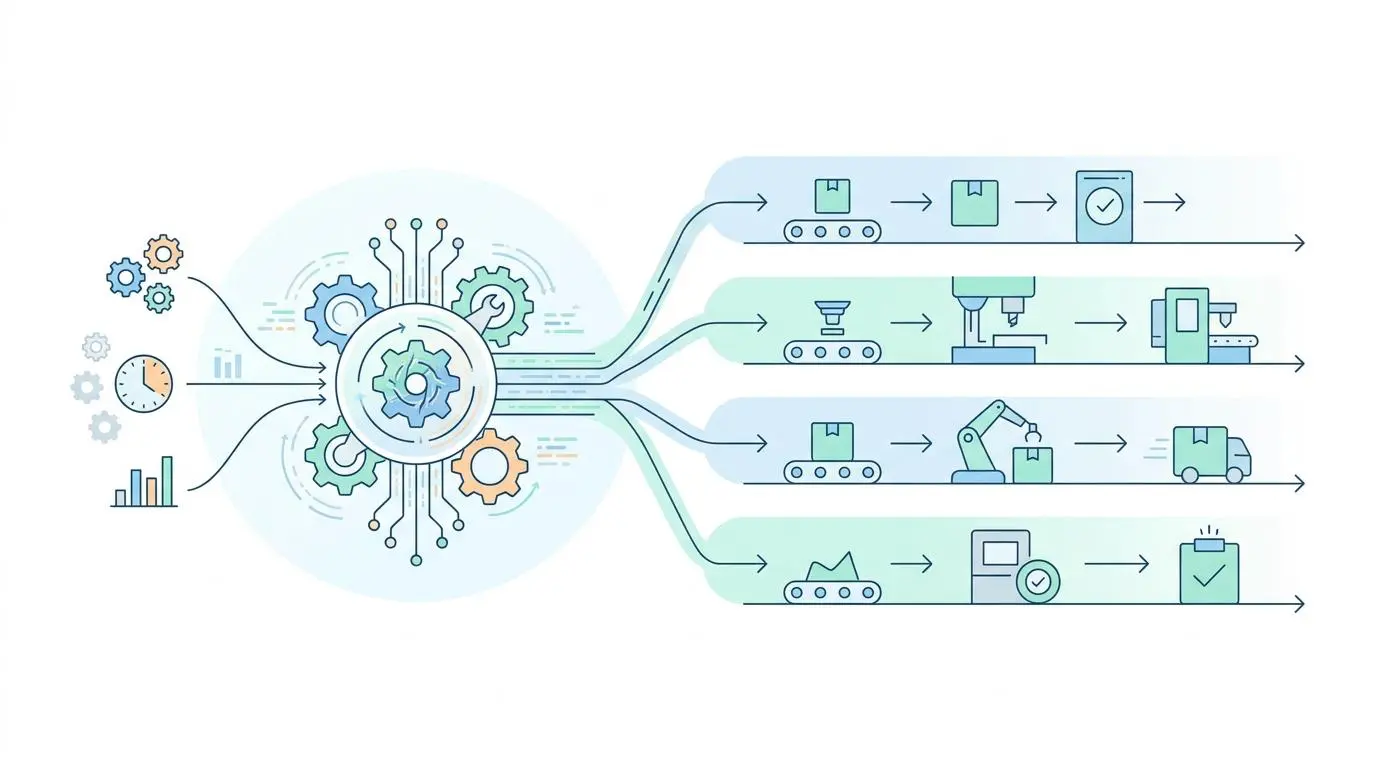
Enter NVIDIA’s OpenUSD, which has firmly established itself as the 2026 standard for synchronizing 3D design data across heterogeneous systems. OpenUSD acts as a universal translator, allowing rich, complex 3D models to flow seamlessly from engineering to production without losing fidelity.
PTC Windchill now supports direct OpenUSD exports to NVIDIA Omniverse, unlocking incredible capabilities.
This standardized pipeline enables real-time factory floor simulations where engineers can validate changes in a digital twin before a single piece of metal is cut. The result is a frictionless data highway that connects the brightest engineering minds directly to the physical machinery.
Stopping the Bleed of Unplanned Downtime
The financial impact of desynchronized design data is staggering. According to recent manufacturing audits, manual production planning leads to a silent but deadly 1% revenue erosion from completely avoidable errors.
This erosion is compounded by a consistent drop in overall equipment effectiveness as machines sit idle waiting for clarification.
Unplanned downtime frequently occurs because an engineer has to physically stop a production line to explain a design update that wasn’t properly synced to the MES. These manual interventions disrupt the rhythm of the factory and introduce massive variability into production schedules.
It is a chaotic way to run a modern business.
Automated synchronization acts as an operational tourniquet, stopping the bleed of wasted time. When the CAD and MES are locked in a continuous digital thread, changes propagate instantly, allowing machines to keep humming and operators to stay focused.
Copilots on the Factory Floor
Translating complex 3D engineering changes into readable, step-by-step instructions for factory workers requires immense human effort. Traditionally, manufacturing engineers had to manually interpret every altered dimension and rewrite the standard operating procedures.
This tedious translation process is highly susceptible to human error.
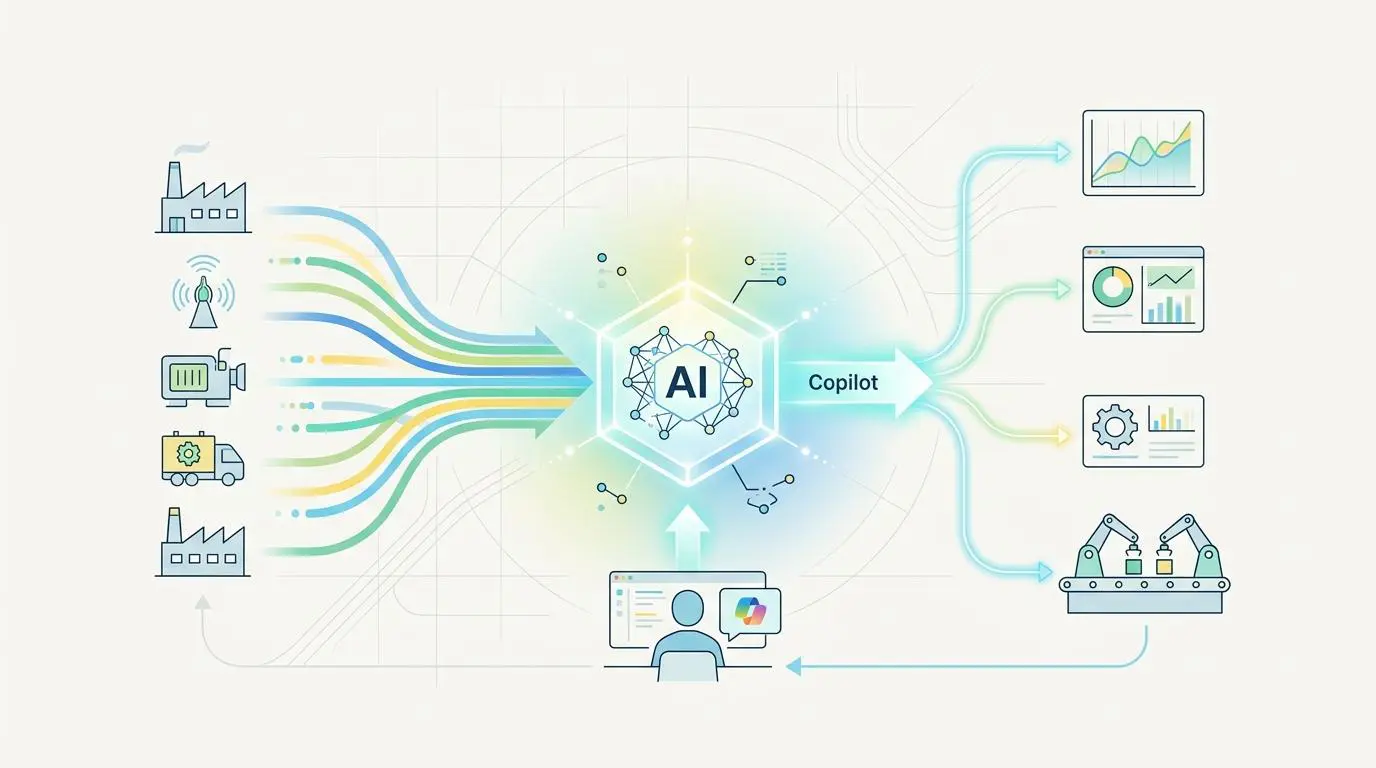
Generative AI copilots are now being embedded directly into PLM-MES workflows, such as Siemens Opcenter, to shoulder this burden. These intelligent agents monitor the 3D CAD model and automatically rewrite the shop-floor work instructions the moment a geometric change is detected.
The AI understands the context of the revision and updates the text, images, and tool requirements instantly.
This autonomous translation bridges the cognitive gap between advanced engineering software and the human operators assembling the product. It ensures that the workforce always has crystal-clear, perfectly accurate guidance.
The Dawn of Autonomous Manufacturing
The lack of true digital continuity currently prevents a fully autonomous factory response to brilliant engineering innovations. However, the trajectory is clear as we move toward late 2026.
Hyper-integrated engineering systems will become the baseline standard for competitive manufacturing, rendering human intervention in data transfer entirely obsolete.
The shift toward simulation-first manufacturing means that engineering updates will be rigorously validated in a 3D digital twin using OpenUSD before any physical change occurs. This effectively eliminates the risk of production downtime due to unforeseen design clashes.
AI will transition from experimental pilot projects to the core nervous system of production.
In this near future, machines will self-calibrate their tooling paths in real-time, responding fluidly to design changes streamed directly via the cloud. The factory will become a living, breathing organism that adapts to engineering intent instantaneously.
Forging the Future of Digital Continuity
The synchronization gap is no longer an unsolvable reality of manufacturing; it is a choice. Embracing a closed-loop digital thread transforms your operational architecture from a series of disconnected silos into a unified, high-speed engine.
The automation of CAD-to-MES data flow is the ultimate catalyst for scale.
Those who cling to manual engineering change orders will find themselves outpaced by competitors who leverage real-time synchronization. The future belongs to the agile, the integrated, and the automated.
Navigating the intersection of technology, workflows, and operational efficiency requires a sharp strategy. To future-proof your business architecture and scale with precision, connect with Andres at Andres SEO Expert.
Frequently Asked Questions
What is CAD-to-MES digital thread integration?
CAD-to-MES digital thread integration is the automated synchronization of engineering design updates with manufacturing execution systems. It creates a closed-loop ecosystem where design revisions are instantly pushed to the shop floor, eliminating manual data entry and ensuring that production always aligns with the latest approved engineering specifications.
How does the manual documentation grind affect engineering productivity?
In traditional manufacturing setups, engineers spend approximately 30% of their time managing documentation, exporting PDFs, and chasing manual approvals for Engineering Change Orders (ECOs). This administrative burden creates a synchronization gap that often leads to the manufacturing of obsolete parts or “ghost revisions.”
Why is NVIDIA OpenUSD important for modern manufacturing synchronization?
OpenUSD acts as a universal translator for 3D design data, allowing complex CAD models to flow seamlessly between heterogeneous systems without losing fidelity or vital metadata. It enables real-time factory floor simulations where engineers can validate changes in a digital twin before physical production begins.
Can low-code platforms simplify the connection between CAD and MES?
Yes, low-code platforms like Tulip and Mendix have democratized integration by offering specialized PLM connectors. These tools allow shop managers to use drag-and-drop interfaces to pull complex CAD metadata into digital work instructions, bypassing the need for expensive IT consultants and custom middleware.
How does Generative AI improve factory floor work instructions?
Generative AI copilots monitor 3D CAD models and automatically rewrite shop-floor work instructions when a geometric change is detected. This autonomous translation ensures that human operators always have crystal-clear, accurate guidance without the need for manual SOP updates by manufacturing engineers.
What are the measurable benefits of a connected CAD-to-MES ecosystem?
Key measurable benefits include a 15% reduction in time-to-market, a significant decrease in unplanned downtime, and the elimination of a 1% revenue erosion typically caused by manual production planning errors. Additionally, it improves Overall Equipment Effectiveness (OEE) by removing data silos.