Key Points
- Transitioning to Agentic AI within FSM tools eliminates manual dispatching bottlenecks by autonomously analyzing real-time traffic, technician skills, and parts availability.
- Modern mobile apps act as offline-first command centers, empowering field technicians with augmented reality and 3D repair simulations to close knowledge gaps on-site.
- Deep-stack ERP integrations ensure 99.9% inventory accuracy across van stock and warehouses, enabling outcome-oriented service models that guarantee equipment uptime.
Table of Contents
- The Invisible Tax of Disconnected Field Operations
- Quantifying the Automation Advantage in Field Services
- Solving the Dispatcher’s Dilemma With Agentic AI
- Closing the Knowledge Gap Through Augmented Reality
- Escaping the Billable Hour Trap With Outcome-Oriented Models
- Engineering Frictionless Workflows for the Frontline
- Eliminating Fragmentation Across the Supply Chain
- The Dawn of Autonomous Service Orchestration
The Invisible Tax of Disconnected Field Operations
The invisible tax of manual dispatching quietly drains your operational budget whenever a technician arrives without the right information or equipment. This widespread friction, often called the efficiency leak, creates compounding delays across the entire service delivery lifecycle. Service coordinators find themselves trapped in endless phone calls, struggling to align shifting customer windows with unpredictable field conditions.
Historically, these information silos and disconnected workflows result in a staggering 14 percent rate of completely unnecessary truck rolls. As the industry hurtles toward a projected 2.6 million worker talent deficit by 2026, relying on outdated spreadsheets is no longer just inefficient. It has become an existential threat to business scalability, requiring a fundamental shift in how service organizations operate.
Modern Field Service Management (FSM) platforms serve as the ultimate digital remedy to this operational chaos. By centralizing scheduling, dispatching, and mobile workforce communications into a single unified architecture, these platforms eliminate the guesswork from daily operations. They empower businesses to modernize their service footprint, secure critical customer data, and scale their frontline workforce without the traditional administrative headache.
Quantifying the Automation Advantage in Field Services
Market Intelligence & Data
2026 Market Valuation
According to the 2026 Research and Markets FSM report, the global market is expanding at a 15% CAGR driven by the rapid adoption of cloud-based automation.
Mobile Productivity Surge
A 2025 Invoiceasap industry analysis indicates that technicians utilizing integrated mobile FSM apps complete nearly one-third more jobs per day compared to paper-based peers.
AI Implementation Rate
The 2026 Fieldwork Trend Report reveals that nearly all high-performing service organizations have now integrated AI into their core dispatching and scheduling workflows.
Avoidable Dispatch Rate
The 2025 Aquant Field Service Benchmark found that 1 in 7 truck rolls are currently unnecessary and could be avoided with proper remote diagnostic tools.
The financial trajectory of service automation is accelerating rapidly, reflecting a massive shift in how businesses handle their frontline operations. Industry forecasts confirm that the global market is expanding at a 15% CAGR, pushing valuations toward the $5.88 billion mark by 2026. This explosive growth is largely fueled by companies abandoning on-premise legacy systems in favor of agile, cloud-based FSM architectures.
On the frontline, this technological shift translates directly into measurable output, generating a massive 30 percent surge in mobile productivity. Technicians equipped with robust FSM mobile applications are no longer burdened by manual data entry or end-of-day paperwork drops. By instantly accessing job histories, digital manuals, and customer notes on their tablets, field workers can seamlessly transition between jobs.
Simultaneously, the strategic backbone of these operations is being entirely rewritten by artificial intelligence, boasting a 93 percent implementation rate among top-tier firms. High-performing service organizations leverage machine learning algorithms to instantly calculate complex routing variables that would take human dispatchers hours to process. This nearly universal adoption highlights that AI is no longer an experimental feature, but a mandatory baseline for remaining competitive.
Perhaps the most critical metric for operational health is the revelation that 14% of truck rolls are currently unnecessary, representing a massive drain on fuel, vehicle maintenance, and technician time. By implementing remote diagnostic tools and intelligent triage systems within their FSM platforms, companies can resolve minor issues over the phone or via video link. This proactive approach drastically reduces the avoidable dispatch rate, ensuring that highly skilled technicians are only deployed when absolutely required.
Solving the Dispatcher’s Dilemma With Agentic AI
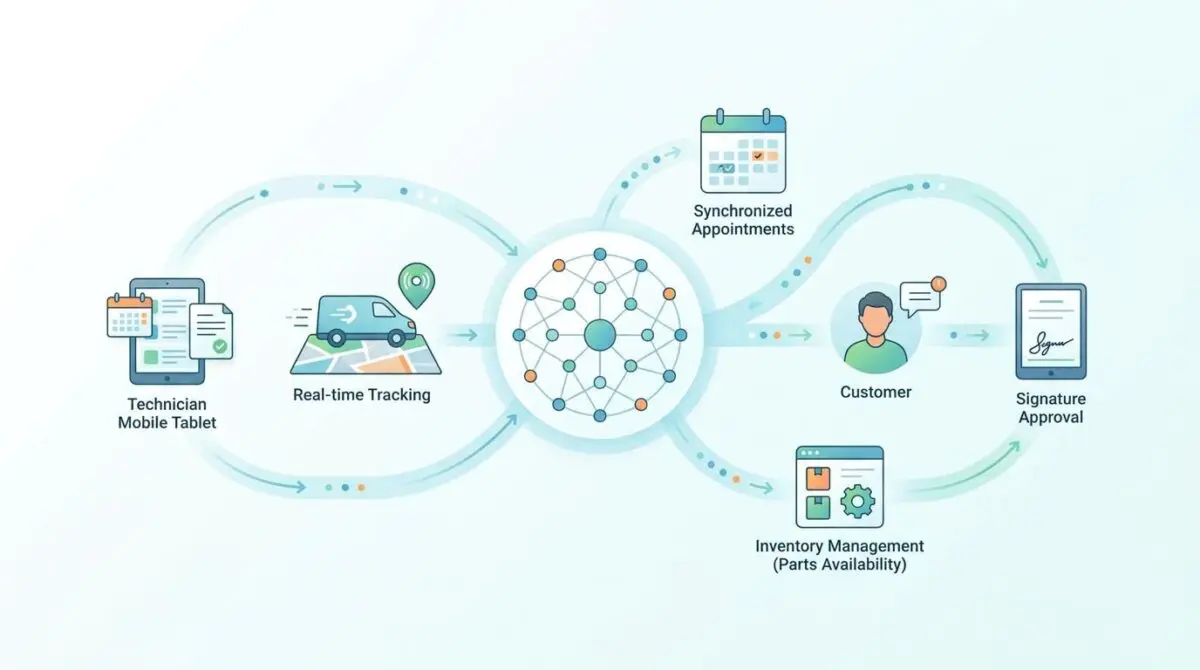
The traditional dispatcher’s dilemma involves a chaotic, high-stress environment where coordinators must manually balance hundreds of shifting service windows, sudden cancellations, and technician locations in real-time. Human dispatchers simply cannot process the sheer volume of variables required to optimize a fleet of dozens of vehicles simultaneously. This manual bottleneck inevitably leads to inefficient routing, missed appointments, and frustrated customers.
By 2026, the technological landscape is shifting from basic AI assistants to sophisticated Agentic AI systems capable of autonomous decision-making. These advanced engines do not just offer suggestions; they autonomously plan and execute multi-step resolutions without requiring human intervention. They dynamically adjust the schedule the moment a technician runs late or an emergency job is logged into the system.
Leading enterprise tools like Microsoft Dynamics 365 and Salesforce Field Service are at the forefront of this revolution. They utilize generative AI to instantly analyze real-time traffic conditions, specific technician skill sets, and current tool availability in the van. By removing the human element from complex route optimization, these platforms ensure that the right technician arrives at the right time.
Closing the Knowledge Gap Through Augmented Reality
A major friction point in field services is the knowledge gap, which occurs when field technicians encounter complex, unfamiliar equipment they haven’t been adequately trained on. When a worker cannot diagnose a specialized machine on the first try, it inevitably leads to a secondary visit. These return trips destroy profit margins, frustrate clients, and severely disrupt the following week’s schedule.
To combat this, modern FSM applications like Zuper and Totalmobile have evolved into comprehensive mobile command centers. These robust apps provide vital offline-first capabilities, ensuring that technicians working in rural areas or deep inside concrete basements never lose access to their digital tools. The ability to sync data asynchronously means work continues seamlessly regardless of cellular reception.
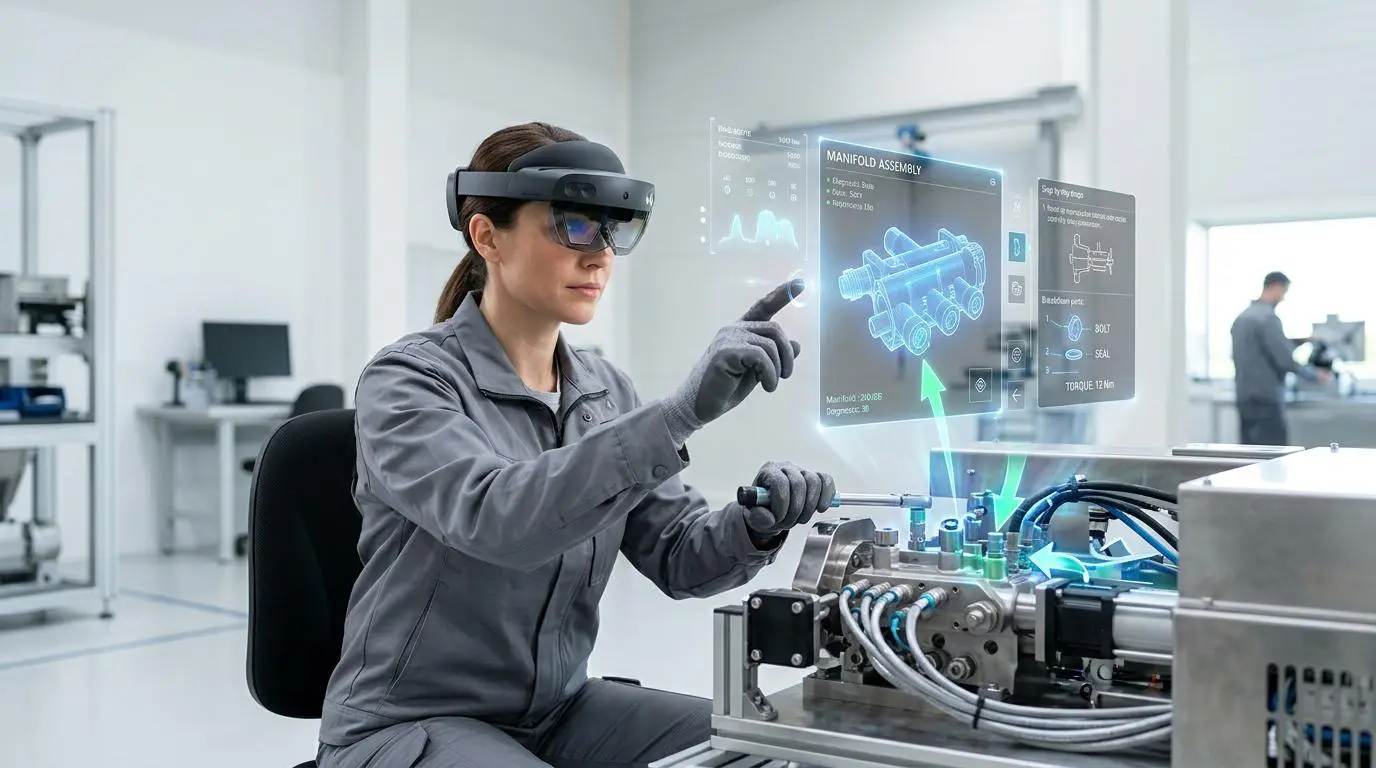
More impressively, these platforms now integrate native Augmented Reality (AR) support directly into the technician’s tablet. Field workers can launch 3D repair simulations or initiate 4K video support calls with remote senior experts back at headquarters. This real-time visual collaboration empowers junior technicians to successfully complete complex repairs on their first visit, drastically improving first-time fix rates.
Escaping the Billable Hour Trap With Outcome-Oriented Models
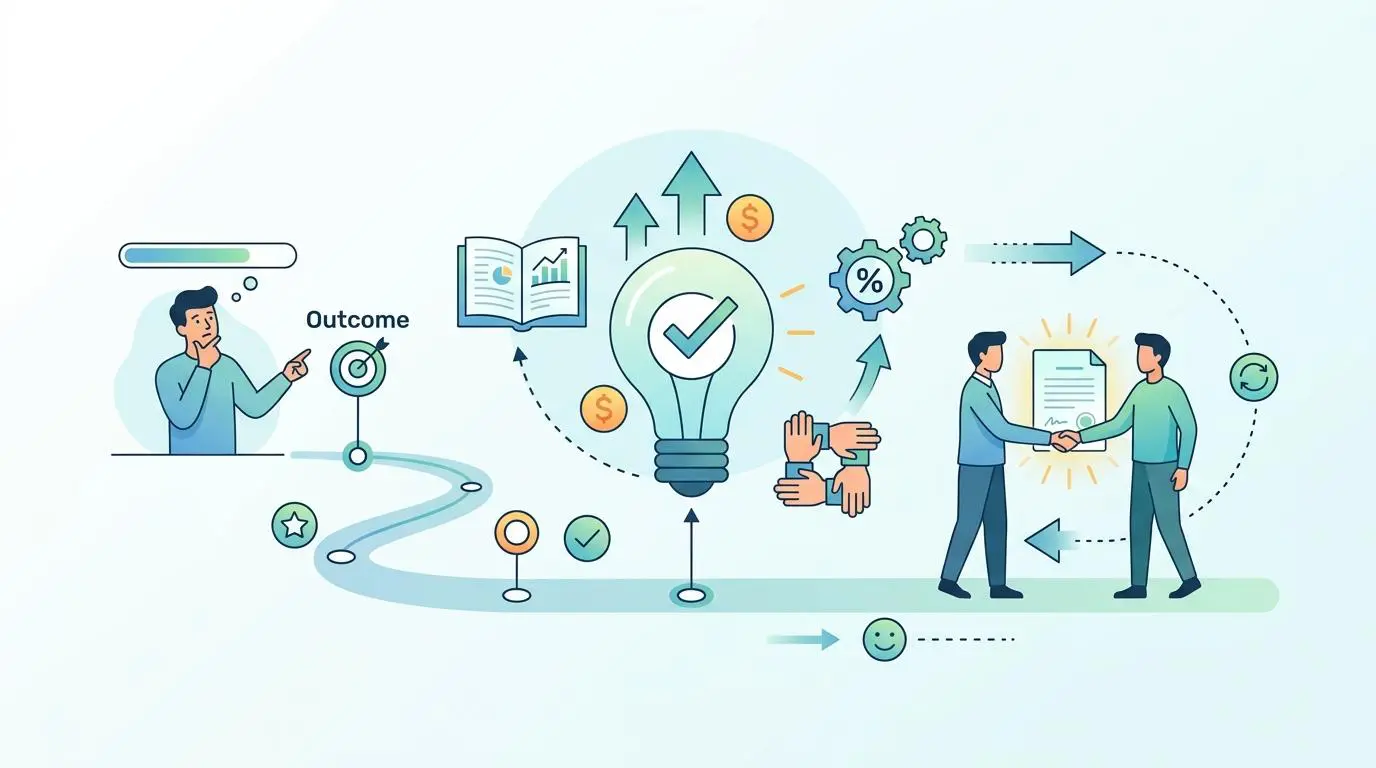
For decades, the service industry has been caught in the billable hour trap, a model that perversely incentivizes slow repairs and reactive maintenance rather than long-term asset health. When businesses only generate revenue when things break, there is little motivation to invest in preventative care. This outdated financial structure creates an adversarial relationship between the service provider and the client.
Forward-thinking industry leaders are aggressively pivoting toward outcome-oriented service models. Instead of charging for time and materials, these companies are selling guaranteed equipment uptime and optimized asset performance. By aligning the service provider’s financial goals directly with the customer’s productivity, both parties benefit from machinery that rarely experiences unexpected downtime.
Enterprise-grade platforms like SAP FSM and IFS Cloud are the technological enablers of this massive financial shift. They provide the deep analytics and predictive maintenance tracking required to confidently guarantee service level agreements (SLAs). This modern approach allows service firms to command premium pricing and secure stronger, long-term B2B contract retention.
Engineering Frictionless Workflows for the Frontline
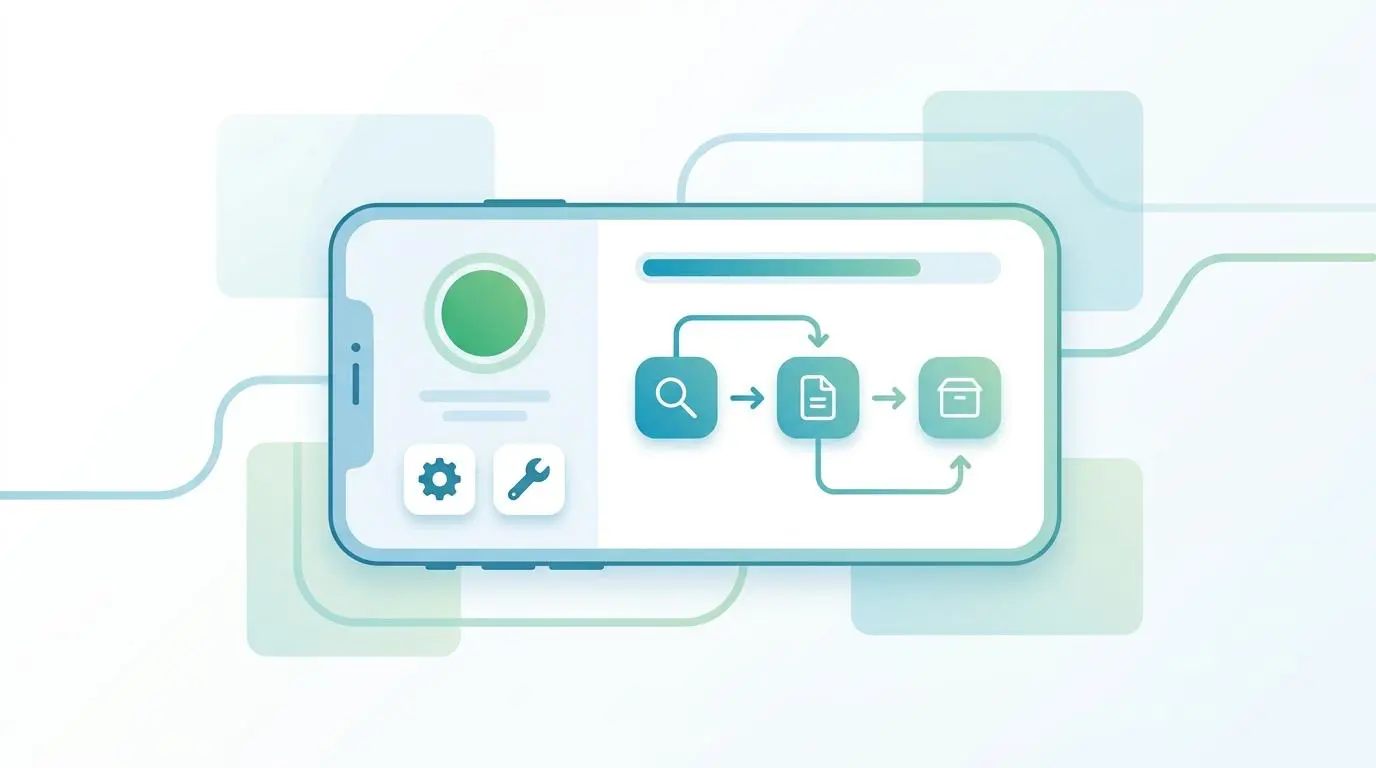
One of the most persistent hurdles in digital transformation is the inherent resistance from blue-collar workforces toward complex, data-heavy software. When an application feels like extra administrative work at the end of an exhausting physical job, technicians will actively avoid using it. Poor user experience directly leads to incomplete data, delayed invoicing, and a breakdown of the entire software investment.
Recognizing this, FSM platforms like Jobber and Housecall Pro have completely reimagined their user interfaces for 2026, moving toward intuitive tap-to-close workflows. These streamlined interfaces are specifically designed for tired hands and small screens, minimizing the number of clicks required to complete a job. The focus is entirely on removing friction from the technician’s daily routine.
These modern tools automate tedious post-job reporting and payment collection right from the driveway. By integrating features like voice-to-text job summaries and automated one-click invoicing, technicians can reduce their daily administrative time by up to 20 percent. When software actively makes a technician’s day shorter and easier, platform adoption rates naturally skyrocket.
Eliminating Fragmentation Across the Supply Chain
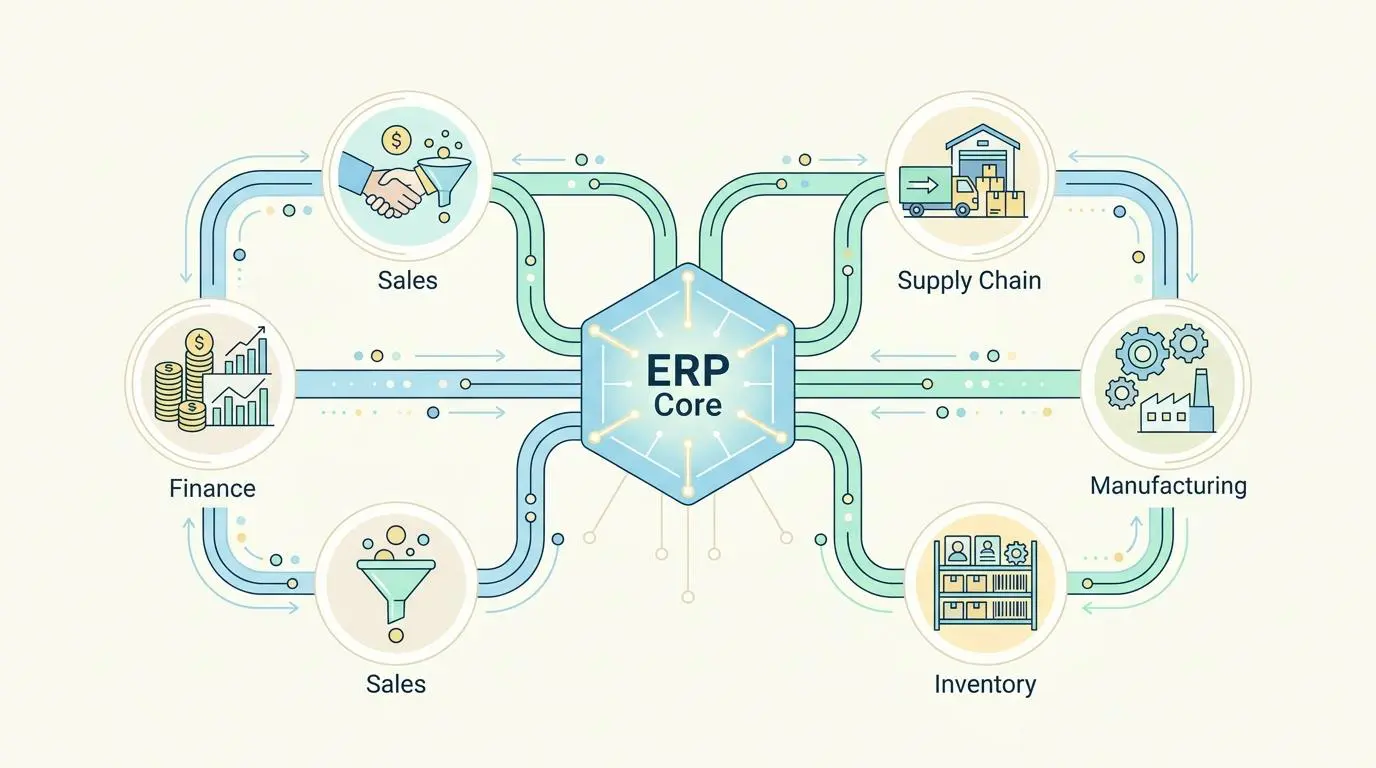
Operational fragmentation is a silent killer of service efficiency, occurring when the dispatch system fails to communicate seamlessly with the parts warehouse or the billing department. Technicians frequently arrive at a job site perfectly on time, only to realize they lack a critical five-dollar part to complete the repair. This disconnect completely negates the benefits of optimized scheduling.
To solve this, modern FSM tools rely on deep-stack integration with major ERP systems like QuickBooks, Oracle, and NetSuite. This bidirectional data flow ensures that van stock and warehouse inventory are continuously synced with 99.9 percent accuracy. Dispatchers can instantly see exactly what parts are in a specific technician’s vehicle before assigning them to a specialized work order.
According to the 2026 Salesforce IoT Maintenance Guide, the implementation of Ambient IoT standards has pushed this even further, enabling field service firms to achieve an unprecedented 99.99% inventory accuracy. By virtually eliminating the missing part delays that historically affected one-fifth of all service calls, deeply integrated FSM ecosystems ensure that every truck roll is fully equipped for success.
The Dawn of Autonomous Service Orchestration
As we look toward late 2026, the field service industry is rapidly converging on the concept of Autonomous Service Orchestration. The days of waiting for a customer to call and report a broken machine are ending. Ambient IoT sensors embedded in commercial equipment will soon have the capability to not only predict imminent mechanical failures but also trigger self-healing software protocols instantly.
When physical intervention is required, these smart systems will automatically cross-reference inventory, locate the nearest qualified technician, and dispatch them with the correct part before the customer is even aware of a system degradation. This represents the ultimate evolution of service delivery—moving from reactive firefighting to invisible, seamless maintenance.
Navigating the intersection of modern technology, software architecture, and business growth requires a sharp strategy. To future-proof your tech stack and scale with precision, connect with Andres at Andres SEO Expert.
Frequently Asked Questions
What is the invisible tax in disconnected field operations?
The invisible tax refers to the operational drain and hidden costs caused by manual dispatching and information silos. This friction results in a staggering 14 percent rate of completely unnecessary truck rolls and creates compounding delays across the service delivery lifecycle.
How much can mobile FSM apps improve technician productivity?
Industry analysis indicates that technicians utilizing integrated mobile Field Service Management (FSM) apps complete nearly 30 percent more jobs per day compared to paper-based peers. This surge is driven by instant access to job histories, digital manuals, and the elimination of manual data entry.
What is Agentic AI in the context of dispatching?
Agentic AI represents a shift from basic assistants to autonomous decision-making engines. These systems can independently plan and execute multi-step resolutions, such as dynamically adjusting a fleet’s schedule the moment a technician runs late or an emergency job is logged.
How does Augmented Reality (AR) help reduce the knowledge gap in field services?
AR integration empowers technicians to launch 3D repair simulations or initiate 4K video support calls with remote senior experts. This real-time visual collaboration allows junior workers to successfully complete complex repairs on their first visit, drastically improving first-time fix rates.
What is the advantage of outcome-based service models?
Outcome-based models replace the traditional billable hour trap with a focus on guaranteed equipment uptime. This aligns the service provider’s financial goals with the customer’s productivity, incentivizing preventative care and long-term asset health rather than reactive maintenance.
How can companies improve FSM software adoption among field technicians?
By implementing frictionless, intuitive ‘tap-to-close’ workflows and automated post-job reporting, companies can reduce a technician’s daily administrative burden by up to 20 percent. When software actively makes the workday shorter and easier, platform adoption rates naturally skyrocket.
What role does ERP integration play in field service efficiency?
Deep-stack integration with ERP systems ensures that van stock and warehouse inventory are synced in real-time. This eliminates the risk of a technician arriving at a job site without the necessary parts, a problem that historically affected one-fifth of all service calls.