Key Points
- Transitioning from monolithic systems to headless and composable architectures eliminates multi-channel content duplication.
- Composable CMS platforms leverage best-of-breed SaaS tools via APIs to create highly specialized, high-performance tech stacks.
- The future of content management relies on AI-driven orchestration to deliver zero-head data directly to IoT and multi-agent systems.
Table of Contents
- Escaping the Copy-Paste Nightmare
- The Financial Momentum Behind Modern Content Systems
- Solving the Multi-Channel Delivery Bottleneck
- The Restaurant Analogy for Content Architecture
- Transitioning to Best-of-Breed Cloud Stacks
- The Rise of Agentic Content Orchestration
- Building the Ultimate MACH Integration Ecosystem
- Preparing for Zero-Head Spatial Computing Data
- The Future of Intelligent Content Orchestration
Escaping the Copy-Paste Nightmare
Picture this scenario. Your marketing team just updated a crucial product description. Now they must manually log into a mobile app backend, a website dashboard, and a digital kiosk system just to paste the exact same text.
This is the copy-paste nightmare that paralyzes modern businesses trying to scale across multiple channels. Instead of focusing on growth, highly paid professionals are reduced to performing repetitive data entry tasks.
This operational friction stems from legacy monolithic systems. These platforms tightly couple the backend database with a single frontend presentation layer. When you are locked into this rigid structure, pushing real-time updates to non-web interfaces becomes an agonizingly slow process.
Teams are often forced to execute full-site redeployments just to fix a simple typo on a smartwatch notification.
Overcoming this bottleneck requires understanding the CMS architecture evolution from traditional to headless and composable systems. By decoupling the content repository from the presentation layer, organizations can centralize their data into a single source of truth.
This modernization strategy eliminates redundancy and secures data integrity. It also allows businesses to deploy content anywhere instantly.
The Financial Momentum Behind Modern Content Systems
Market Intelligence & Data
Global CMS Market Valuation
According to research from SQ Magazine and Mordor Intelligence, the global content management market is valued at over $33 billion as of early 2026.
Composable Tech Adoption
A 2026 MACH Alliance Enterprise Technology Report found that 92% of large organizations have now implemented or are actively adopting composable technology.
Headless CMS Growth Rate
The headless CMS segment is expanding at a compound annual growth rate of 18.85% through 2031, driven by massive omnichannel demand according to 2026 industry analysis.
The Composable Advantage
Research from the MACH Alliance in 2026 reveals that organizations with fully scaled composable architectures are 6 times more likely to achieve measurable ROI from their AI implementations.
The financial trajectory of content infrastructure highlights a massive shift away from legacy platforms toward agile, API-driven solutions. Industry analysts report that the CMS market is expected to grow at over USD 33.28 billion as of early 2026.
This valuation proves that enterprises are aggressively investing in modern architectures to eliminate deployment delays. Capital is flowing directly into systems that prioritize seamless multi-channel synchronization.
Corporate adoption rates further illustrate the urgency of this technological pivot. Recent data shows that 92% of organizations have implemented or are actively adopting composable technologies to replace their outdated monoliths.
This overwhelming majority indicates that modular software design is no longer an experimental luxury. It is now the baseline requirement for enterprise survival in a highly competitive digital landscape.
The headless CMS segment specifically is experiencing explosive growth. An 18.85 percent compound annual growth rate is projected through 2031. This surge is directly driven by the massive consumer demand for unified omnichannel experiences.
Brands simply cannot afford the technical debt of maintaining separate databases for their web, mobile, and IoT applications.
Transitioning to these advanced architectures delivers a staggering six times higher ROI for organizations scaling their AI implementations. When content is structured as clean, API-accessible data, artificial intelligence tools can process and distribute it with incredible efficiency.
This composable advantage transforms a static content repository into a dynamic, revenue-generating engine.
Solving the Multi-Channel Delivery Bottleneck
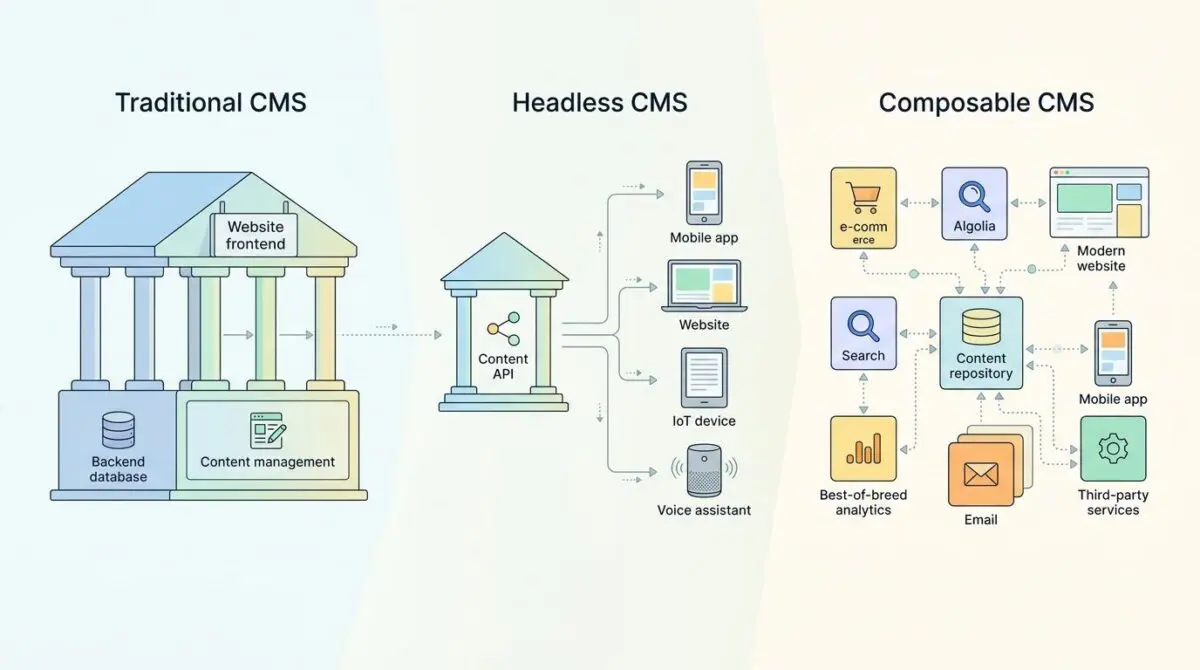
Businesses relying on legacy monoliths like traditional WordPress or Drupal face severe limitations when expanding beyond standard web browsers. The rigid coupling between the backend database and the frontend template forces development teams into a corner.
They must essentially rebuild the entire site architecture just to change how a product description appears on different platforms.
Modern headless tools like Contentful and Strapi solve this everyday problem by serving content through a centralized API hub. Instead of dictating how the information should look, the system simply delivers raw data to any connected device.
This allows a smartwatch, a digital billboard, and a mobile app to pull from the exact same text source simultaneously.
By separating the content creation workflow from the engineering deployment cycle, marketing teams gain unprecedented autonomy. They can publish updates instantly without waiting for developers to push code changes.
This architectural freedom dramatically accelerates time-to-market for new campaigns and multi-channel initiatives.
The Restaurant Analogy for Content Architecture
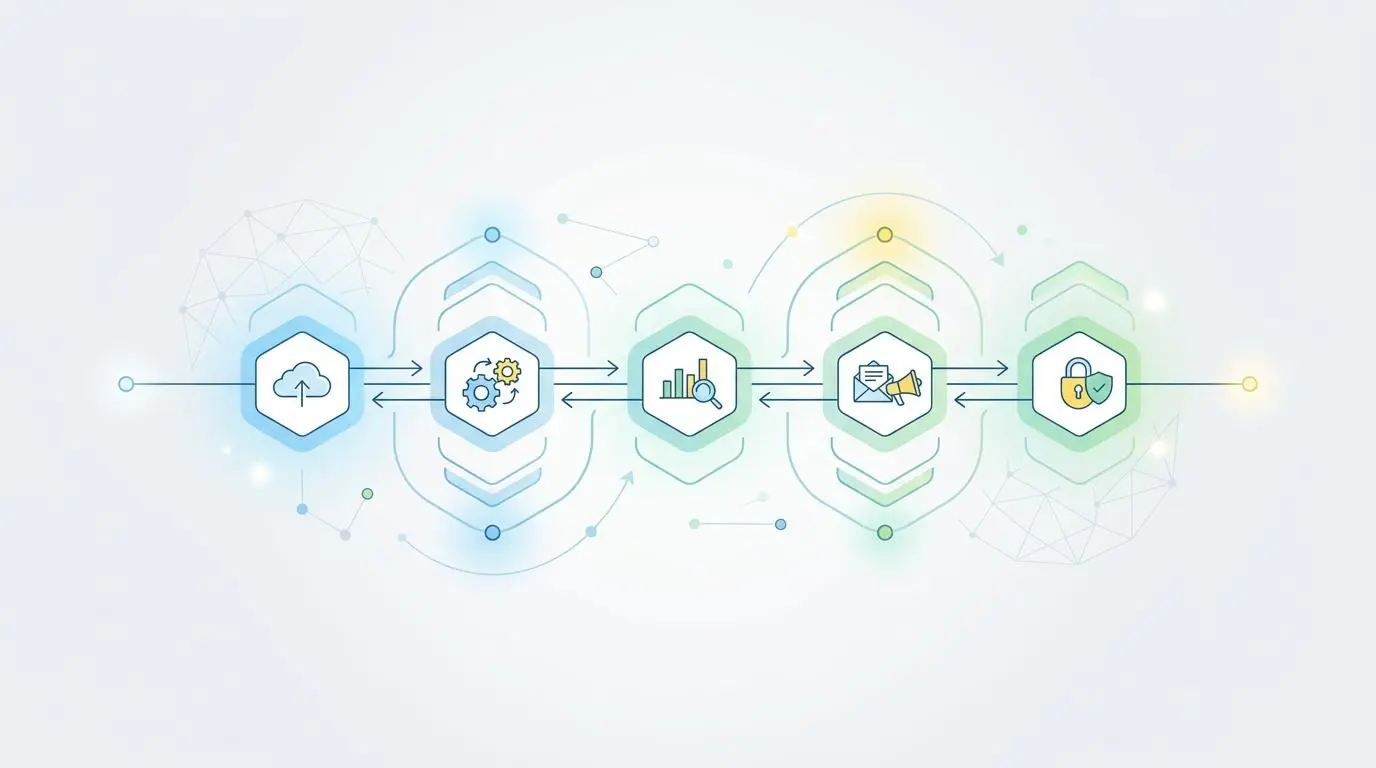
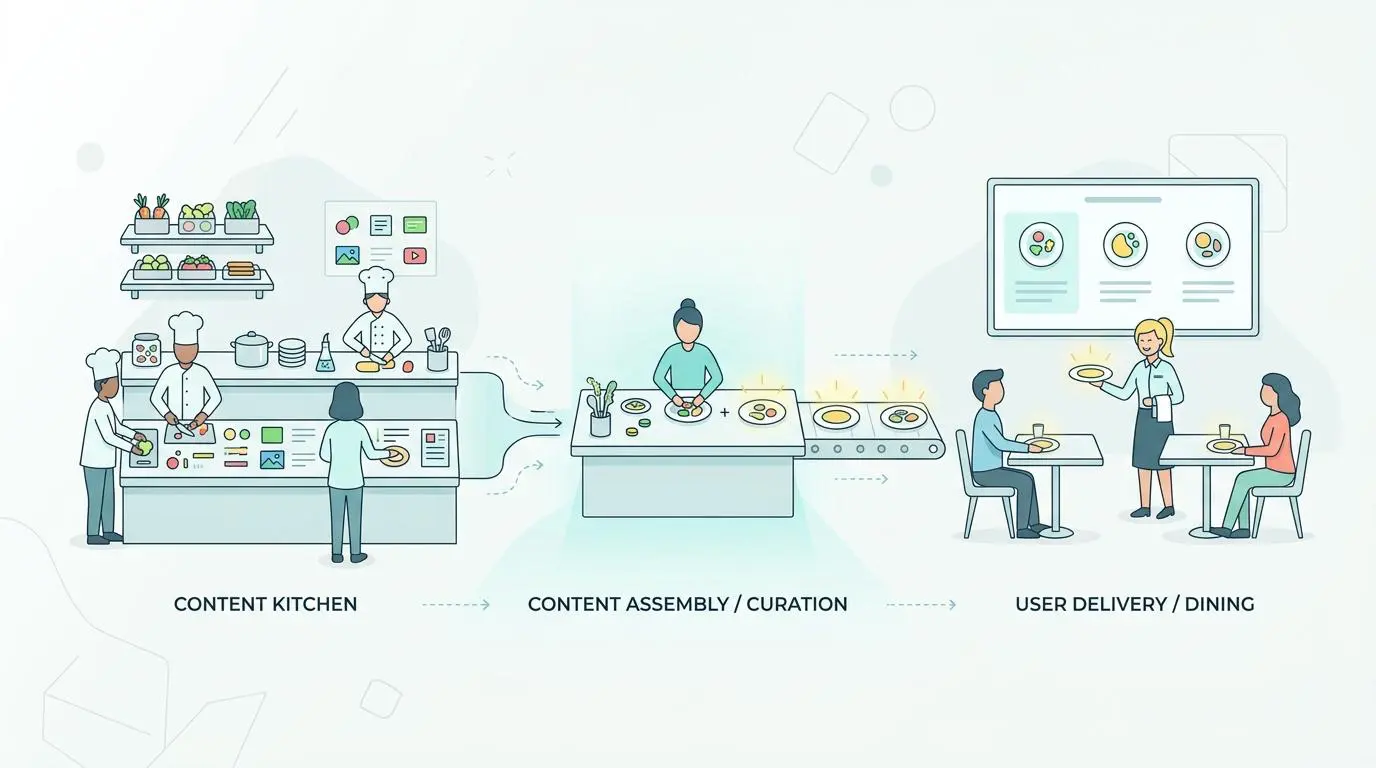
Understanding these complex systems is much easier when you compare them to the food service industry. A traditional CMS operates like a fixed-menu restaurant where you can only eat what is served on their specific plates.
You are entirely restricted by the software’s predefined templates and built-in features. If you want to serve that exact same meal at a picnic, the restaurant simply cannot accommodate you.
A headless CMS, by contrast, functions as a highly efficient ghost kitchen. It prepares the raw ingredients perfectly but allows you to deliver the final meal to any plate, house, or picnic blanket you choose.
The kitchen focuses solely on cooking the food, leaving the delivery and presentation entirely up to your specialized frontend applications.
Taking this evolution a step further, a composable CMS acts as a master pantry. Here, you source the best organic veggies, artisanal bread, and rare spices from entirely different, specialized vendors to create your own unique meal.
This prevents businesses from getting stuck with standard plates and allows them to scale by swapping out individual ingredients as their needs change.
Transitioning to Best-of-Breed Cloud Stacks
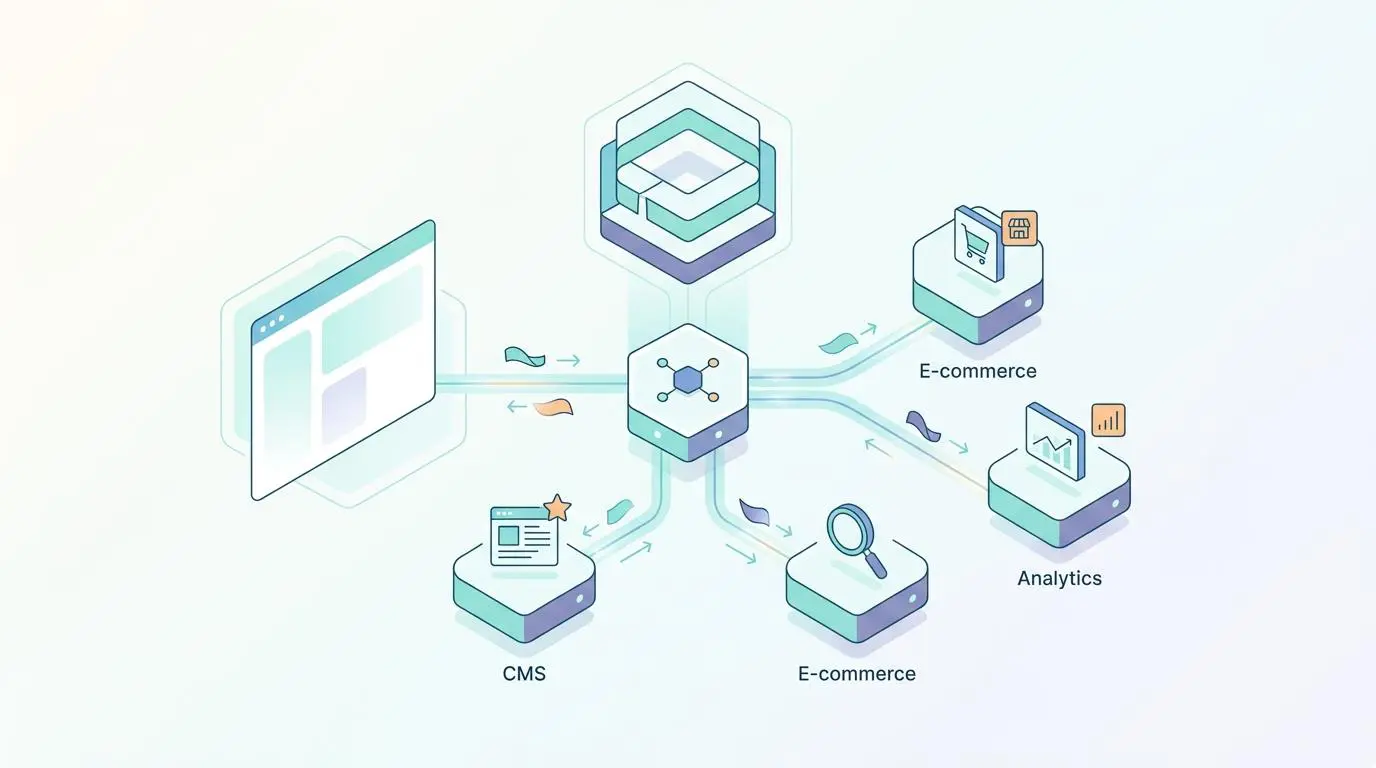
The software market has officially moved away from heavy monolithic suites that try to do everything at once. These all-in-one solutions often end up being a collection of mediocre tools wrapped in a single, expensive package.
On-premise or heavy cloud-wrapped monoliths are simply too slow to adapt to the instantaneous global synchronization required today.
Modern organizations are now embracing best-of-breed stacks where every component is specifically chosen for its superior performance. This modular approach provides several critical advantages for scaling enterprises:
- Cloud-Native Resilience: Ensures your infrastructure remains lightweight and infinitely scalable under heavy traffic.
- Omnichannel Orchestration: Empowers digital teams to push dynamic content across ten or more platforms simultaneously.
- Reduced Vendor Lock-In: Allows you to swap out underperforming software without rebuilding your entire database.
By early 2026, leveraging these cloud-native architectures has been shown to shorten campaign launch cycles by an impressive 50 percent. When you remove the friction of bloated legacy code, your digital teams can experiment, iterate, and deploy at lightning speed.
The focus shifts from managing server maintenance to actually driving business value.
The Rise of Agentic Content Orchestration

The year 2026 marks a definitive turning point with the rise of agentic CMS platforms like Contentstack and Sanity. These systems utilize autonomous AI agents to automatically generate, test, and optimize content variants for highly specific audience segments.
Manual content personalization has become impossible to scale. This makes AI-driven orchestration the only viable path forward.
Managing millions of dynamic content nodes requires a system that can think and adapt in real time. AI agents do not just fetch data. They actively rewrite and localize text based on the user’s geographic location, device type, and past behavior.
This creates a hyper-personalized user journey without requiring an army of copywriters to draft endless variations.
The financial impact of this smart integration is already transforming enterprise balance sheets. For example, AI-driven experience clouds added hundreds of millions in annualized recurring revenue in recent years by automating these exact optimization processes.
Intelligent orchestration turns a passive database into an active participant in your sales funnel.
Building the Ultimate MACH Integration Ecosystem
A truly composable architecture relies heavily on the MACH Alliance principles. These stand for Microservices, API-first, Cloud-native, and Headless. This framework ensures that your CMS fits perfectly with highly specialized external tools rather than relying on clunky built-in plugins.
You can seamlessly connect Algolia for lightning-fast search and Shopify for robust commerce within the exact same ecosystem.
Relying on all-in-one software inevitably creates technical debt. Those platforms often perform poorly in specialized areas like search functionality or secure checkouts. This poor performance directly degrades the end-user experience and lowers conversion rates.
The MACH approach eliminates this risk by allowing you to plug in the absolute best tool for every single job.
The MACH Alliance recently launched the Agent Ecosystem, a new interoperability standard that pushes this concept even further. This standard allows different SaaS tools to share AI agents and data via the Model Context Protocol.
This effectively makes a company’s tech stack act as a single, intelligent brain. Your search engine, commerce platform, and CMS now communicate autonomously to optimize the entire customer journey.
Preparing for Zero-Head Spatial Computing Data
Looking toward late 2026 and beyond, the technological horizon is shifting rapidly toward zero-head content delivery. In this model, information is consumed directly by AI large language models and multi-agent systems rather than human eyes on a screen.
The content generates spatial computing experiences for augmented reality and voice-activated commerce without requiring a traditional visual interface.
This represents a massive transition from being a mobile-first organization to becoming an AI-agent-first enterprise. To survive this shift, your content must be strictly structured as clean data rather than just formatted text on a web page.
If your database is cluttered with HTML tags and rigid templates, AI models simply cannot parse or utilize your information effectively.
Preparing for this future means adopting a composable architecture today so your data is ready for the devices of tomorrow. Whether your customers are using smart glasses or relying on autonomous purchasing bots, your content must be ready to serve them instantly.
Structuring your digital assets as pure data is the ultimate future-proofing strategy.
The Future of Intelligent Content Orchestration
By the end of 2026, the entire CMS market will complete its pivot from basic content management to holistic intelligence orchestration. Organizations will rely on fully autonomous AI agents that seamlessly fetch, rewrite, and deliver localized data across complex multi-agent commerce ecosystems.
The days of manually publishing static web pages are rapidly coming to an end.
Embracing this evolution guarantees that your business remains agile enough to dominate new digital touchpoints as they emerge. A composable foundation ensures you are never locked into outdated technology or restricted by vendor limitations.
You gain the ultimate freedom to adapt, innovate, and scale without friction.
Navigating the intersection of modern technology, software architecture, and business growth requires a sharp strategy. To future-proof your tech stack and scale with precision, connect with Andres at Andres SEO Expert.
Frequently Asked Questions
What is the difference between a traditional CMS and a headless CMS?
A traditional CMS couples the backend database with a single frontend presentation layer, restricting content to specific templates. In contrast, a headless CMS decouples these layers, delivering raw content through an API to any device, allowing for seamless omnichannel distribution across websites, mobile apps, and IoT devices.
Why are organizations switching to composable architecture in 2026?
Market data shows that 92% of large organizations are adopting composable technology to eliminate the manual effort of cross-platform updates. Composable systems allow businesses to select best-of-breed tools for specific functions, resulting in 50% shorter campaign launch cycles and a more resilient, scalable digital infrastructure.
How does a headless CMS improve the ROI of AI implementations?
According to 2026 industry research, organizations with composable foundations see a 6x higher ROI on AI. This is because headless systems provide clean, structured, and API-accessible data that autonomous AI agents can easily parse, personalize, and distribute without the technical friction of legacy code.
What are the core components of a MACH architecture?
MACH stands for Microservices, API-first, Cloud-native, and Headless. This architectural framework ensures that a CMS can integrate with specialized external tools (like Algolia for search or Shopify for commerce) rather than relying on bloated, all-in-one monolithic plugins that often create technical debt.
What is Agentic Content Orchestration?
Agentic Content Orchestration involves using autonomous AI agents within platforms like Contentstack or Sanity to automatically generate, test, and optimize content. These agents go beyond simple data fetching by actively rewriting and localizing text in real-time based on user behavior and geographic data.
How does content architecture prepare for Zero-Head spatial computing?
Zero-Head content delivery moves away from visual screens toward AI models and spatial computing (AR/voice). By structuring content as pure, tag-free data today, businesses future-proof their assets so they can be consumed by autonomous purchasing bots and augmented reality systems in the near future.