




Key Points
- Eliminating the Monolithic Drag: Transitioning to a Composable MACH Architecture frees up the 71% of IT budgets typically wasted on legacy system maintenance.
- Accelerating Feature Velocity: Adopting a best-of-breed mesh allows businesses to integrate specialized tools via unified APIs, enabling teams to release new features 40% faster.
- Unlocking AI and Zero-Copy: Modern composable stacks leverage event-driven orchestration and agentic AI to automate complex workflows and eliminate massive data preparation taxes.
Table of Contents
- The Invisible Cost of the Monolithic Drag
- The Data Driving the Composable Revolution
- Shifting to a Best-of-Breed Mesh
- Unlocking Agentic AI Orchestration
- Reclaiming Wasted Spend with Zero-Copy
- Debunking the Microservices Myth
- Mastering Granular Scaling for Traffic Spikes
- Conquering Integration Hell with Event-Driven Meshes
- The Dawn of Autonomous Self-Healing Systems
The Invisible Cost of the Monolithic Drag
The invisible tax of maintaining a massive, all-in-one software suite quietly drains your IT budget and stifles innovation.
Up to 71% of IT budgets are consumed just keeping these rigid legacy systems alive. Integrating a modern AI agent or scaling a single checkout feature forces you to risk total system failure. It is like trying to upgrade an airplane engine while still in flight.
A Composable MACH Architecture steps in to stop this operational bleeding. Breaking down the monolith into Microservices, API-first, Cloud-native, and Headless components lets you swap out individual parts safely. It is the ultimate strategy to modernize, secure, and scale your operations seamlessly.
The Data Driving the Composable Revolution
Market Intelligence & Data
The Strategic Standard
According to the 2026 MACH Alliance annual research, 91% of IT decision-makers now view composable technology as instrumental to the success of their organization.
Feature Velocity Boost
Data-backed analysis from Swell in 2026 reveals that organizations using composable architectures release new features 40% faster than those on legacy platforms.
The Legacy Trap
A 2026 industry report shows that companies with over 75% legacy monolithic infrastructure are forced to spend 71% of their entire IT budget on maintenance and upgrades.
AI Agent Adoption
Forrester’s 2026 Enterprise Software report predicts that 40% of all enterprise applications will feature task-specific AI agents by the end of the year.
The overwhelming consensus among technology leaders is that modularity is no longer optional. According to the MACH Alliance annual research, an astonishing 91% of IT decision-makers view composable technology as the fundamental backbone of organizational success. This shift highlights a massive departure from vendor lock-in, empowering businesses to build highly customized tech stacks.
This strategic pivot directly translates into raw operational speed. Data-backed analysis reveals that organizations leveraging composable architectures release new features 40% faster than competitors stuck on legacy platforms. Instead of waiting months for a monolithic system update, development teams deploy isolated improvements in a matter of days.
Conversely, the financial penalty for ignoring this evolution is staggering. Companies operating with over 75% legacy monolithic infrastructure are forced to spend 71% of their IT budget strictly on maintenance. This monolithic drag starves the innovation budget, leaving businesses paying a premium just to keep the lights on.
The urgency to escape this trap is further amplified by the rapid rise of artificial intelligence. The 2026 Enterprise Software report predicts that 40% of all enterprise applications will feature task-specific AI agents soon. Monolithic systems simply cannot support the decoupled data access required by these advanced AI tools.
Shifting to a Best-of-Breed Mesh

Legacy suites force businesses to use mediocre sub-tools bundled within high-cost contracts. This all-in-one approach stifles innovation in specific departments that desperately need specialized capabilities.
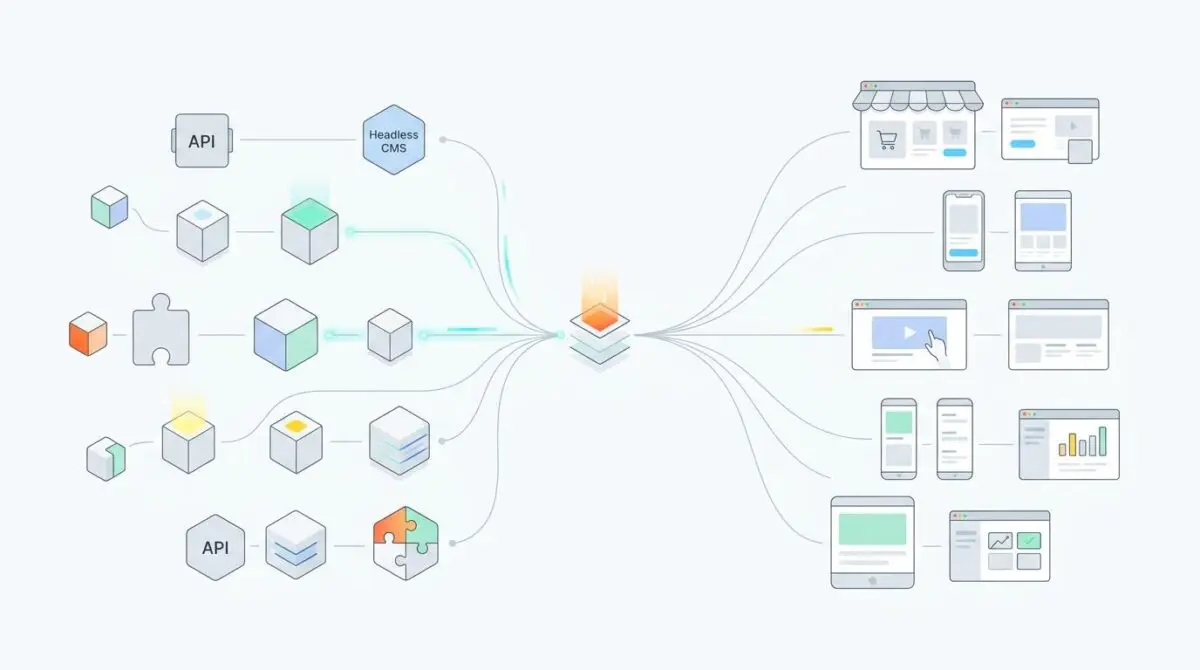
The industry is moving rapidly away from these rigid implementations toward a flexible best-of-breed mesh. Companies are abandoning bloated monolithic platforms in favor of unified API layers that connect the best available software for each task.
Modern organizations now use tools like Contentful for headless CMS, Algolia for lightning-fast search, and BigCommerce for streamlined checkout. Linking these specialized platforms creates a tailored ecosystem that easily outperforms any single legacy suite.
Unlocking Agentic AI Orchestration
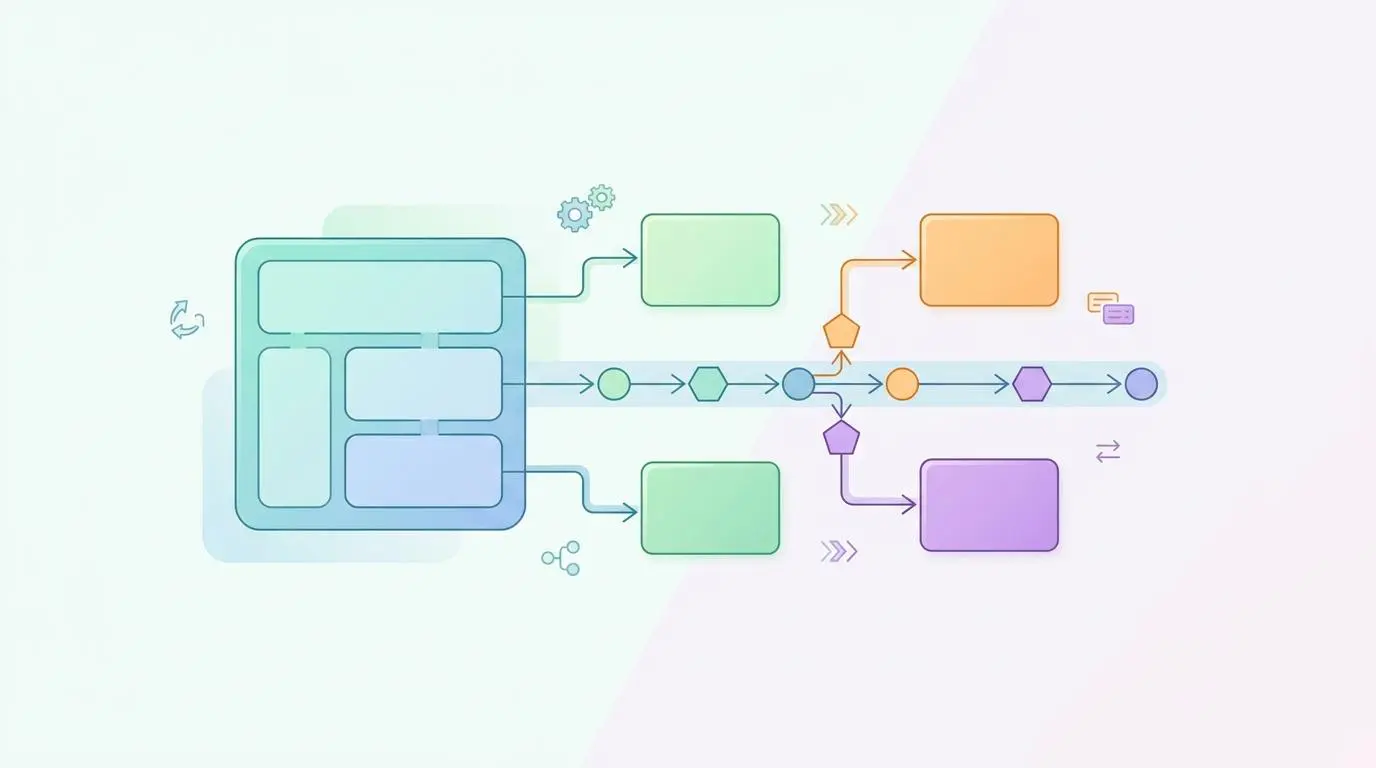
Agentic AI Orchestration is a defining technological breakthrough for modern enterprises. However, legacy monoliths trap commercial data in isolated silos, making it impossible for AI agents to access the clean data needed for automated reasoning.
New frameworks like the Model Context Protocol are actively breaking down these barriers. They allow intelligent AI agents to seamlessly navigate across decoupled services, bridging the gap between SaaS, ERP, and CRM platforms.
These agents can now execute complex workflows autonomously without relying on human middleware. This level of smart feature integration is only possible when your architecture rests on a solid composable foundation.
Reclaiming Wasted Spend with Zero-Copy
High capital expenditure for monolithic upgrades creates a dangerous sunk cost fallacy. This psychological trap blocks organizations from adopting more efficient, pay-as-you-go modular services.
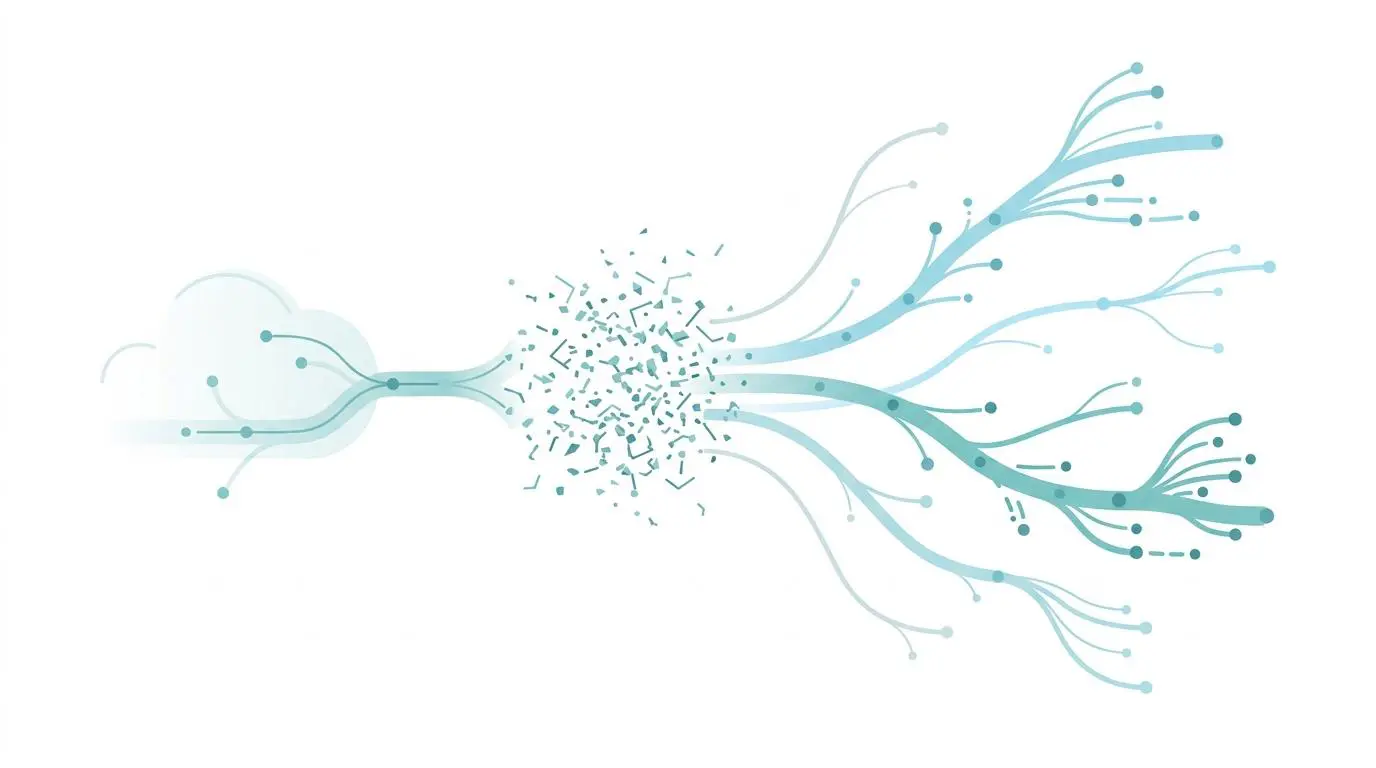
A major cost-sink identified in recent industry analysis is the massive data preparation tax. Monolithic systems force data professionals to spend 80% of their time simply cleaning and moving data between rigid silos.
Forward-thinking financial leaders are prioritizing Zero-Copy Architecture to reclaim this wasted spend. Bringing AI models directly to the data eliminates the preparation tax entirely, helping transitioning organizations easily exceed their ROI expectations.
Debunking the Microservices Myth

Recent technology resets have finally debunked the myth that microservices are the only viable alternative to monoliths. Over-engineering a system into hundreds of microservices often creates an integration debt more expensive to manage than the original monolith.
The modular monolith has emerged as a highly pragmatic middle ground for many growing businesses. It offers the structural benefits of shared databases while strictly enforcing clear module boundaries.
This hybrid approach allows development teams to modernize their architecture at a sustainable pace. It effectively helps organizations avoid the complex distributed monolith trap entirely.
Mastering Granular Scaling for Traffic Spikes
Scaling a legacy monolith requires duplicating the entire application across servers. This happens even if only one small feature is under heavy load, resulting in massive cloud resource waste.
Modern composable stacks solve this inefficiency through highly granular scaling. This allows businesses to allocate server power precisely where it is needed without overspending on idle infrastructure.
E-commerce giants now use serverless functions to scale only their checkout and inventory modules during flash sales. They keep the rest of the site resources flat, ensuring high performance while saving significant operational costs.
Conquering Integration Hell with Event-Driven Meshes
Adopting multiple specialized vendors often results in a frustrating integration hell. This occurs when the engineering cost of making different tools talk to each other exceeds the actual value of the tools themselves.
New global standards for API governance have been established to eliminate this friction entirely. These modern standards ensure that decoupled systems can communicate securely and efficiently across the board.
Advanced event-driven orchestration tools now provide seamless connectivity between services. This technology ensures different vendor modules communicate in real-time with minimal latency, creating a perfectly synchronized digital ecosystem.
The Dawn of Autonomous Self-Healing Systems
The evolution of the composable stack is rapidly moving toward autonomous self-healing meshes. We are entering an era where software architecture actively monitors and repairs itself in real-time.
AI-driven orchestration layers will soon not only connect APIs but autonomously swap out underperforming third-party modules. Imagine a system automatically switching payment gateways based on real-time transaction success rates, all without human intervention.
Navigating the intersection of modern technology, software architecture, and business growth requires a sharp strategy. To future-proof your tech stack and scale with precision, connect with Andres at Andres SEO Expert.
Frequently Asked Questions
What is the primary disadvantage of a monolithic software architecture?
The primary disadvantage is the “monolithic drag,” where legacy systems consume up to 71% of IT budgets just for maintenance. This rigid structure makes it difficult to integrate modern features like AI agents without risking total system failure.
What does MACH architecture stand for and why is it important?
MACH stands for Microservices, API-first, Cloud-native, and Headless. It is a strategic standard that 91% of IT decision-makers view as essential for organizational success, allowing businesses to build flexible, customized tech stacks without vendor lock-in.
How much faster can companies release features using composable architecture?
According to 2026 data analysis, organizations leveraging composable architectures release new features 40% faster than those on legacy platforms by deploying isolated improvements to specific microservices instead of waiting for full system updates.
Why is a composable stack necessary for AI agent adoption?
Legacy monoliths trap data in isolated silos, preventing AI agents from accessing the clean data required for reasoning. A composable foundation is mandatory to support the decoupled data access needed for the 40% of enterprise applications expected to feature AI agents by the end of 2026.
What is the difference between microservices and a modular monolith?
While microservices break a system into many small, independent services, a modular monolith is a pragmatic middle ground that offers structural benefits like shared databases while enforcing strict module boundaries to avoid complex integration debt.
How does Zero-Copy Architecture reduce operational costs?
Zero-Copy Architecture eliminates the “data preparation tax,” where data professionals spend 80% of their time cleaning and moving data between silos. By bringing AI models directly to the data, 93% of transitioning organizations meet or exceed their ROI expectations.
What are autonomous self-healing systems in software architecture?
Emerging by late 2026, these are AI-driven orchestration layers that actively monitor and repair themselves. They can autonomously swap out underperforming third-party modules, such as switching payment gateways in real-time based on success rates.