




Key Points
- Latent Space Scripting accelerates legacy system interactions by predicting UI states before they render.
- Functional Anchoring ensures autonomous agents operate strictly within corporate compliance boundaries.
- Hyper-Specific Sovereign Models will soon replace generic workflows using private synthetic data.
Table of Contents
The Amnesia Bottleneck
Imagine hiring a brilliant executive assistant who forgets their employer every time they enter a new room. This is exactly what happens when enterprise AI systems suffer from contextual drift. As autonomous agents move across decoupled corporate SaaS applications, they lose their state-awareness.
They forget previous steps, misplace data context, and ultimately fail to complete complex workflows. This digital amnesia creates a massive bottleneck for organizations trying to scale automation. The solution to this frustrating friction is the OpenAI Agentic Enterprise Framework.
Instead of treating every software interaction as a blank slate, this architecture maintains a persistent memory thread across your entire tech stack. It acts as the central nervous system for your digital workforce. By anchoring context deeply into the reasoning process, the framework ensures multi-step tasks are executed flawlessly.
Metrics Driving Automation ROI

To truly understand the value of this framework, we must look at the underlying performance metrics driving operational return on investment. The GAIA General AI Assistants benchmark recently revealed that GPT-5 achieved a staggering 94% success rate in reasoning accuracy. This represents a massive 20% jump over the previous GPT-4o model.
This leap in cognitive reliability perfectly complements the deployment of the Operator agent for browser-based tasks. With near-perfect reasoning, agents can now navigate unpredictable software interfaces without human intervention. The days of automated bots getting stuck on a simple pop-up window are finally over.
Furthermore, the cost of running these advanced models has plummeted, making enterprise-wide deployment highly feasible. As of March 2026, the inference efficiency for GPT-5-Turbo dropped to just $0.10 per one million output tokens. This dramatic reduction in operational expense is directly tied to the hardware innovations within the Stargate AI infrastructure project.
Cheaper compute means enterprises can deploy thousands of agents simultaneously without breaking their IT budgets. AI is no longer an experimental luxury. It is a cost-effective utility powering daily operations.
Architecting Agentic Workflows
Scaling AI across an enterprise requires more than just a smart chatbot. It demands a robust architecture capable of handling dynamic environments, securing proprietary data, and processing complex multimodal inputs.
Orchestrating Autonomous Digital Teams

Traditional Robotic Process Automation tools are notoriously rigid. They rely on fixed screen coordinates and break the moment a user interface changes. OpenAI’s approach completely bypasses this semantic inflexibility through advanced multi-agent orchestration.
At the heart of this shift is a breakthrough known as Latent Space Scripting. Instead of waiting for a web page to load, the model actually predicts the next state of a software UI before it renders. This allows the framework to interact with legacy systems up to three times faster than human clicks.
To keep these high-speed agents in check, the system utilizes functional anchoring. This ensures that agents remain strictly within corporate compliance boundaries during autonomous navigation. Global teams can now synchronize high-frequency state changes without worrying about agents executing unauthorized actions.
Cooling The Compute Crisis
Real-time agentic reasoning requires massive amounts of processing power. Many enterprises quickly hit compute quotas, where regional GPU availability throttles their automated workflows. This bottleneck forces a strategic shift toward model distillation, allowing lighter models to run efficiently on local edge nodes.
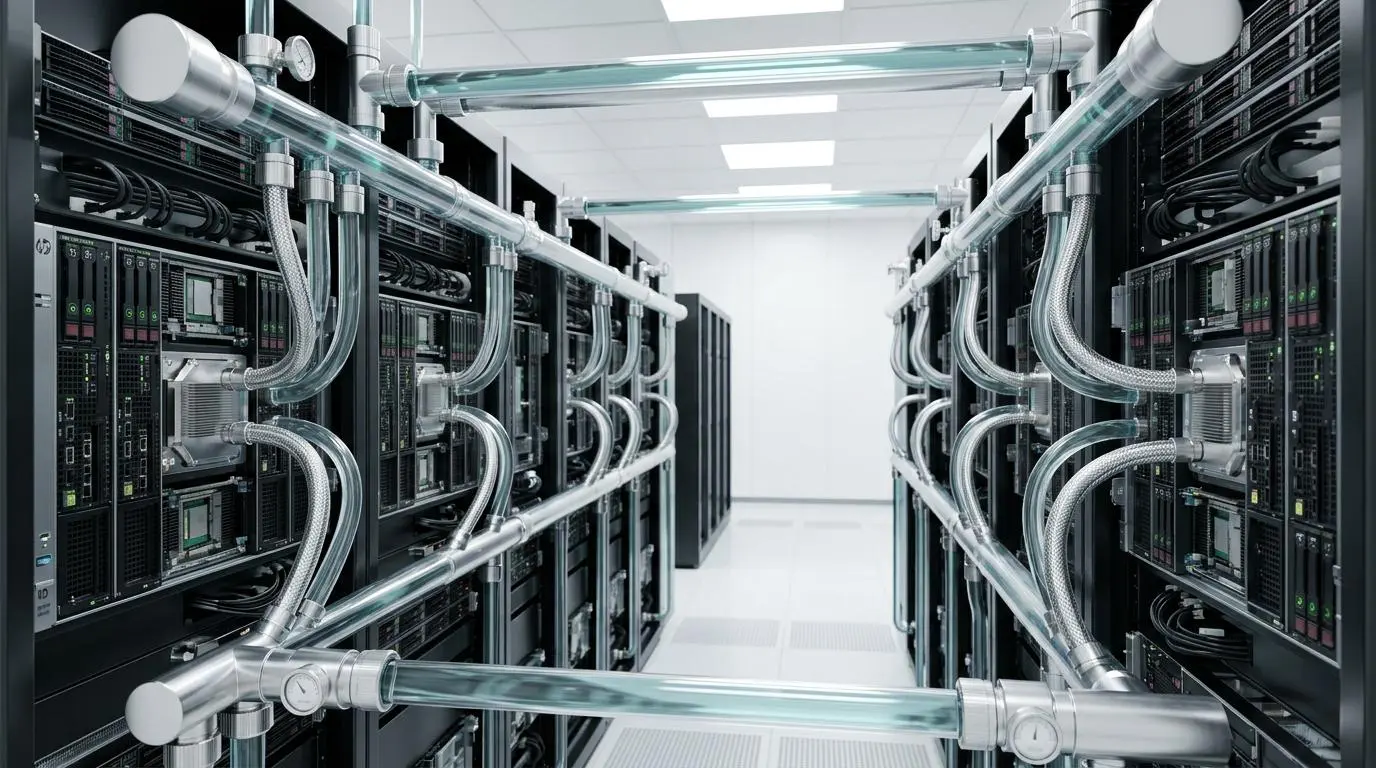
To address the macro-level compute crisis, OpenAI has heavily invested in hardware optimization. Their phase one integration with Azure utilizes advanced liquid cooling for massive H200 and B200 server clusters. Think of it like upgrading the radiator on a high-performance race car.
This infrastructure upgrade aims for a 40% reduction in Power Usage Effectiveness for inference-heavy workloads. By cooling the hardware more efficiently, data centers can push more tokens per second. This ensures your digital workforce never slows down during peak operational hours.
Securing The Reasoning Engine

Chief Information Security Officers are naturally hesitant to grant write-access to AI agents. The lack of deterministic audit trails in non-linear reasoning paths makes security teams incredibly nervous. If an agent can click anything, it can potentially break anything.
Enter the Preparedness Framework 2.0. This vital security update introduces automated red-teaming specifically designed to prevent agentic hijacking. It relentlessly stress-tests models against malicious prompt injections that act like digital con artists trying to trick the AI.
By simulating attacks that attempt to exfiltrate proprietary vector data, the framework hardens the agent’s internal defenses. Enterprises can finally deploy autonomous workflows with full confidence. Every action is mathematically secured, bounded by policy, and fully auditable.
Vision Models In The Industrial Loop
Generative workflows are no longer limited to text and code. The release of GPT-5-Vision introduces temporal video understanding to the enterprise toolkit. Agents can now analyze hours of continuous security footage or industrial sensor data in real-time.
This multimodal capability allows AI to generate highly accurate predictive maintenance reports before a machine even breaks down. It is like giving the AI a photographic memory of the entire factory floor. However, the massive VRAM requirement for processing high-resolution video streams has historically created a steep cost barrier.
By leveraging the optimized inference costs and advanced cooling infrastructures mentioned earlier, this barrier is rapidly dissolving. Mid-sized industrial companies can now run continuous visual analysis without needing a multimillion-dollar supercomputer on-site.
The Sovereign Model Horizon
The era of generic, one-size-fits-all AI is rapidly coming to an end. By 2027, the enterprise ecosystem will shift entirely toward hyper-specific sovereign models. OpenAI will provide a foundational world model, which enterprises will then fine-tune entirely on private, synthetic data.
This evolution will create legally-indemnified digital employees that perfectly understand your unique corporate DNA. The contextual drift and amnesia of today will be replaced by the hyper-focused, autonomous precision of tomorrow.
Navigating the intersection of Enterprise AI, infrastructure scaling, and workflow automation requires a sharp strategy. To future-proof your company’s AI operations and scale with precision, connect with Andres at Andres SEO Expert.
Frequently Asked Questions
What is the “Amnesia Bottleneck” in enterprise AI?
The amnesia bottleneck refers to contextual drift where autonomous agents lose state-awareness when moving between decoupled SaaS applications. The OpenAI Agentic Enterprise Framework solves this by maintaining a persistent memory thread across the entire tech stack, ensuring multi-step tasks are executed without losing context.
How does GPT-5 reasoning accuracy compare to previous models?
Based on the GAIA General AI Assistants benchmark, GPT-5 reached a 94% success rate in reasoning accuracy. This is a 20% increase over the GPT-4o model, providing the cognitive reliability necessary for agents to navigate unpredictable software interfaces autonomously.
What is Latent Space Scripting and how does it improve automation?
Latent Space Scripting is a technique where the AI model predicts the next state of a software user interface before it even renders. This allows the OpenAI framework to interact with legacy systems up to three times faster than human clicks, bypassing the semantic inflexibility of traditional RPA tools.
How does the Preparedness Framework 2.0 protect against agentic hijacking?
The Preparedness Framework 2.0 utilizes automated red-teaming designed specifically to prevent prompt injections and agentic hijacking. It simulates digital attacks to harden internal defenses, ensuring that autonomous workflows remain within compliance boundaries and are fully auditable.
What makes enterprise-wide AI deployment cost-effective in 2026?
As of March 2026, inference costs for GPT-5-Turbo have plummeted to $0.10 per one million output tokens. This efficiency is supported by hardware innovations in the Stargate AI project and liquid-cooled Azure server clusters, significantly reducing the IT budget required for thousands of simultaneous agents.
How does GPT-5-Vision assist in industrial sensor and video analysis?
GPT-5-Vision provides temporal video understanding, enabling real-time analysis of security footage and industrial sensor data. This allows for predictive maintenance reports and photographic-level memory of factory floors, now feasible for mid-sized companies due to optimized inference costs and cooling infrastructure.