Executive Summary
- A data lake is a centralized, scalable repository that stores vast amounts of raw data in its native format, including structured, semi-structured, and unstructured types.
- In the context of AI, data lakes serve as the primary ingestion layer for training Large Language Models (LLMs) and powering Retrieval-Augmented Generation (RAG) systems.
- Effective data lake management is critical for Generative Engine Optimization (GEO), as it ensures data freshness, provenance, and accessibility for AI crawlers and agents.
What is Data Lake?
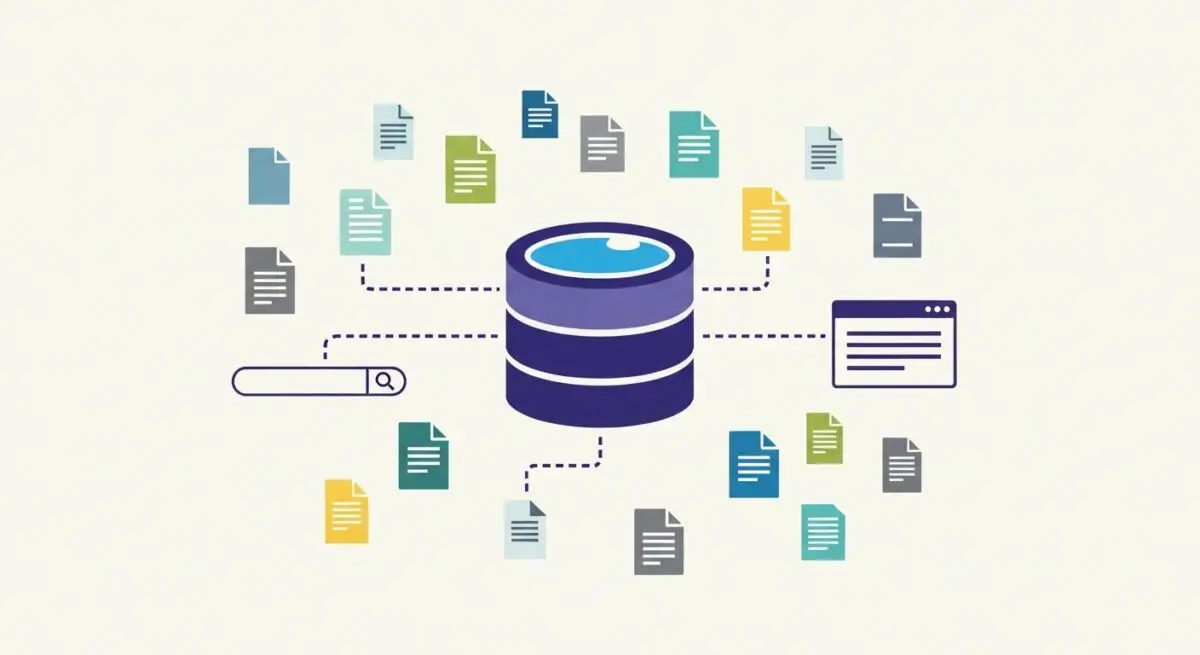
A data lake is a centralized storage repository designed to hold vast quantities of raw data in its native format until it is needed for processing or analysis. Unlike traditional data warehouses, which require data to be structured and transformed before ingestion (schema-on-write), a data lake employs a schema-on-read approach. This allows for the storage of structured data (relational databases), semi-structured data (JSON, XML, logs), and unstructured data (PDFs, images, audio, video) without the immediate need for predefined data models.
From an architectural standpoint, data lakes are built on highly scalable distributed file systems or object storage services, such as Amazon S3, Azure Data Lake Storage (ADLS), or Google Cloud Storage. They provide the foundational infrastructure for big data analytics, machine learning (ML), and artificial intelligence (AI) workflows. By decoupling storage from compute, data lakes enable organizations to cost-effectively store petabytes of information that can be later refined into high-quality datasets for training neural networks or populating vector databases.
The Real-World Analogy
Imagine a massive, high-tech recycling center that accepts every type of material imaginable—paper, plastic, metal, electronics, and glass—without requiring you to sort them first. Instead of spending time categorizing every item at the gate, you simply dump everything into a giant, secure warehouse. When a manufacturer needs specific materials to build a new product, they send in specialized robots to identify, extract, and process exactly what they need at that moment. The warehouse is the data lake; it preserves the raw potential of all materials until a specific use case defines their value.
Why is Data Lake Important for GEO and LLMs?
For Generative Engine Optimization (GEO) and the development of LLMs, the data lake represents the “source of truth” from which AI models derive knowledge. LLMs require massive, diverse datasets to understand context, nuances, and entity relationships. A well-maintained data lake ensures that the data used for pre-training or fine-tuning is comprehensive and representative. Furthermore, in Retrieval-Augmented Generation (RAG) architectures, the data lake acts as the backend repository that provides the contextually relevant documents that an AI agent retrieves to answer user queries accurately.
In the era of AI-Search, the ability of an AI agent to attribute information to a specific source depends on how that data is indexed and stored within these lakes. If a brand’s technical documentation, whitepapers, and product data are stored in a fragmented or inaccessible manner, AI crawlers may fail to ingest the data correctly, leading to poor visibility in generative responses. Data lakes that prioritize data integrity and metadata richness directly enhance an entity’s authority and its likelihood of being cited by systems like Perplexity or ChatGPT.
Best Practices & Implementation
- Implement Robust Metadata Tagging: Ensure every data object in the lake is accompanied by comprehensive metadata. This facilitates faster discovery and more accurate indexing by AI agents and RAG pipelines.
- Enforce Data Governance and Quality: Regularly audit the data lake to prevent it from becoming a “data swamp.” Use automated tools to validate data accuracy, remove duplicates, and ensure compliance with privacy regulations like GDPR.
- Optimize for Partitioning and Indexing: Organize data into logical partitions (e.g., by date, region, or entity type) to reduce latency during retrieval and improve the efficiency of machine learning training jobs.
- Integrate with Vector Databases: Establish a seamless pipeline between the data lake and vector databases to convert raw text into high-dimensional embeddings, enabling semantic search capabilities for AI applications.
Common Mistakes to Avoid
One frequent error is the creation of a “Data Swamp,” where data is ingested without any metadata or governance, making it nearly impossible for AI models to extract meaningful insights. Another critical mistake is neglecting security and access controls; failing to implement fine-grained permissions can lead to sensitive data being inadvertently ingested into public-facing LLMs or RAG systems, creating significant legal and privacy risks.
Conclusion
The data lake is the essential infrastructure for modern AI, providing the raw material necessary for LLM training and real-time information retrieval. For SEO and GEO professionals, understanding how data lakes feed AI systems is vital for ensuring brand data remains accessible, authoritative, and highly visible in the generative search landscape.