Executive Summary
- Inference latency is the total time required for an AI model to process an input and return a finalized output, encompassing pre-processing, model computation, and post-processing.
- It is a critical performance metric for Generative Engine Optimization (GEO), as high latency negatively impacts user retention and the real-time synthesis of search results.
- Optimization strategies such as quantization, KV caching, and speculative decoding are essential for reducing Time to First Token (TTFT) in production environments.
What is Inference Latency?
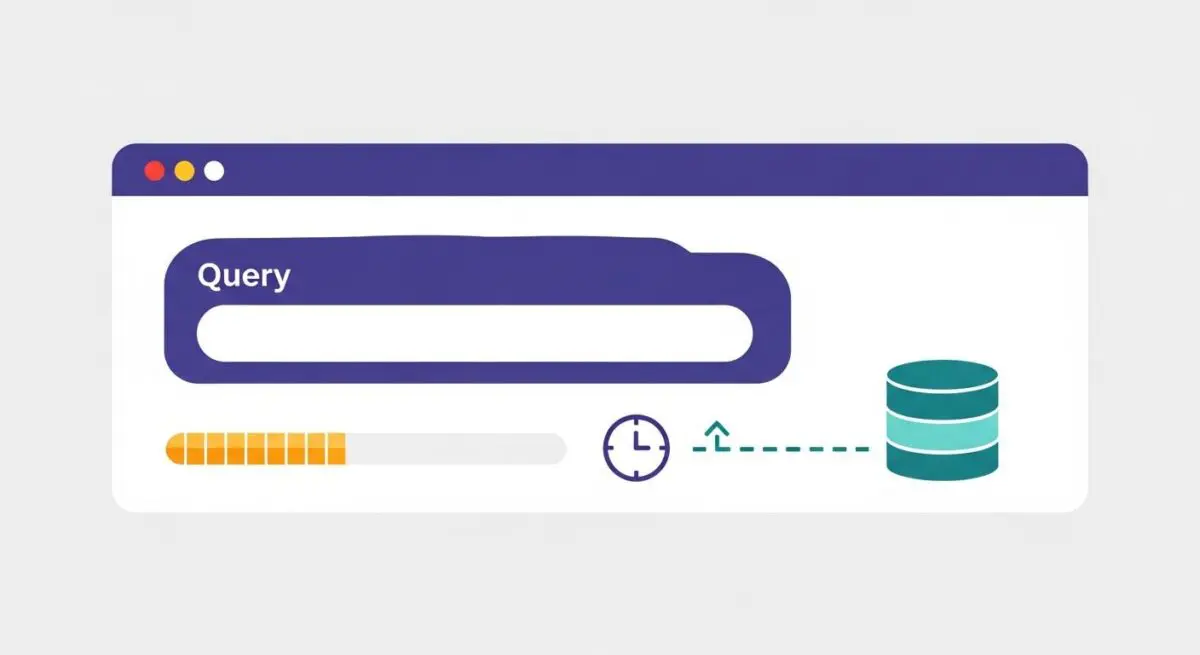
Inference latency refers to the temporal delay between the submission of a query to a trained machine learning model and the delivery of the resulting prediction or generation. Unlike training latency, which involves the time taken to optimize model weights, inference latency focuses on the operational phase where the model is deployed in a production environment. In the architecture of Large Language Models (LLMs), this metric is often segmented into Time to First Token (TTFT)—the delay before the user sees the initial response—and Time Per Output Token (TPOT), which determines the overall speed of the text generation.
Technically, inference latency is influenced by several hardware and software variables, including the model’s parameter count, the available memory bandwidth of the GPU or TPU, and the efficiency of the inference engine (e.g., TensorRT or vLLM). As models grow in complexity, the computational cost of the forward pass increases, making latency management a primary concern for AI architects. We at Andres SEO Expert define it as the critical bottleneck that separates theoretical model capability from practical, scalable utility in AI-driven search ecosystems.
The Real-World Analogy
Imagine a high-end restaurant with a world-class chef. Inference latency is the duration from the moment a waiter places an order in the kitchen to the moment the plate is set before the customer. If the chef is highly skilled but the kitchen lacks the proper tools (insufficient hardware) or the recipe is unnecessarily complex for a simple dish (over-parameterization), the customer waits too long. In the digital realm, if an AI search engine takes five seconds to answer a query, the ‘customer’ has already left for a faster competitor, regardless of how ‘gourmet’ the answer might have been.
Why is Inference Latency Important for GEO and LLMs?
In the era of Generative Engine Optimization (GEO), inference latency is a silent ranking signal. AI search engines like Perplexity, SearchGPT, and Google’s AI Overviews operate on strict computational budgets. If a source’s data is structured in a way that requires excessive processing or if a RAG (Retrieval-Augmented Generation) pipeline is bogged down by slow retrieval steps, the system may bypass that information to maintain a fluid user experience. Low latency is synonymous with high availability.
Furthermore, for AI Agents and autonomous systems, high inference latency leads to ‘cascading delays.’ If an agent must perform five sequential inferences to complete a task, a 500ms delay per step results in a 2.5-second total lag, rendering the agent ineffective for real-time applications. Reducing latency ensures that your content or service remains ‘visible’ to the LLM during the rapid synthesis phase of generative search.
Best Practices & Implementation
- Implement Model Quantization: Reduce the precision of model weights from FP32 to INT8 or FP16. This significantly lowers memory bandwidth requirements and accelerates mathematical throughput without substantial loss in accuracy.
- Utilize KV Caching: Store the Key-Value (KV) pairs of previously processed tokens in memory. This prevents the model from recomputing the entire context window for every new token generated, drastically reducing TPOT.
- Deploy Speculative Decoding: Use a smaller, faster ‘draft’ model to predict the next few tokens, which are then verified in a single parallel step by the larger ‘target’ model. This can improve inference speed by 2x to 3x.
- Optimize the RAG Pipeline: Ensure that the vector database retrieval phase is optimized through indexing (e.g., HNSW) to minimize the ‘retrieval’ portion of the total inference latency.
Common Mistakes to Avoid
One frequent error is using an oversized model (e.g., a 70B parameter model) for tasks that a 7B or 8B model could handle with 95% accuracy; this results in unnecessary latency and cost. Another mistake is neglecting batch size optimization; while larger batches improve throughput, they often increase individual request latency, which can degrade the user experience in real-time chat applications.
Conclusion
Inference latency is the definitive metric for AI performance in production. For GEO professionals, optimizing for speed ensures that content is processed and served efficiently by generative engines, maintaining competitive visibility in an AI-first search landscape.