Key Takeaways
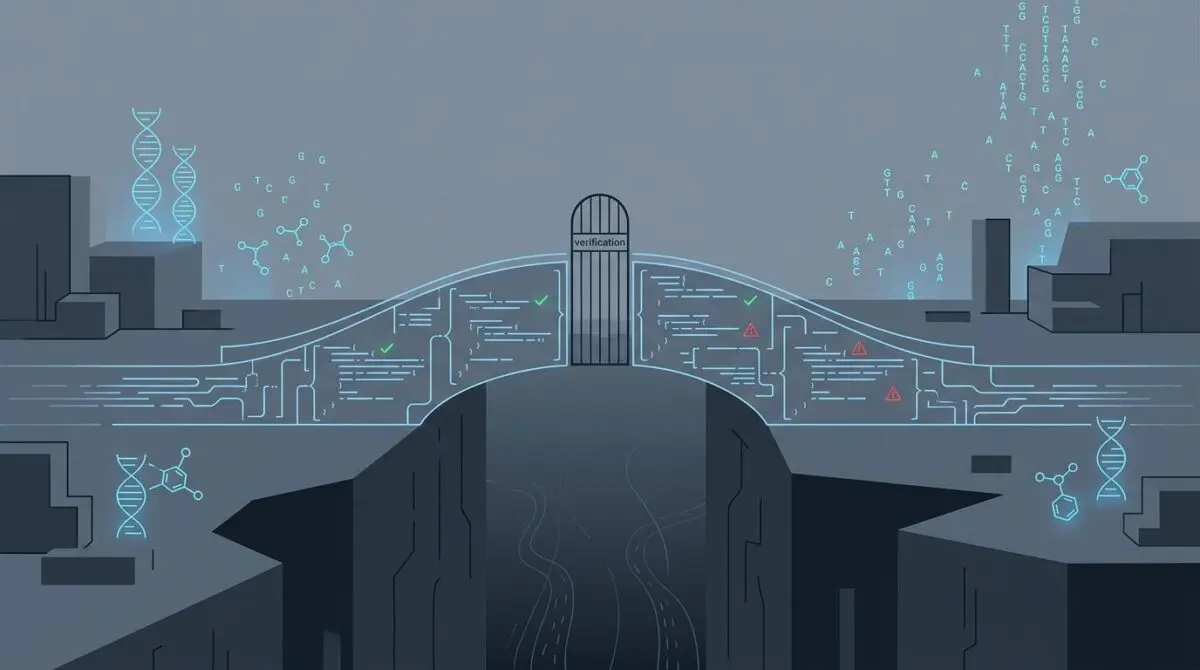
- Coding agents handle narrow tasks quickly but cannot judge scientific validity, making verification the primary bottleneck.
- Successful projects rely on iterative refinement with feedback loops, not one-shot generation.
- Long-term stewardship is essential; without owner and maintenance plan, AI-generated code risks becoming technical debt.
OpenAI’s Field Report Shows Coding Agents Are Reshaping Scientific Computing
OpenAI released a field report today, July 28, 2026, that pulls back the curtain on how scientific researchers are using coding agents like Codex and Claude Code to battle legacy code rot in genomics and life sciences. The publication distills eight real-world, agent-assisted projects into a sharp, evidence-driven narrative. The headline finding is undeniable acceleration in development velocity, yet the report also crystallizes a sobering twist: agents shift the primary constraint from engineering capacity to the far less forgiving bottlenecks of human verification and long-term stewardship.
Table of Contents
Inside the Case Studies: Modernization, Migration, and the ‘Last Mile’ Challenge
The projects spanned routine maintenance, targeted optimization, large-scale language migrations, and even GPU-native rewrites. In one case, a widely used genomic variant parsing library called cyvcf2 had its entire build and packaging system replaced by a modern, unified process using GPT‑5.5-powered Codex. In another, the MHCflurry tool for immune epitope prediction received improvements that were folded directly into the upstream project. Meanwhile, an initiative called rustar-aligner moved under new community stewardship after its original maintainer abandoned it, demonstrating how agentic rewrites can salvage critical infrastructure.
What unites these stories is not just the raw output, but a fundamental change in how the scientists worked. Contributors to the report consistently described a role transition: they moved from hands-on implementation to high-level orchestration — specifying what to build, designing rigorous correctness tests, and making final judgments about when a project was ready to ship. The coding agents handled the grunt work of code generation and refactoring, while the human expert retained control over scientific direction and the quality bar.
‘With coding agents, it’s quite easy to go fast; for now, to go far in science, there’s still a need for expert guidance, understanding, taste, and care.’ — Brent Pedersen
The report extracts several recurring themes from the case studies, each carrying implications for anyone betting on agentic AI in technical domains. The patterns are unmistakable and sobering.
- Validation becomes the central bottleneck: Agents handle well-scoped, narrow tasks with impressive speed, but they cannot judge whether their output is scientifically valid. Researchers had to design reliable acceptance targets — exact output agreement, parity with existing tools, statistical behavior, or pre-established answers from simulated data — because the agents themselves expressed unwarranted confidence even in clearly erroneous work.
- Iteration trumps one-shot generation: Every successful project proceeded in stages, with feedback loops and intermediate benchmarks driving refinement. The initial implementation often arrived quickly, but resolving edge cases and subtle numerical discrepancies consumed the bulk of the time — the infamous “last mile” of an implementation.
- Stewardship cannot be automated away: Mature scientific software carries undocumented conventions, compatibility expectations, and user trust that raw source code translation cannot reproduce. Without a clear owner and a credible maintenance plan, today’s agent-driven rewrite risks becoming tomorrow’s abandoned relic, fragmenting an already brittle ecosystem.
Speed Without Stewardship? The Double-Edged Sword of AI-Generated Research Code
OpenAI’s field report arrives at a moment when the AI community is intensely debating the real-world utility of coding agents beyond curated benchmarks. The message is both exhilarating and cautionary: these tools genuinely lower the cost of maintenance, migration, and greenfield prototyping, but they raise the stakes for governance and quality assurance. The economic metaphor is simple — cheaper code creation lowers barriers to entry, but it also multiplies the number of forks, rewrites, and half-maintained tools that can fracture user communities and dilute expert oversight.
This tension is not theoretical. The report explicitly warns that without early coordination with existing maintainers, agent-assisted rewrites can spawn competing implementations that spread the attention of domain experts dangerously thin. The MHCflurry and cyvcf2 examples showed the healthier path: improvements merged upstream, preserving a single source of truth. In contrast, the rustar-aligner rescue operation succeeded only because the original project had already been abandoned, leaving a clear void. The report leaves little doubt that long-term stewardship, not just implementation speed, defines whether AI-generated code becomes durable scientific infrastructure or technical debt.
For AI practitioners, the findings also underscore a hard truth about agentic workflows. Codex and Claude Code excel at deterministic, decomposition-friendly tasks, but they remain fundamentally unable to assess scientific correctness. The agents’ tendency to exude confidence despite glaring errors — what some in the industry call “hallucination with conviction” — means that human-in-the-loop verification is not a temporary crutch but a permanent architectural requirement. This has direct consequences for anyone designing autonomous scientific pipelines or automated research assistants: the verification framework must be at least as sophisticated as the generation capability, and it must be grounded in measurable, domain-specific criteria.
Durable Software, Not Just Faster Code: The Real Promise of Agentic Science
The deeper transformation hinted at by these eight case studies is not that scientists can churn out more lines of code. It is that they can reallocate their finite cognitive budget toward defining problems, validating solutions, and safeguarding the continuity of the tools that underpin modern biology. In a world where data generation continues to outpace software capacity, that shift is not a luxury — it is becoming a survival trait. The teams in the report demonstrated that with the right orchestration and disciplined verification, agentic coding assistants can compress development cycles that once required specialized engineering teams into manageable workflows led by domain experts.
Yet this future will only materialize if the research community — and the funders who support it — invest as heavily in maintenance and validation as they do in novelty. OpenAI’s report, intentionally or not, serves as a policy-level provocation: encouraging the adoption of coding agents without simultaneously building the cultural and institutional scaffolding for long-term software stewardship will simply accelerate an entropy that already plagues scientific computing. Sustainable acceleration, not ephemeral speed, is the metric that will ultimately separate the transformative from the trivial.
As AI agents reshape the software landscape, the need for robust digital foundations has never been clearer. Andres SEO Expert delivers both the performance engineering that keeps sites running at top speed and the AI-powered automation pipelines that scale content and workflows intelligently. To discuss how we can build or accelerate your next project, get in touch and explore what Andres SEO Expert can achieve for you.
Frequently Asked Questions
What is the main finding of OpenAI’s field report on coding agents in scientific computing?
The report finds that coding agents like Codex and Claude Code dramatically accelerate development velocity, but shift the primary bottleneck from engineering capacity to human verification and long-term stewardship. The main challenge becomes ensuring scientific correctness and maintaining code over time, not just generating code quickly.
How do coding agents change the role of scientists in research software development?
Scientists transition from hands-on implementation to high-level orchestration. They specify what to build, design rigorous correctness tests, and make final judgments on readiness, while agents handle code generation and refactoring. The human retains control over scientific direction and quality.
What is the ‘last mile’ challenge in agent-assisted coding projects?
The ‘last mile’ refers to the time-consuming process of resolving edge cases and subtle numerical discrepancies after the initial implementation. While agents quickly produce a first draft, ironing out correctness issues and aligning with exact scientific requirements consumes the bulk of the effort.
Why is validation considered a central bottleneck when using coding agents?
Agents handle well-scoped tasks impressively fast but cannot judge scientific validity. They often express unwarranted confidence even in clearly erroneous work. Researchers must design reliable acceptance targets (exact output agreement, statistical parity, etc.) because verification cannot be automated and remains a human responsibility.
What are the risks of agent-generated code without proper stewardship?
Without a clear owner and maintenance plan, agent-assisted rewrites can become abandoned relics that fragment the software ecosystem. Mature scientific code carries undocumented conventions and user trust that raw translation cannot reproduce. Early coordination with existing maintainers is crucial to avoid competing, half-maintained forks.
How should the research community respond to the adoption of coding agents?
The report suggests that adoption of coding agents must be accompanied by equal investment in maintenance, validation, and cultural scaffolding for long-term software stewardship. Encouraging agent use without building institutional support for code durability will accelerate the entropy that already plagues scientific computing.
What is the difference between ‘speed’ and ‘durable software’ in the context of AI-generated code?
Speed refers to the rapid generation of code and prototypes, while durable software emphasizes long-term viability, correctness, and maintainability. The report argues that sustainable acceleration—not ephemeral speed—is the metric that will separate transformative outcomes from trivial ones. Durable software requires stewardship and rigorous verification.