Executive Summary
- Product-Led Growth (PLG) prioritizes the product as the primary vehicle for customer acquisition, conversion, and expansion, reducing reliance on traditional sales-heavy models.
- The strategy leverages product-usage data to identify Product Qualified Leads (PQLs), enabling high-precision targeting and automated conversion funnels.
- Successful PLG implementation requires deep integration between product analytics, CRM systems, and marketing automation to optimize the user journey in real-time.
What is Product-Led Growth?
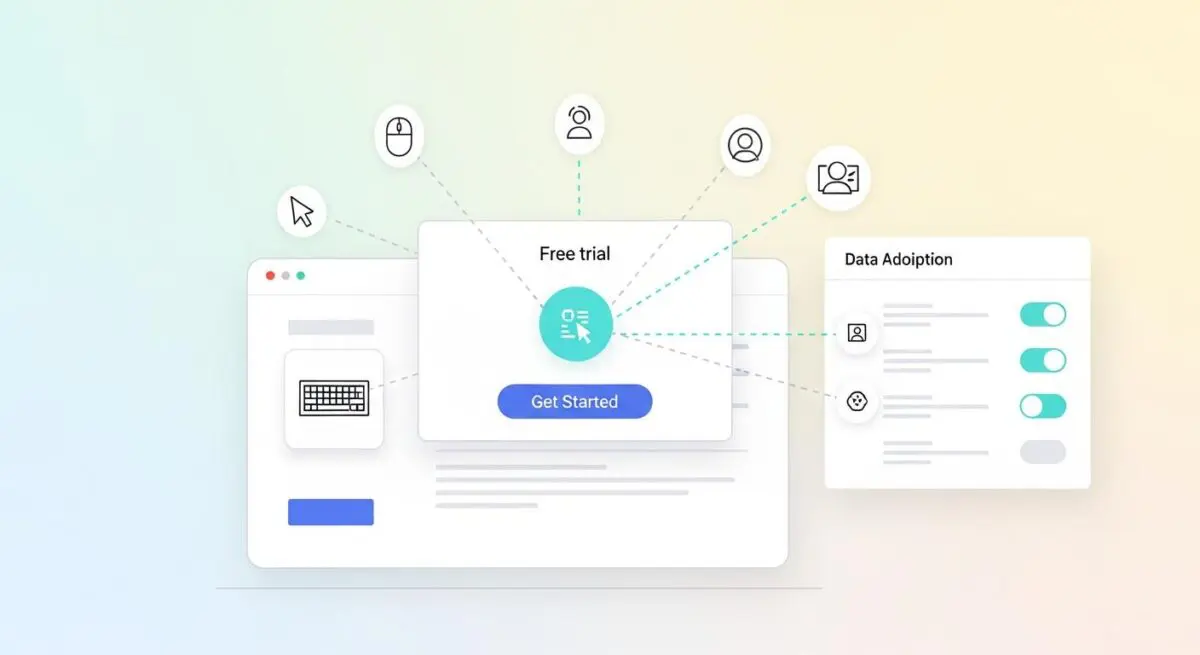
Product-Led Growth (PLG) is a go-to-market strategy that relies on the product itself as the primary driver of customer acquisition, conversion, and retention. In a PLG framework, the product is not merely a deliverable but the central engine of the marketing and sales funnel. This approach necessitates a robust MarTech stack capable of tracking granular user behavior, often utilizing tools like Segment, Mixpanel, or Amplitude to feed real-time data into CRM and marketing automation platforms. By lowering the barrier to entry through freemium or trial models, PLG creates a scalable acquisition loop that operates independently of linear sales headcount growth.
From a technical SEO and GEO perspective, PLG strategies often involve programmatic SEO, where high-value, product-specific landing pages are generated based on user-generated content or product features. This creates a virtuous cycle where product utility drives organic search visibility. Furthermore, in the era of AI-Search, PLG provides the structured data and user engagement signals necessary for Large Language Models (LLMs) to recognize and recommend the product as a high-authority solution within specific categories.
The Real-World Analogy
Consider the difference between a traditional sit-down restaurant and a modern, high-tech self-service kiosk. In a sales-led model (the restaurant), you must wait for a host to seat you and a waiter to explain the menu before you can taste the food. In a Product-Led Growth model (the kiosk), the menu is intuitive, the ordering process is frictionless, and you receive a sample of the meal immediately. If the sample is excellent, you are empowered to upgrade your order instantly without needing a middleman. The product’s quality and the ease of the interface do the selling for the establishment.
How Product-Led Growth Impacts Marketing ROI & Data Attribution?
PLG fundamentally alters the economics of customer acquisition by significantly reducing the Customer Acquisition Cost (CAC). By automating the top-of-funnel and middle-of-funnel activities through self-service onboarding, brands can allocate resources toward product engineering and data infrastructure rather than massive advertising spends. This shift improves the CAC-to-LTV (Lifetime Value) ratio, as the product-driven nature of the relationship often leads to higher retention rates and lower churn.
In terms of data attribution, PLG introduces the concept of the Product Qualified Lead (PQL). Unlike Marketing Qualified Leads (MQLs), which are based on passive engagement like whitepaper downloads, PQLs are identified through active product usage. This provides a more accurate attribution model, as conversion events are tied directly to feature engagement and realized value. This high-fidelity data allows marketing teams to optimize spend based on actual product utility rather than superficial clicks.
Strategic Implementation & Best Practices
- Instrument Granular Event Tracking: Implement a robust data layer to track specific user actions within the product, ensuring that every click and feature activation is mapped to a unique user ID in your CRM.
- Optimize the “Time to Value” (TTV): Engineer the onboarding flow to lead users to their “Aha! moment” as quickly as possible, removing any technical or UI friction that delays the realization of the product’s core utility.
- Develop a PQL Scoring Framework: Define specific behavioral triggers—such as reaching a usage threshold or inviting a team member—that signal a user is ready for an upsell or enterprise transition.
- Leverage Programmatic SEO: Create dynamic, indexable pages that showcase product capabilities or solve specific user queries, ensuring the product is discoverable at the exact moment of user intent.
Common Pitfalls & Strategic Mistakes
A frequent error is the “Freemium Trap,” where a company offers too much value for free without a clear technical path to monetization, leading to high infrastructure costs without corresponding revenue. Another common mistake is failing to integrate product data with the broader MarTech stack, resulting in data silos where the marketing team remains unaware of how users are actually interacting with the software. Finally, ignoring the “Human-in-the-Loop” for enterprise deals can be fatal; while PLG handles the bottom-up adoption, complex organizational sales still require a strategic sales overlay to navigate procurement and legal hurdles.
Conclusion
Product-Led Growth represents a paradigm shift toward a more efficient, data-centric marketing architecture where product utility serves as the ultimate driver of scalable enterprise value.