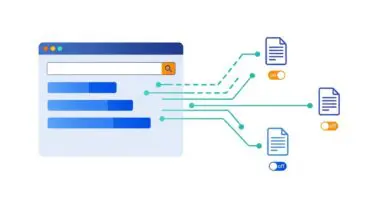





Executive Summary
- Knowledge bases serve as the primary grounding mechanism for Retrieval-Augmented Generation (RAG) in AI search architectures.
- Structured and semantically rich data within a knowledge base significantly reduces LLM hallucinations and improves citation accuracy.
- Optimizing external knowledge bases is a core pillar of Generative Engine Optimization (GEO) to ensure brand authority and source attribution.
What is Knowledge Base (for AI)?
A Knowledge Base (for AI) is a structured or semi-structured repository of information specifically designed to be consumed, indexed, and retrieved by Large Language Models (LLMs) and generative search systems. Unlike traditional databases that rely on exact keyword matching, an AI-centric knowledge base is optimized for semantic retrieval. This often involves converting text into vector embeddings, allowing AI agents to identify relevant context based on the underlying meaning and intent of a query. We at Andres SEO Expert define this as the ‘source of truth’ that informs the generative output of systems like ChatGPT, Perplexity, and Google Gemini.
Technically, these systems operate through a process known as Retrieval-Augmented Generation (RAG). When a user submits a prompt, the AI searches the knowledge base for the most relevant documents, extracts the pertinent data, and synthesizes a response. This architecture ensures that the AI’s output is grounded in specific, verifiable facts rather than relying solely on its pre-trained weights, which may be outdated. A high-performance knowledge base includes clear entity relationships, hierarchical data structures, and comprehensive metadata to facilitate efficient machine consumption.
The Real-World Analogy
Imagine a brilliant, world-class researcher who has read every book in existence but has a slightly fuzzy memory for specific, recent details. This researcher represents the LLM. Your Knowledge Base (for AI) is a perfectly organized, up-to-date private library that you provide to that researcher. When a client asks a complex question, the researcher doesn’t just guess based on what they remember from years ago; they walk over to your library, pull the exact file needed, and provide an answer with 100% accuracy and proper citations. Without the library, the researcher is just a smart person guessing; with the library, they are an infallible expert on your specific business.
Why is Knowledge Base (for AI) Important for GEO and LLMs?
For GEO professionals, the knowledge base is the fundamental unit of Entity Authority. AI search engines prioritize sources that provide high-density, factual information that is easy to parse and verify. When a brand maintains a robust knowledge base, it increases the probability of being cited as a primary source in generative responses. This directly impacts visibility in the ‘Sources’ or ‘Citations’ sections of AI-driven interfaces, which are the new benchmarks for digital presence.
Furthermore, knowledge bases influence the confidence score of an LLM’s response. By providing clear, disambiguated data, you reduce the computational effort required for the AI to synthesize an answer. In the era of AI-first search, your digital assets are no longer just a collection of pages for human readers; they function as a knowledge base for machines to ingest, process, and redistribute. High-quality knowledge bases lead to higher rankings in Perplexity and more frequent mentions in ChatGPT’s search-enabled modes.
Best Practices & Implementation
- Implement Comprehensive Schema Markup: Use advanced JSON-LD to define entities, relationships, and datasets, making it easier for AI crawlers to map your brand into their internal knowledge graphs.
- Optimize for Semantic Density: Structure content with clear headings (H2, H3) and concise, fact-heavy paragraphs that address specific user intents and long-tail technical queries.
- Ensure Data Freshness and API Accessibility: Regularly update the knowledge base and, where possible, provide structured feeds or APIs that allow AI agents to access real-time information without latency.
- Utilize Internal Linking for Context: Create a dense network of internal links between related concepts to help AI models understand the topical hierarchy and relevance of your data points.
Common Mistakes to Avoid
One frequent error is maintaining unstructured or ‘thin’ content that lacks the technical depth required for AI grounding, which results in poor source attribution. Another critical mistake is failing to resolve conflicting information across different sections of the knowledge base, which confuses the LLM and lowers the reliability score of the domain. Finally, many brands neglect technical crawlability, inadvertently blocking AI bots via robots.txt or using complex JavaScript that prevents efficient indexing of the knowledge repository.
Conclusion
A robust Knowledge Base (for AI) is the infrastructure upon which successful GEO strategies are built, ensuring LLMs have access to accurate, grounded, and citable brand data for every query.