



Executive Summary
- Orchestrates event-driven workflows through a robust middleware layer utilizing REST APIs and webhooks.
- Facilitates stateless data transformation and conditional logic for complex multi-app integration.
- Enables the scaling of AI Content Ops by bridging LLM endpoints with CMS and SEO data sources.
What is Zapier?
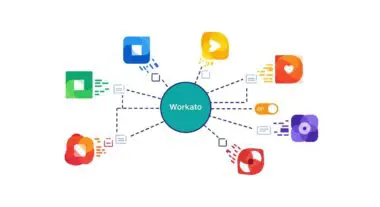
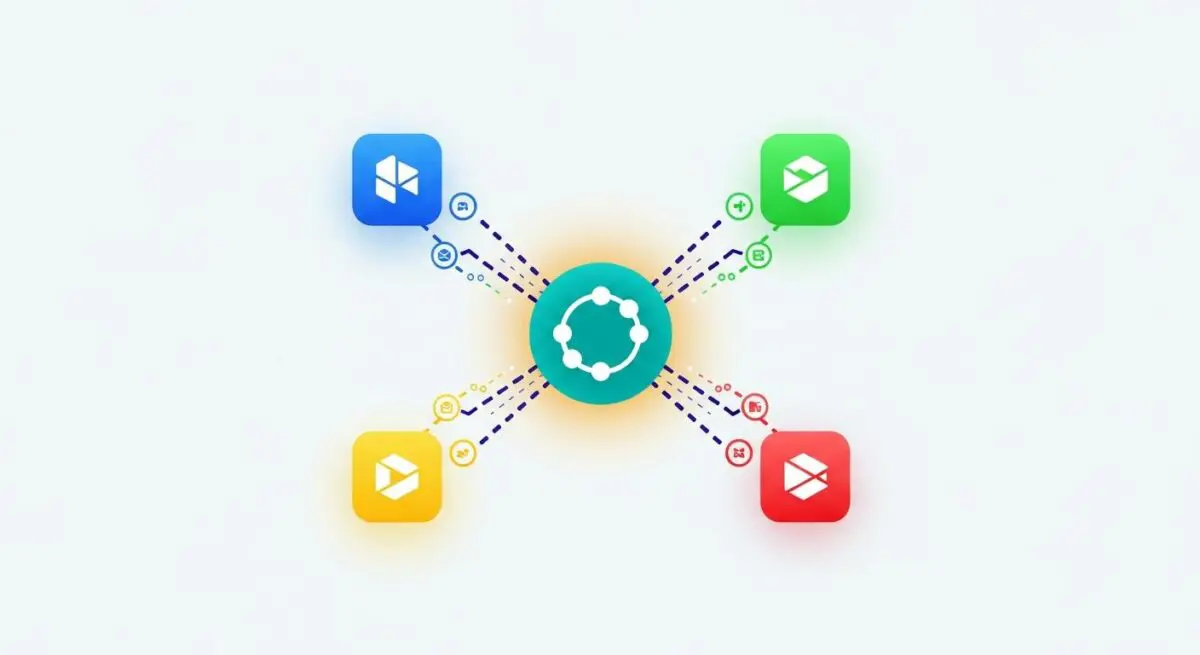
Zapier is a leading Integration Platform as a Service (iPaaS) designed to facilitate event-driven automation between disparate software applications. It functions as a sophisticated middleware layer that connects over 6,000 web services by leveraging their respective Application Programming Interfaces (APIs). At its core, Zapier operates on a trigger-action model: an event in one application (the trigger) initiates a sequence of operations in one or more other applications (the actions).
In the architecture of AI automations, Zapier serves as the central nervous system, managing the flow of data between input sources, Large Language Model (LLM) providers, and output destinations. It abstracts the complexity of manual API integration, providing a standardized environment for mapping JSON payloads, handling authentication protocols such as OAuth2, and executing multi-step logic without the need for custom backend infrastructure.
The Real-World Analogy
Think of Zapier as a highly efficient, 24/7 digital air traffic control tower. Each software application is an airplane from a different airline, speaking its own language and following its own schedule. Without a control tower, these planes cannot coordinate landings, transfers, or refueling. Zapier acts as the tower, receiving signals from one plane (data), translating those signals into a universal protocol, and directing other planes on exactly when and where to move. This ensures that information reaches its final destination smoothly, even if it must switch between multiple different carriers along the way.
Why is Zapier Critical for Autonomous Workflows and AI Content Ops?
Zapier is indispensable for autonomous workflows because it enables stateless automation at scale. By decoupling the trigger from the action, it allows developers and SEO professionals to build modular pipelines that are resilient and easily adjustable. In the realm of AI Content Ops, Zapier facilitates the programmatic ingestion of keyword data or RSS feeds, routes that data to an LLM for content generation, and then pushes the structured output to a CMS via a webhook or native integration. This eliminates the manual bottleneck of data entry and content formatting, allowing for the execution of high-volume programmatic SEO strategies with minimal latency and high payload efficiency.
Best Practices & Implementation
- Prioritize Webhooks: Use Webhooks by Zapier for triggers whenever possible to achieve near-instantaneous data transfer and reduce the overhead associated with polling intervals.
- Implement Data Sanitization: Utilize the Formatter tool to clean and structure data before it reaches an LLM, ensuring that the prompt context is optimized and free of irrelevant HTML or metadata.
- Leverage Conditional Paths: Use internal logic paths to handle different data types or error states, ensuring that the automation remains robust even when encountering unexpected input values.
- Optimize Task Usage: Consolidate steps using Python or JavaScript code blocks within Zapier to perform complex transformations in a single task, reducing overall operational costs and latency.
Common Mistakes to Avoid
One frequent error is the failure to implement adequate filters, leading to the processing of irrelevant data and unnecessary task consumption. Another common pitfall is neglecting to account for API rate limits of the connected services, which can cause workflow interruptions during high-volume bursts. Finally, many organizations fail to document their multi-step automations, making it difficult to troubleshoot or iterate on complex logic as the automation infrastructure grows.
Conclusion
Zapier provides the essential connectivity and logic orchestration required to transform isolated AI tools into comprehensive, autonomous content production engines.