



Executive Summary
- Eliminates manual data extraction by leveraging API-driven pipelines and scheduled cron jobs for real-time visibility.
- Enhances data integrity through standardized transformation logic, reducing human error in complex multi-source aggregations.
- Facilitates autonomous decision-making in AI content ops by feeding structured data into LLM-driven analysis engines.
What is Automated Reporting?
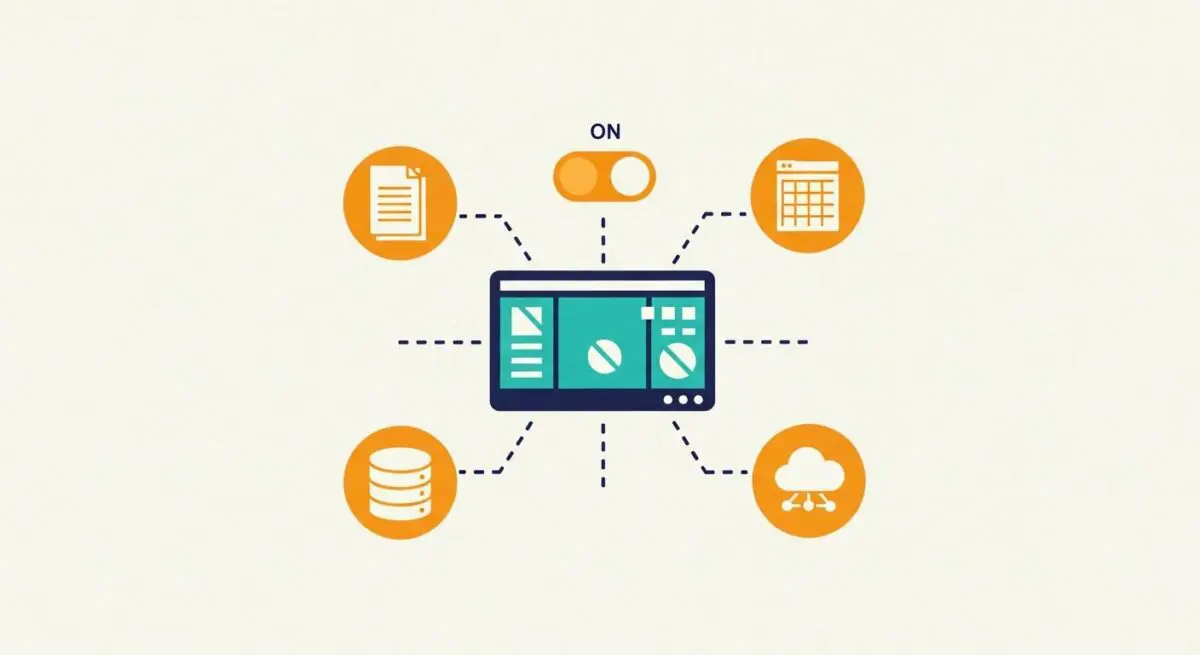
Automated reporting refers to the programmatic orchestration of data collection, processing, and visualization workflows. In the context of AI automations and digital marketing, it involves using middleware or custom scripts to fetch metrics from disparate APIs—such as Google Search Console, GA4, or CRM systems—and funneling them into a centralized repository or dashboard. This process ensures that stakeholders receive high-fidelity data without the latency or error rates associated with manual spreadsheet updates.
Technically, automated reporting functions as a continuous data pipeline. It utilizes extract, transform, load (ETL) or extract, load, transform (ELT) methodologies to handle JSON payloads from various endpoints. By automating these sequences, organizations can maintain a stateless architecture where data is processed in real-time, allowing for immediate insights into technical SEO performance and operational efficiency.
The Real-World Analogy
Imagine a high-performance aircraft’s flight data recorder. Instead of the pilot manually writing down the altitude, fuel levels, and engine temperature every five minutes, the system automatically captures thousands of data points per second and generates a comprehensive report upon landing. This allows the pilot to focus on navigation and safety while ensuring that maintenance crews have an objective, error-free log of the flight’s performance. In business, automated reporting is that flight recorder, capturing every digital metric without human intervention.
Why is Automated Reporting Critical for Autonomous Workflows and AI Content Ops?
In modern AI content operations, automated reporting serves as the essential feedback loop for stateless automation. When executing programmatic SEO at scale, developers must monitor indexing rates and keyword fluctuations across thousands of pages. Automated reporting pipelines allow for the real-time ingestion of performance data into AI agents, which can then trigger autonomous adjustments to content strategy or technical SEO parameters. By utilizing JSON payloads and webhook listeners, these reports become actionable data streams rather than static documents, enabling serverless architectures to scale based on actual performance metrics rather than historical guesswork.
Best Practices & Implementation
- Normalize Data Schemas: Ensure all incoming API data is transformed into a consistent JSON structure before storage to prevent downstream processing errors in your automation stack.
- Implement Robust Error Handling: Use retry logic and dead-letter queues in your automation workflows to handle API rate limits, authentication timeouts, or temporary service downtime.
- Utilize Incremental Loading: Instead of fetching entire datasets during every cycle, use timestamp-based filters to only retrieve new or updated records, optimizing API quota usage and reducing server load.
- Decouple Data and Visualization: Store raw data in a cloud warehouse (like BigQuery or Snowflake) and use it as a single source of truth for multiple reporting front-ends and AI analysis tools.
Common Mistakes to Avoid
One frequent error is failing to account for API schema changes, which can break data pipelines without immediate notification if monitoring is not in place. Another mistake is over-reporting, where stakeholders are flooded with low-signal metrics that obscure critical KPIs, leading to decision paralysis. Finally, many organizations neglect data validation at the ingestion point, leading to “garbage in, garbage out” scenarios where automated reports propagate inaccurate information across the enterprise.
Conclusion
Automated reporting is the foundational infrastructure for data-driven AI operations, providing the necessary telemetry to optimize autonomous workflows. By treating reports as dynamic data pipelines, organizations can achieve superior scalability and precision in their digital strategies.