Executive Summary
- Mitigates data loss caused by Intelligent Tracking Prevention (ITP) and browser-side ad blockers by shifting processing to a first-party cloud environment.
- Enhances website performance and Core Web Vitals by reducing the execution of heavy third-party JavaScript on the client-side browser.
- Enables granular control over data governance and privacy compliance through the redaction of PII before transmission to third-party vendors.
What is Server-Side Tracking?
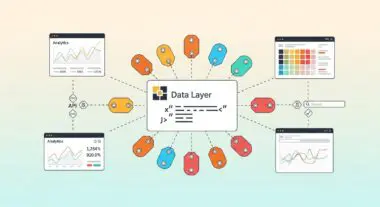
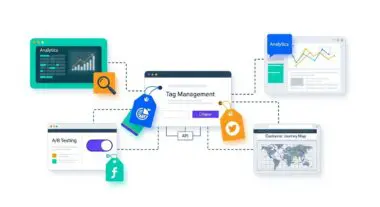
Server-side tracking (SST) represents a fundamental shift in how digital marketing data is collected, processed, and distributed. In a traditional client-side tracking setup, the user’s browser (the client) is responsible for executing various JavaScript tags that send data directly to third-party platforms like Google Analytics, Meta, or LinkedIn. Server-side tracking introduces an intermediary server—typically hosted on a first-party subdomain—that intercepts the data from the client, processes it according to predefined business logic, and then transmits it to the final destinations via secure API calls.
This architecture centralizes the data collection process, moving the computational burden away from the user’s device and into a controlled cloud environment. Within a modern MarTech stack, SST acts as a data clearinghouse. It allows organizations to maintain a single stream of data from the browser to the server, which can then be “fanned out” to multiple vendors. This not only improves data security but also ensures that the organization, rather than the third-party vendor, maintains ownership and control over the raw data stream before it is shared.
The Real-World Analogy
Imagine a high-security international airport terminal. Client-side tracking is like allowing every individual passenger to carry their own sensitive documents, luggage, and personal information directly to various foreign embassy desks scattered throughout the public lobby. It is chaotic, prone to data loss, and exposes the passengers’ private details to anyone watching in the terminal. Server-side tracking is equivalent to a centralized, secure VIP concierge service. The passenger hands their information once to a trusted, local official in a private, secure room. That official then verifies the data, removes unnecessary personal details, and securely transmits only the required information to each embassy through a private, encrypted tunnel. The process is faster for the passenger, more secure for the airport, and ensures that the embassies receive perfectly formatted, verified data without the passenger ever having to interact with them directly.
How Server-Side Tracking Impacts Marketing ROI & Data Attribution?
The transition to server-side tracking has a profound impact on Marketing ROI by addressing the “signal loss” caused by evolving privacy standards. As browsers like Safari and Firefox implement stricter Intelligent Tracking Prevention (ITP) measures, the lifespan of client-side cookies is often restricted to 24 hours or 7 days. SST allows for the setting of cookies in a first-party context from the server, which can significantly extend cookie durability. This ensures that long-cycle conversions are correctly attributed to the original marketing touchpoint, providing a more accurate calculation of Return on Ad Spend (ROAS).
Furthermore, SST significantly improves site performance, which is a direct ranking factor in SEO via Core Web Vitals. By removing dozens of third-party tracking scripts from the browser, the Total Blocking Time (TBT) and Largest Contentful Paint (LCP) are reduced. A faster website leads to higher conversion rates and lower bounce rates, directly lowering the Customer Acquisition Cost (CAC). From a data integrity perspective, SST prevents “spoofing” and ensures that the data reaching the analytics platform is cleaned and validated, reducing the noise that often leads to poor strategic decision-making in programmatic environments.
Strategic Implementation & Best Practices
- Establish a First-Party Subdomain: Configure your server-side container (e.g., GTM Server-Side) on a subdomain of your primary domain (e.g., metrics.example.com). This ensures that data collection occurs in a first-party context, which is essential for bypassing third-party cookie restrictions and improving data reliability.
- Implement Data Redaction and Hashing: Use the server-side environment to strip PII (Personally Identifiable Information) or hash sensitive data like email addresses using SHA-256 before sending them to third-party vendors, ensuring strict compliance with GDPR and CCPA.
- Leverage Hybrid Tracking: For maximum resilience, use a hybrid approach where the client-side sends a single event stream to the server, which then distributes that data to multiple endpoints (GA4, Facebook CAPI, etc.), minimizing the browser’s execution load.
- Monitor Server Resources and Latency: Since SST relies on cloud infrastructure such as Google Cloud Run or AWS, it is critical to monitor CPU and memory usage to ensure the server can handle traffic spikes without introducing latency into the data pipeline.
Common Pitfalls & Strategic Mistakes
One frequent error is treating server-side tracking as a “set and forget” solution without considering the ongoing cloud costs. Unlike client-side tracking, SST incurs hosting fees based on traffic volume, and failing to optimize the server configuration can lead to unexpected expenses. Another mistake is the failure to synchronize client-side and server-side identities. If the unique identifiers (like Client ID or External ID) are not consistently mapped across both environments, it can lead to duplicated sessions and fragmented user profiles, severely undermining the accuracy of attribution models. Finally, many brands neglect the opportunity to enrich data on the server, missing out on the ability to inject high-value business logic, such as profit margins or lead scores, into their marketing signals before they are sent to ad platforms.
Conclusion
Server-side tracking is a foundational requirement for enterprise-level data sovereignty, providing the technical infrastructure necessary to maintain high-fidelity attribution and privacy compliance in a cookieless future.