Executive Summary
- Utilization of first-party data and tracking pixels (Google Tag, Meta Pixel) to re-engage users based on specific behavioral triggers and event-based interactions.
- Integration with programmatic advertising platforms to optimize bidding strategies, reduce Customer Acquisition Cost (CAC), and enhance Lifetime Value (LTV) through precise audience segmentation.
- Strategic alignment with evolving privacy regulations (GDPR/CCPA) and the transition to server-side tagging to maintain data integrity in a cookieless environment.
What is Remarketing?
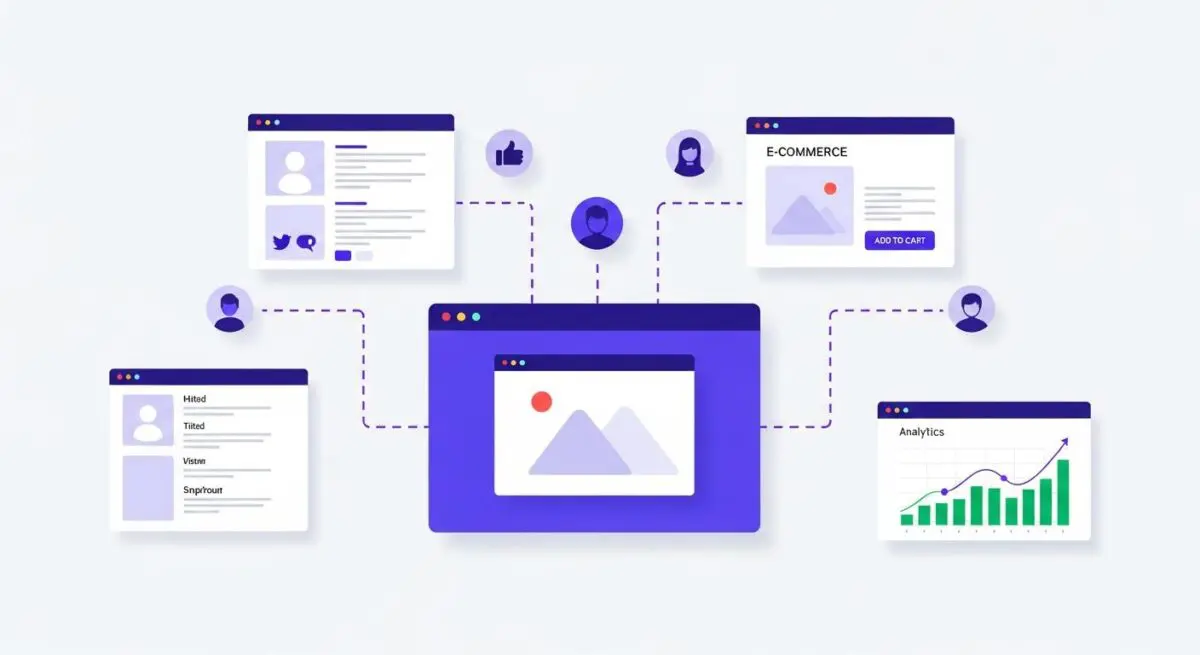
Remarketing is a sophisticated digital marketing strategy that involves serving targeted advertisements to users who have previously interacted with a brand’s digital properties, such as a website, mobile application, or social media profile. From a technical perspective, remarketing functions as a closed-loop system within the modern MarTech stack. It relies on the deployment of tracking scripts—commonly referred to as pixels or tags—which are embedded in the site’s source code. When a user performs a specific action, such as viewing a product page or adding an item to a cart, the tag triggers a browser cookie or captures a unique device identifier (IDFA or AAID). This data is then transmitted to a Demand-Side Platform (DSP) or an advertising network, enabling the brand to programmatically bid on ad inventory when that specific user appears on a third-party site or social media platform.
In the context of Search Engine Optimization (SEO) and Generative Engine Optimization (GEO), remarketing serves as a critical mechanism for capturing and converting traffic that may have initially arrived via organic search but did not complete a conversion during the first session. By maintaining a persistent presence throughout the customer journey, remarketing mitigates the impact of high bounce rates and long sales cycles. It is not merely a tool for repetitive exposure; rather, it is a data-driven approach to audience orchestration that leverages behavioral signals to deliver highly relevant, context-aware messaging. Modern remarketing frameworks often incorporate machine learning models to predict the likelihood of conversion, allowing for dynamic bid adjustments based on the user’s proximity to the final purchase decision.
The Real-World Analogy
To understand remarketing through a non-technical lens, consider the experience of visiting a high-end boutique. You enter the store, browse several specific items—perhaps a tailored suit or a designer watch—and even discuss the features with a sales associate. However, you decide to leave without making a purchase. In a traditional retail environment, that interaction ends there. In a remarketing-enabled environment, it is as if that sales associate discreetly remembers your preferences and, as you walk through the city, occasionally appears on digital billboards or in the magazines you read, specifically showcasing the exact suit you were admiring, perhaps mentioning that it is now available in your size or part of a limited-time offer. It is a personalized follow-up that ensures the initial interest you showed is nurtured until you are ready to return to the store and finalize the transaction.
How Remarketing Impacts Marketing ROI & Data Attribution?
Remarketing has a profound impact on Marketing Return on Investment (ROI) by focusing advertising spend on users who have already demonstrated intent, thereby significantly lowering the Customer Acquisition Cost (CAC) compared to cold-prospecting campaigns. Because these users are already familiar with the brand, they typically exhibit higher Click-Through Rates (CTR) and Conversion Rates (CVR). From a data attribution perspective, remarketing introduces complexity that requires advanced modeling. Traditional last-click attribution models often over-attribute value to remarketing ads, ignoring the top-of-funnel organic search or social media efforts that initially brought the user to the site. To accurately measure the impact, sophisticated organizations utilize multi-touch attribution (MTA) or incrementality testing to determine the true lift generated by remarketing efforts.
Furthermore, remarketing plays a vital role in Customer Lifetime Value (LTV) modeling. By targeting existing customers with complementary products (cross-selling) or higher-tier services (up-selling), brands can increase the average order value and frequency of purchase. The technical integration of CRM data with advertising platforms allows for “Customer Match” strategies, where encrypted email lists are used to target users across the web, bypassing the limitations of browser-based cookies. This alignment between first-party data and programmatic execution ensures that marketing budgets are allocated toward the most profitable audience segments, enhancing the overall efficiency of the digital ecosystem.
Strategic Implementation & Best Practices
- Granular Audience Segmentation: Avoid broad-spectrum remarketing. Instead, segment audiences based on specific behaviors, such as “Cart Abandoners (Last 24 Hours),” “High-Value Blog Readers,” or “Past Purchasers of Category X.” This allows for tailored creative that resonates with the user’s specific stage in the funnel.
- Implementation of Server-Side Tagging: To combat the limitations imposed by Apple’s ITP (Intelligent Tracking Prevention) and the phase-out of third-party cookies, move tracking logic from the client-side (browser) to a server-side environment (e.g., Google Tag Manager Server-Side). This improves data accuracy, site performance, and security.
- Dynamic Remarketing via Product Feeds: For e-commerce, utilize dynamic remarketing which automatically generates ad creative featuring the exact products a user viewed. This requires a robust XML or JSON product feed integrated with the advertising platform’s API to ensure real-time price and inventory accuracy.
- Frequency Capping and Burn Pixels: Implement strict frequency caps to prevent ad fatigue and brand sentiment erosion. Additionally, use “burn pixels” or exclusion lists to immediately stop serving remarketing ads to a user once they have completed the desired conversion.
Common Pitfalls & Strategic Mistakes
One of the most frequent errors in enterprise remarketing is the failure to respect the user’s privacy and the resulting data silos. Over-reliance on third-party cookies without a transition to first-party data strategies can lead to a significant drop in reachable audience sizes as privacy regulations tighten. Another common mistake is poor creative rotation; serving the same ad to a user for weeks leads to “banner blindness” and diminished ROI. Finally, many brands fail to align their remarketing messaging with the user’s intent, such as showing a “Buy Now” ad to someone who only visited the “Careers” page, resulting in wasted spend and irrelevant user experiences.
Conclusion
Remarketing is an essential component of a high-performance MarTech stack, providing the technical infrastructure necessary to re-engage high-intent users and optimize conversion paths. When executed with a focus on data privacy, granular segmentation, and multi-touch attribution, it serves as a powerful catalyst for scalable growth and enhanced marketing efficiency.