Executive Summary
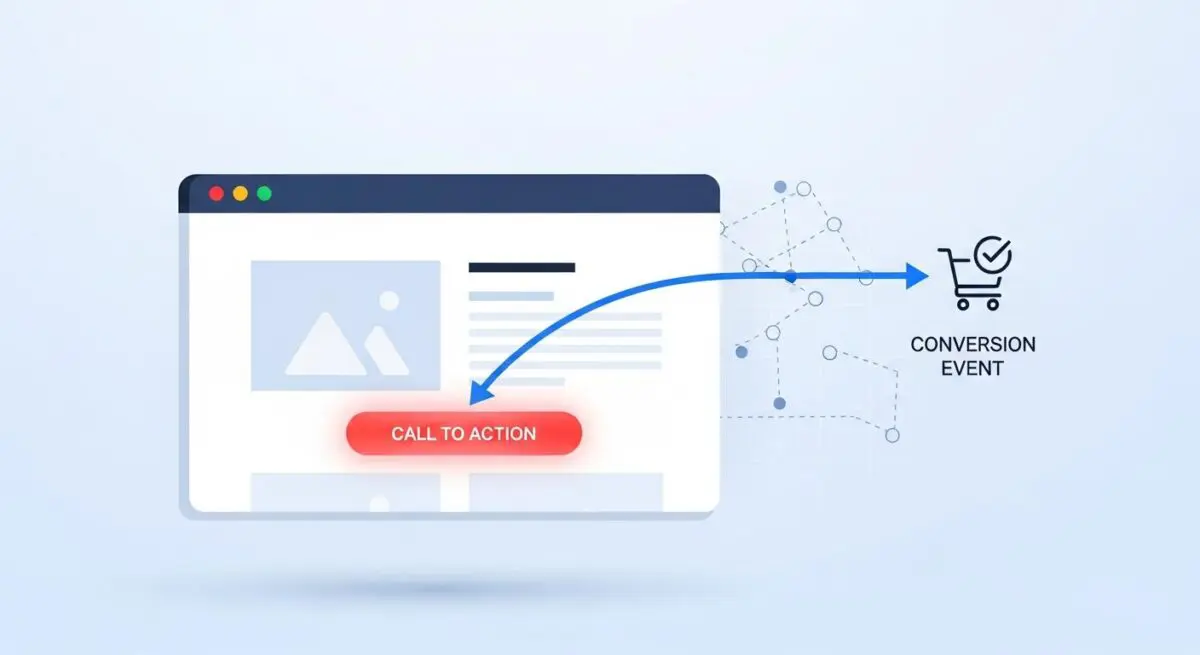
- Click-Through Conversion (CTC) serves as the primary metric for direct-response attribution, linking a specific user interaction (click) to a terminal conversion event within a defined lookback window.
- The technical integrity of CTC relies on robust tracking architectures, including first-party cookies, server-side tagging, and unique identifiers like GCLID or FBCLID to maintain data continuity across sessions.
- Optimizing for CTC requires a granular understanding of attribution modeling, as it directly influences the training of machine learning algorithms in programmatic advertising and AI-driven search environments.
What is Click-Through Conversion?
Click-Through Conversion (CTC) is a fundamental performance marketing metric that quantifies the number of users who complete a predefined goal after clicking on a digital advertisement. Unlike view-through conversions, which attribute value to ad impressions where no direct interaction occurred, CTC requires a proactive engagement from the user. In the modern MarTech stack, this process is facilitated by tracking pixels, JavaScript snippets, or server-side APIs that drop a unique identifier—such as a Google Click ID (GCLID) or a Facebook Click ID (FBCLID)—into the user’s browser or server session. When the user eventually triggers a conversion event (e.g., a purchase, lead form submission, or software download), the analytics platform matches that event back to the original click based on this identifier.
From a technical perspective, Click-Through Conversions are governed by the ‘attribution window’ or ‘lookback window,’ which defines the maximum duration between the initial click and the final conversion for the credit to be assigned to that specific ad. Standard windows range from 1 to 30 days, though enterprise-level data science teams often customize these based on the average length of the customer journey. In the era of privacy-centric browsing, CTC has become more complex due to the deprecation of third-party cookies and the implementation of Intelligent Tracking Prevention (ITP) by Apple and similar measures by other browser engines. Consequently, professionals must now leverage first-party data and server-to-server tracking to ensure the accuracy of CTC reporting.
In the context of Search Engine Optimization (SEO) and Generative Engine Optimization (GEO), Click-Through Conversions provide a critical feedback loop. While SEO focuses on organic visibility, the conversion data derived from paid search clicks often informs keyword strategy and content architecture. High CTC rates on specific terms indicate strong commercial intent, signaling to SEO teams which topics should be prioritized for organic ranking. Furthermore, as AI-search engines begin to prioritize transactional accuracy, the data patterns established by click-through conversions help refine the semantic relevance of landing pages within a broader digital ecosystem.
The Real-World Analogy
To understand Click-Through Conversion, imagine a high-end retail environment where a customer is walking down a busy street. They see a specific promotional sign in a store window (the advertisement). The customer doesn’t just look at the sign; they actively open the door and enter the store (the click). Once inside, they browse the aisles and eventually bring an item to the register to complete a purchase (the conversion). In this scenario, the ‘Click-Through Conversion’ is the documented proof that the specific act of walking through that door—prompted by that specific sign—resulted in a sale. It is the most direct evidence of a marketing asset’s ability to drive a physical transaction, providing a clear trail from the initial invitation to the final exchange of value.
How Click-Through Conversion Impacts Marketing ROI & Data Attribution?
Click-Through Conversion is the cornerstone of calculating Return on Ad Spend (ROAS) and Customer Acquisition Cost (CAC). By isolating conversions that stem directly from a click, marketers can assign a precise monetary value to individual keywords, creative assets, and audience segments. This level of granularity is essential for algorithmic bidding strategies. Platforms like Google Ads and Meta use CTC data to train their machine learning models; when a conversion is reported, the algorithm analyzes the characteristics of the user who clicked and seeks to find similar profiles, thereby lowering the CAC over time through automated optimization.
However, the impact of CTC extends beyond simple math; it fundamentally shapes attribution modeling. In a ‘Last-Click’ attribution model, the final Click-Through Conversion receives 100% of the credit, which can lead to an undervaluation of top-of-funnel awareness efforts. Conversely, in ‘Data-Driven’ or ‘Multi-Touch’ attribution, CTC data is weighted against other touchpoints. Technical accuracy here is paramount; if the tracking mechanism fails to capture a click due to slow page load times or script blocking, the entire ROI of a campaign may be underreported, leading to strategic errors such as the premature termination of profitable campaigns. Furthermore, CTC data integrity is vital for ‘Incrementality Testing,’ where marketers determine if a conversion would have happened anyway without the ad click, ensuring that the marketing budget is driving truly new revenue rather than just claiming credit for existing brand demand.
Strategic Implementation & Best Practices
- Deploy Server-Side Tagging: To mitigate the impact of browser-based tracking limitations (like ITP), implement server-side Google Tag Manager (sGTM) or direct API integrations (e.g., Meta Conversions API). This ensures that click identifiers are passed directly from your server to the ad platform, bypassing client-side restrictions and improving data match rates.
- Optimize Attribution Windows: Align your lookback windows with your actual sales cycle. For B2B enterprises with 6-month cycles, a 30-day click-through window may be insufficient, whereas a fast-moving CPG brand might find a 7-day window more reflective of true consumer behavior.
- Implement Enhanced Conversions: Use hashed first-party data (such as email addresses or phone numbers) to supplement click-based tracking. This allows platforms to ‘stitch’ together user journeys even when cookies are cleared or users switch devices between the click and the conversion.
- Audit Tag Firing Sequences: Ensure that conversion tags fire only after the page has fully loaded and the click identifier has been successfully captured. Use asynchronous loading to prevent tracking scripts from increasing Largest Contentful Paint (LCP), which could negatively impact both user experience and SEO rankings.
- Cross-Reference with CRM Data: Validate digital Click-Through Conversions against your internal CRM (e.g., Salesforce or HubSpot). This ‘closed-loop’ reporting ensures that the conversions reported in ad platforms translate into actual revenue, filtering out bot traffic or unverified leads.
Common Pitfalls & Strategic Mistakes
One of the most frequent errors in enterprise marketing is the ‘Attribution Silo,’ where Click-Through Conversions are viewed in isolation from View-Through data. This often leads to over-optimizing for ‘bottom-of-funnel’ keywords that have high CTC but low incremental reach, effectively cannibalizing organic traffic. Another critical mistake is failing to account for ‘Click Fraud’ or accidental clicks on mobile devices, which can inflate CTC numbers and lead to inefficient budget allocation toward low-quality traffic sources.
Additionally, many brands suffer from ‘Data Duplication.’ If a user clicks an ad on Google, then later clicks an ad on Facebook before converting, both platforms may claim a Click-Through Conversion if the tracking is not properly deduplicated via a centralized analytics platform like GA4 or a dedicated Attribution software. This results in an inflated view of total conversions that does not match the actual bank deposits, leading to flawed financial forecasting.
Conclusion
Click-Through Conversion remains the most reliable metric for assessing direct user intent and campaign efficacy within a modern data-driven marketing architecture. By mastering the technical nuances of server-side tracking and attribution modeling, organizations can ensure high data integrity and scalable growth in an increasingly complex digital landscape.