


Key Points
- WRS Resource Allocation: Understand how JavaScript execution limits within Google’s Web Rendering Service cause DOM injection failures and orphaned pages.
- Edge-Level Rendering: Implement NGINX or Cloudflare Workers to serve pre-rendered HTML to crawlers, circumventing client-side execution bottlenecks.
- Progressive Enhancement: Structure critical navigation using standard anchor tags in the initial server response to guarantee discovery before JS hydration.
Table of Contents
The Core Conflict: WRS and Link Discovery
According to the HTTP Archive, the median mobile page requires over 450KB of JavaScript to reach interactivity. A recent technical SEO study by Vercel indicates that websites relying solely on Client-Side Rendering (CSR) experience a 40% slower content discovery rate compared to those utilizing Server-Side Rendering (SSR). This data highlights a critical vulnerability in modern web architecture.
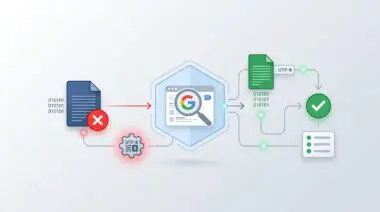
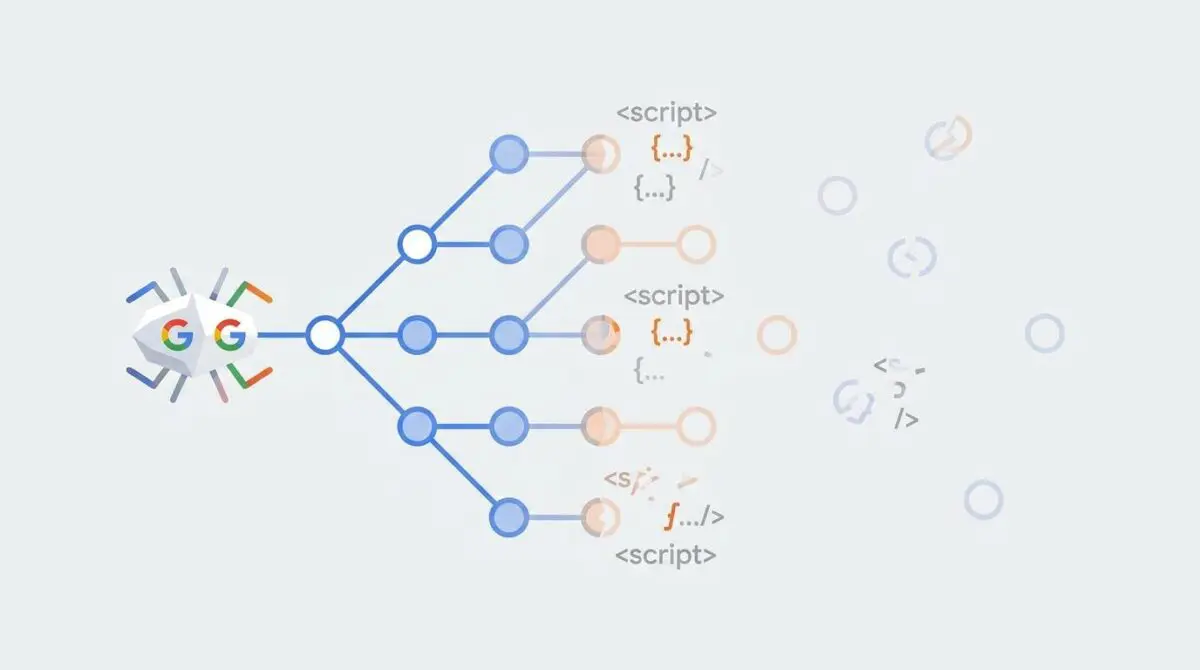
When Googlebot fails to execute JavaScript required to load internal links, the result is a catastrophic generation of orphaned pages. JavaScript-rendered link discovery refers to the technical process where search engine crawlers, specifically Google’s Web Rendering Service (WRS), must execute client-side scripts to populate the Document Object Model (DOM) with anchor tags.
Unlike traditional static HTML crawling, this requires a two-wave indexing process. The first wave scrapes the raw HTML, and the second wave renders the full page to find internal links generated by frameworks like React, Vue, or Angular. Failure in this discovery phase leads to orphaned pages that are excluded from the site’s link equity graph.
If the WRS fails to execute scripts due to timeouts or errors, generative engines and traditional indexers cannot perceive the site’s structure. This effectively silos content and prevents it from being used as a source for AI-generated overviews or search snippets. Symptoms include Google Search Console showing high latency for JS/CSS files alongside a flatline in ‘Discovery’ for new URLs. Server logs often show Googlebot hitting parent hub pages but never requesting the linked child assets.
Diagnostic Checkpoints and Root Causes
Diagnosing this error requires understanding the desynchronization within your rendering stack. The failure point can exist at the server level, the edge network, or within the application’s codebase itself.
Diagnostic Checkpoints
WRS Execution Timeout
JS execution exceeds Googlebot WRS time and memory limits.
Robots.txt Resource Blocking
Crawler blocked from assets required for accurate DOM rendering.
Event-Driven Link Injection
Links hidden behind user interactions like clicking or scrolling.
Client-Side Routing (Hash Fragments)
Hash fragments in URLs are ignored by search crawlers.
Server and Edge Layer Bottlenecks
Googlebot allocates a finite amount of CPU time and memory to render a page. If the JavaScript bundle is too large or requires excessive DOM manipulation, the WRS may terminate the process before links are appended. This execution timeout is a primary driver of orphaned URLs in JS-heavy environments.
Additionally, overly aggressive optimization settings or security rules in robots.txt can block crawlers from accessing critical scripts. If the crawler cannot fetch the JS files, the rendering phase is compromised from the start. This lack of asset access guarantees a rendering failure.
Application Layer Conflicts
Googlebot does not simulate user interactions such as clicking, scrolling, or hovering. If internal links are only injected into the DOM via on-click events or infinite scroll listeners, the crawler will never trigger the logic to reveal them. This is a common architectural flaw in modern single-page applications.
Client-side routing using hash fragments further compounds this issue. Search engines generally ignore the fragment identifier, treating all routes as the same URL and failing to discover unique pages. The crawler sees the base URL and discards the state management entirely.
The Engineering Resolution
Resolving these rendering bottlenecks requires a systematic approach to how your infrastructure serves content to automated agents. You must ensure that critical path elements are decoupled from heavy client-side execution.
Engineering Resolution Roadmap
Verify Rendered HTML in GSC
Navigate to Google Search Console, use the ‘URL Inspection Tool’ on a parent page. Click ‘Test Live URL’, then ‘View Tested Page’. Search the ‘HTML’ tab for the missing <a> tags. If they are absent, the JS failed to execute or inject them.
Implement Server-Side Rendering (SSR) or Hydration
Ensure that the primary navigation and critical internal links are present in the initial 200 OK HTML response from the server. For JS-heavy themes, use a pre-rendering service or ensure the theme outputs standard HTML anchors that the JS then enhances (Progressive Enhancement).
Audit Robots.txt for Asset Access
Check robots.txt for any ‘Disallow’ rules targeting script directories. Use the ‘Robots.txt Tester’ in GSC to ensure Googlebot-Smartphone can access all .js and .css files linked in the page header.
Configure Dynamic Rendering at the Edge
If SSR is not possible, use NGINX or Cloudflare Workers to detect the Googlebot User-Agent and serve a pre-rendered, static HTML version of the page (using tools like Rendertron or Puppeteer) while serving the JS-heavy version to users.
Progressive Enhancement Architecture
The most robust solution involves shifting the rendering burden away from the client. Implementing Server-Side Rendering (SSR) ensures that the primary navigation and critical internal links are present in the initial HTML response. This guarantees discovery before the browser even parses the first script tag.
For highly dynamic applications, you must design a Progressive Enhancement strategy. This ensures that the core content and links are accessible without JavaScript, which the scripts then enhance once loaded. If SSR requires a massive architectural overhaul, edge-level dynamic rendering provides an immediate fallback.
By intercepting the request at the CDN or reverse proxy layer, you can serve a pre-rendered static snapshot specifically to search engine user agents. You can review the official documentation on how Googlebot processes JavaScript to understand the exact specifications of the two-wave indexing model.
Resolution Execution via NGINX
When modifying the application codebase is not immediately feasible, dynamic rendering at the server block level is the standard operating procedure. This involves configuring your web server to detect crawler user agents and proxy their requests to a rendering service.
Dynamic Rendering Configuration
The following configuration utilizes NGINX to map specific user agents and route them to a Rendertron or Puppeteer instance. This ensures that Googlebot receives a fully hydrated DOM containing all anchor tags, bypassing WRS execution limits.
map $http_user_agent $is_bot {
  default 0;
  ~*(googlebot|bingbot|baiduspider) 1;
}

server {
  location / {
    if ($is_bot) {
      rewrite ^(.*)$ /render/$1 last;
    }
    try_files $uri $uri/ /index.php?$args;
  }

  location /render/ {
    proxy_pass http://your-rendertron-instance/render/https://$host$request_uri;
  }
}
Deploying this configuration requires a dedicated rendering instance capable of handling the bot traffic volume. Ensure your proxy timeout settings are configured to accommodate the rendering delay. Failure to optimize the proxy timeout will result in 502 Bad Gateway errors for the crawler.
Validation Protocol & Edge Cases
Implementing the fix is only half the battle; rigorous validation is required to ensure the WRS correctly processes the new delivery method. You must bypass browser-based testing and simulate the exact conditions of the crawler.
Validation Protocol
- Run a ‘Live Test’ in GSC and verify the ‘Rendered Screenshot’ for links.
- Execute curl -A “Googlebot” -L [URL] to check raw HTML for <a> tags.
- Perform a ‘Rich Result Test’ to confirm post-render DOM structure visibility.
A rare conflict occurs when Cloudflare’s Rocket Loader or Auto Minify interacts with a site’s Content Security Policy. The CSP may block the inline scripts injected by Cloudflare, causing a JS execution failure that only triggers during the Googlebot rendering phase.
Googlebot is significantly more sensitive to script errors than modern browsers. This conflict results in a blank DOM and a 100 percent orphan rate, despite the site appearing perfectly functional to human users. Always monitor the browser console for CSP violations when simulating Googlebot via DevTools.
Autonomous Monitoring & Prevention
Preventing future rendering anomalies requires integrating technical SEO checks directly into your CI/CD pipeline. Implement a static link fallback policy where all critical navigation is mirrored in the footer or a noscript tag to guarantee discovery.
Integrate Lighthouse CI into your deployment pipeline to monitor the Time to Interactive and DOM size. This ensures script execution remains within bot-friendly limits before new code reaches production. Conducting quarterly log file audits is essential to ensure Googlebot is successfully traversing paths discovered via JavaScript.
At Andres SEO Expert, we utilize advanced automation pipelines and custom API alerts to monitor entity integrity at the enterprise level. By analyzing server logs in real-time, we can detect WRS timeouts and rendering failures before they impact indexation. This proactive architecture shields your crawl budget from inefficient execution cycles.
Conclusion
Resolving JavaScript-rendered link discovery failures is a critical mandate for maintaining crawl efficiency and search visibility. By understanding WRS limitations and implementing robust server-side or edge-rendering solutions, you eliminate orphaned pages and restore your link equity graph.
Navigating the intersection of technical SEO, server architecture, and generative search requires a precise roadmap. If you need to future-proof your enterprise stack, resolve deep-level crawl anomalies, or implement AI-driven SEO automation, connect with Andres at Andres SEO Expert.