Executive Summary
- An AI API Endpoint serves as the programmatic interface for data exchange between external applications and Large Language Models (LLMs).
- These endpoints are critical for implementing Retrieval-Augmented Generation (RAG), allowing AI agents to access real-time, proprietary data.
- Optimization of endpoint latency and payload structure is essential for maintaining high visibility in generative search environments and AI-driven discovery.
What is AI API Endpoint?
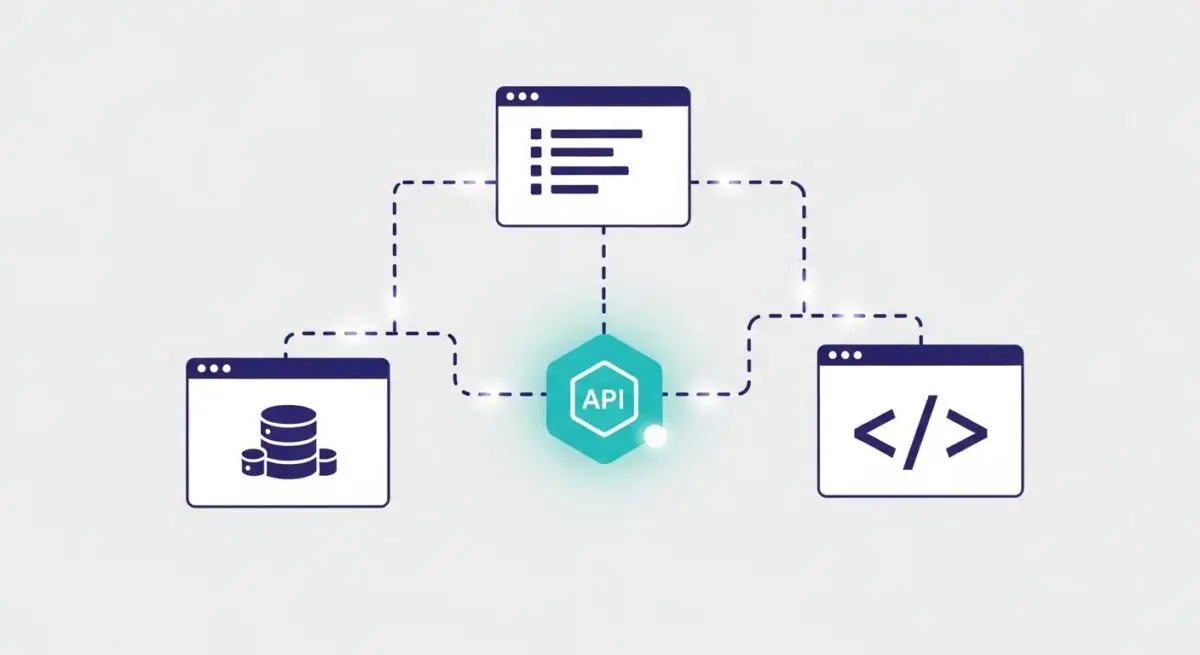
An AI API Endpoint is a specific URL that serves as the communication gateway between a client application and a hosted Artificial Intelligence model, such as a Large Language Model (LLM). It functions as the entry point for RESTful or GraphQL requests, where developers send structured data—typically in JSON format—containing prompts, parameters, and context. The endpoint then routes this data to the underlying neural network for processing and returns a generated response based on the model’s inference capabilities.
Technically, these endpoints manage critical operations including authentication, rate limiting, and tokenization. They allow for the decoupling of the AI’s computational logic from the user interface, enabling seamless integration of generative capabilities into diverse software ecosystems. In the context of AI search and Generative Engine Optimization (GEO), endpoints are the primary mechanism through which AI agents query external databases or live web content to synthesize answers for end-users.
The Real-World Analogy
Think of an AI API Endpoint as the drive-thru window of a sophisticated restaurant. The customer (the application) does not need to enter the kitchen (the LLM) or understand how the complex machinery works. They simply pull up to the window (the endpoint), provide their order (the prompt), and wait for the staff to pass back the finished meal (the AI response). The window provides a controlled, standardized way for the customer and the kitchen to interact without the customer ever needing to manage the internal heat or ingredients of the kitchen itself.
Why is AI API Endpoint Important for GEO and LLMs?
For Generative Engine Optimization (GEO), the AI API Endpoint is the infrastructure that facilitates the flow of information between a brand’s data and the generative engine. When an AI agent like Perplexity or a GPT-based tool performs a real-time search, it often utilizes endpoints to fetch structured data from authoritative sources. If an organization’s endpoints are poorly optimized or slow, the AI agent may timeout or prioritize faster, more accessible sources, directly impacting the brand’s visibility in AI-generated answers.
Furthermore, endpoints are the backbone of Retrieval-Augmented Generation (RAG). By exposing content through high-performance endpoints, developers ensure that LLMs can ground their responses in factual, up-to-date information. This enhances source attribution and entity authority, as the AI can programmatically verify and cite the data retrieved through these technical gateways, leading to higher rankings in AI-search results.
Best Practices & Implementation
- Minimize Latency: Optimize backend processing and use Content Delivery Networks (CDNs) to ensure the endpoint responds within milliseconds, as AI agents prioritize high-speed data sources for real-time synthesis.
- Implement Robust Error Handling: Design systems to gracefully handle HTTP 429 (Too Many Requests) and 5xx errors to maintain reliability during high-traffic AI crawling events.
- Structured Data Payloads: Use strictly validated JSON schemas to ensure the AI model receives clean, unambiguous data, reducing the risk of hallucinations or processing failures.
- Security and Authentication: Utilize OAuth2 or rotating API keys to protect sensitive data while allowing authorized AI agents to access proprietary information securely.
Common Mistakes to Avoid
A frequent error is neglecting the scalability of the endpoint infrastructure; if an AI agent suddenly increases its request rate, an under-provisioned endpoint will fail, leading to a loss in AI search visibility. Another mistake is failing to version the API, which can break integrations with AI agents when the underlying data structure changes. Finally, many organizations ignore the importance of detailed logging, making it impossible to audit how AI agents are consuming their data or to identify bottlenecks in the RAG pipeline.
Conclusion
The AI API Endpoint is the essential technical bridge that enables programmatic interaction between data sources and generative models, serving as a cornerstone for modern GEO and RAG strategies.