Key Points
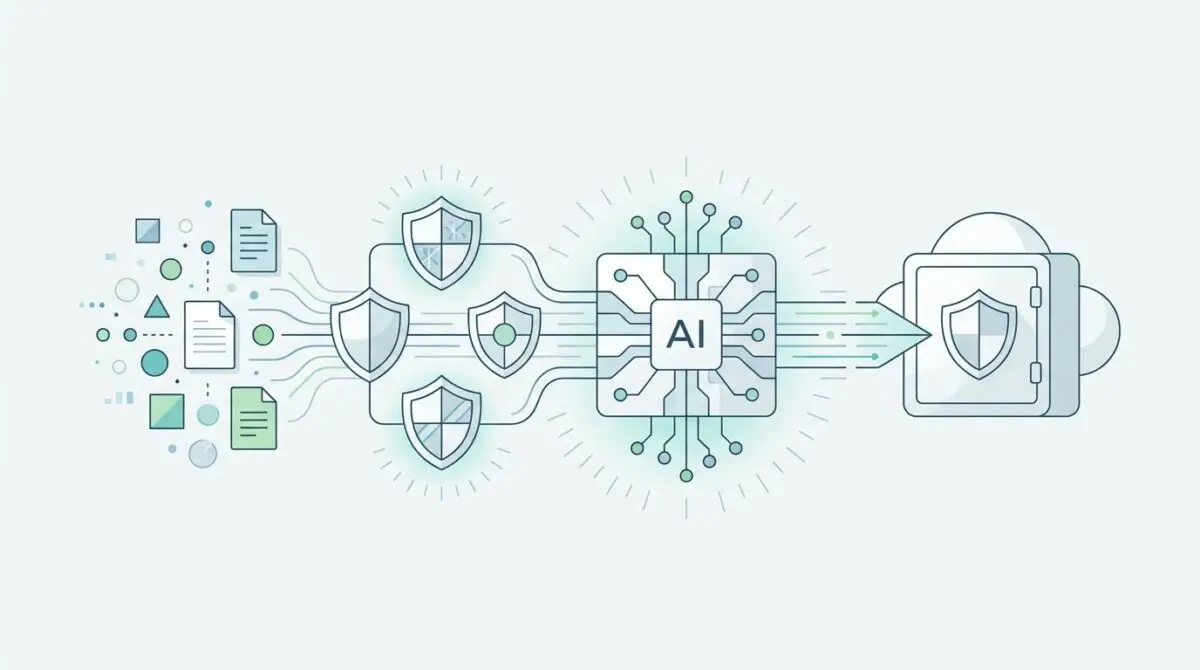
- Hardware-Rooted Isolation: The transition from software perimeters to Trusted Execution Environments (TEEs) ensures data remains cryptographically invisible during active AI computation.
- Neocloud Disruption: Specialized GPU providers and Privacy-as-a-Service orchestrators are dismantling hyperscaler monopolies by delivering sovereign, private-first infrastructure.
- Agentic Security Economy: The future relies on Autonomous Guardian Agents and self-governing data packets that dynamically enforce zero-trust policies across decentralized AI workflows.
Table of Contents
The Shadow AI Epidemic and the Trust Deficit
According to the IDC 2026 Worldwide Security Spending Guide, global security investments are projected to exceed $308 billion this year. This massive surge is driven almost entirely by the urgent need to secure AI-driven workloads and manage non-human digital identities.
The enterprise AI landscape is currently fractured by a profound trust deficit between rapid innovation and data security. We are witnessing a pervasive “Shadow AI” epidemic across global organizations.
An estimated 57% of employees routinely bypass corporate governance to use unsanctioned generative AI tools. They do this not out of malice, but because legacy corporate tools introduce too much friction into their daily workflows.
This behavioral friction exposes highly sensitive corporate intellectual property to public model training pipelines. The solution to this existential threat is not merely stricter compliance policies, but a fundamental architectural revolution.
Enter Confidential AI and Hardware-Enforced Data Privacy. This represents the definitive shift from legacy encryption at rest to dynamic, impenetrable encryption in use.
By executing AI workloads inside hardware-rooted vaults, organizations can finally unlock their most sensitive proprietary data. They can fine-tune frontier models without the lingering fear of model weight theft or PII leakage into public training sets.
Market Intelligence & Capital Flow
Market Intelligence & Data
Shadow AI Cost Premium
Data from the 2025/2026 IBM Cost of a Data Breach Report shows that breaches involving unauthorized ‘Shadow AI’ tools cost organizations an extra $670,000 per incident.
Confidential Compute Shift
Gartner forecasts that by 2029, more than 75% of processing operations in untrusted infrastructure will be secured in-use by hardware-based Confidential Computing.
PETs Market Valuation
The global market for Privacy Enhancing Technologies (PETs) is projected to reach $5.03 billion in 2026 as organizations prioritize data-in-use protection, according to Fortune Business Insights.
Security Software Growth
According to IDC, Information and Data Security software is the fastest-growing tech group in 2026, expanding at 14% annually to keep pace with AI-driven threats.
The data reveals a stark reality for enterprise infrastructure and the future of cloud computing. Centralized hyperscalers are no longer the default safe havens for proprietary AI computation.
Smart capital is aggressively flowing toward infrastructure that can cryptographically guarantee data invisibility. We are seeing a massive shift in how risk is quantified by boardrooms and institutional investors.
This shift is accelerating because breaches involving unauthorized ‘Shadow AI’ tools cost organizations an extra $670,000 per incident. The financial bleeding caused by unsecured AI prompts has forced executives to mandate hardware-level security protocols.
In fact, industry analysts project that more than 75% of processing operations in untrusted infrastructure will be secured in-use by hardware-based Confidential Computing. This is not a distant prediction; it is an active reallocation of enterprise IT budgets.
The psychology of the market is clear: trust is no longer assumed, it must be cryptographically proven. Organizations that fail to adopt these privacy-enhancing technologies will find themselves uninsurable and uninvestable.
The Strategic Deep Dive: Architecting the Zero-Trust Vault
Hardware-Rooted Trusted Execution Environments
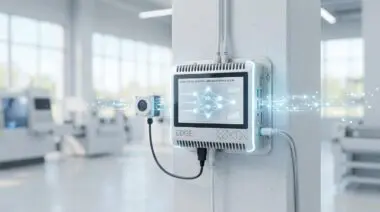
The fundamental architecture of AI security is undergoing a tectonic shift from software perimeters to silicon fortresses. We are rapidly moving away from software-based firewalls toward hardware-rooted Trusted Execution Environments (TEEs).
These microchip-level enclaves isolate data during the exact moment of active computation. Even the cloud providers hosting the physical servers, or internal system admins with root access, cannot peer into the active memory states.
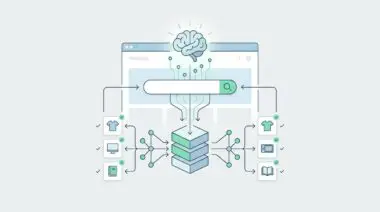
This means that model inference and Retrieval-Augmented Generation (RAG) processes occur in total darkness. NVIDIA and AMD are aggressively leading this hardware trust revolution.
The upcoming 2026 NVIDIA Vera Rubin architecture represents the bleeding edge of this movement. It bakes cryptographic isolation directly into the GPU silicon, creating an impenetrable vault for data in transit.
This hardware baseline is further fortified by advanced differential privacy layers. These complex mathematical algorithms mask individual data points with statistical noise.
This allows large language models to extract highly accurate global insights without ever exposing the underlying personal identities of the users.
In early 2026, Meta announced a strategic partnership with NVIDIA to deploy confidential computing at an unprecedented scale. This initiative specifically secures WhatsApp’s private AI processing, ensuring user data remains invisible to the underlying infrastructure during analysis.
This partnership is a watershed moment for hyperscale confidential AI. It proves to the market that hardware-enforced privacy can operate seamlessly at the scale of billions of concurrent users.
Neoclouds and Privacy Orchestration
As the demand for privacy-first compute surges, the traditional hyperscaler monopoly is quietly eroding. Smart capital is heavily backing the rise of neoclouds, which are specialized and agile GPU providers.
Companies like CoreWeave are capturing massive market share by prioritizing sovereign, private-first infrastructure. These disruptors offer the immense compute power necessary for frontier models while guaranteeing strict data sovereignty.
This is highly attractive to heavily regulated industries like healthcare, finance, and defense. However, raw hardware isolation is only half of the equation.
Startups like Skyflow and Fortanix are emerging as the dominant privacy-as-a-service orchestrators in this new ecosystem. They provide the essential software glue that makes zero-trust AI workflows possible across complex hybrid clouds.
These platforms ensure that granular policy engines and cryptographic keys travel seamlessly alongside the data payloads. They act as the central nervous system for hardware-enforced privacy.
The Executive Action Plan
Strategic Trajectory
- Deploy Autonomous Guardian Agents to monitor and redact data flows between autonomous AI systems in real-time.
- Prepare for the transition to a Zero-Trust Agentic Economy where centralized security gives way to decentralized autonomy.
- Architect self-governing data packets that carry embedded, AI-driven policy engines.
- Implement context-aware permissioning based on the requesting agent’s profile and the local regulatory environment.
To survive the next phase of the AI transition, executives must completely rethink their enterprise security posture. Centralized firewalls and traditional VPNs are obsolete in a world of decentralized, autonomous data processing.
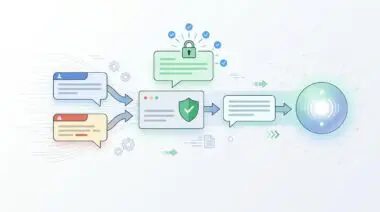
The next evolution is the deployment of autonomous guardian agents. These are specialized, lightweight AI security agents tasked specifically with monitoring data flows.
They sit between other autonomous AI systems, aggressively redacting sensitive information in real-time before it reaches an untrusted node.
We are rapidly approaching the dawn of a zero-trust agentic economy. In this new paradigm, data packets are no longer passive files, but rather self-governing digital entities.
They carry their own embedded, AI-driven policy engines. These engines dynamically determine access permissions based on the security context of the requesting agent and the local regulatory environment of the server.
The Autonomous Horizon
The future of enterprise AI belongs exclusively to those who can compute with secrets. By adopting hardware-enforced data privacy, organizations effectively close the 100-day gap typically required for traditional breach detection.
You gain absolute, mathematical proof that your most valuable intellectual property remained invisible throughout its entire computational lifecycle. This is the ultimate competitive moat in the AI era.
Navigating the intersection of technology, capital, and market psychology requires a sharp strategy. To future-proof your business architecture and scale with precision, connect with Andres at Andres SEO Expert.
Frequently Asked Questions
What is Shadow AI and why does it pose a risk to enterprises?
Shadow AI refers to the use of unsanctioned generative AI tools by employees to bypass corporate governance. It poses a significant risk because sensitive intellectual property can be exposed to public model training pipelines, often leading to data breaches that cost an average of $670,000 more than standard security incidents.
What is Confidential Computing in the context of AI?
Confidential Computing is a security technology that protects data-in-use by performing computation in a hardware-based, isolated Trusted Execution Environment (TEE). It represents a shift from legacy encryption at rest to dynamic encryption in use, ensuring that data remains invisible to cloud providers and system administrators during processing.
How do Trusted Execution Environments (TEEs) secure proprietary data?
TEEs use microchip-level enclaves to isolate data during the exact moment of active computation. This hardware-rooted approach, being pioneered by NVIDIA and AMD, ensures that model inference and Retrieval-Augmented Generation (RAG) processes occur in cryptographic isolation, protecting against model weight theft and PII leakage.
What are the market projections for Privacy Enhancing Technologies (PETs)?
The global market for Privacy Enhancing Technologies (PETs) is projected to reach $5.03 billion by 2026. This growth is driven by enterprise demand for data-in-use protection, with Gartner forecasting that 75% of processing in untrusted infrastructure will be secured via hardware-based Confidential Computing by 2029.
What is a Zero-Trust Agentic Economy?
A Zero-Trust Agentic Economy is a future security paradigm where data packets are self-governing entities with embedded, AI-driven policy engines. In this model, centralized firewalls are replaced by Autonomous Guardian Agents that redact sensitive information in real-time based on the local regulatory environment and the requesting agent’s profile.
Why is Information and Data Security software growing so rapidly in 2026?
According to IDC, Information and Data Security software is the fastest-growing tech group in 2026, expanding at 14% annually. This surge is fueled by the urgent need to manage non-human digital identities and secure AI-driven workloads against a backdrop of increasing Shadow AI threats and financial risks associated with unmanaged AI tools.