Executive Summary
- Elimination of the hypervisor layer removes virtualization overhead, providing WordPress applications with direct access to raw CPU and memory resources.
- Single-tenancy architecture guarantees consistent performance by eliminating the “noisy neighbor” effect common in shared or cloud-based VPS environments.
- Hardware-level customization allows for specialized NVMe RAID arrays and kernel-level optimizations tailored for high-concurrency PHP-FPM and MySQL workloads.
What is a Bare Metal Server?
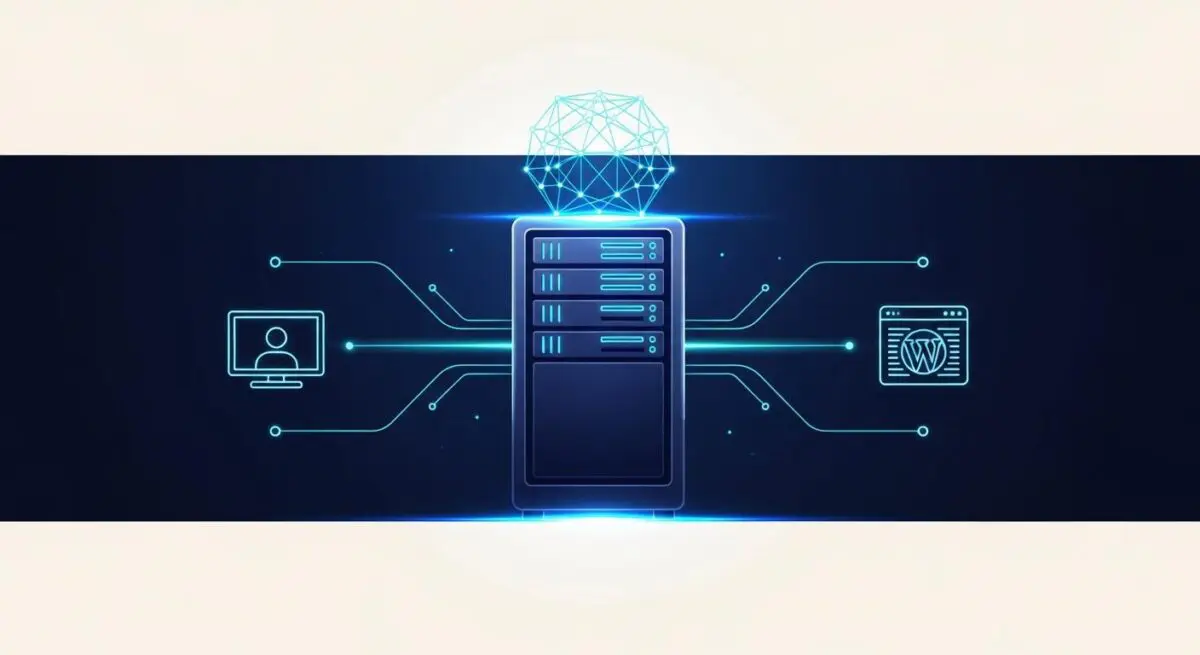
A Bare Metal Server is a physical computer dedicated to a single tenant, devoid of any virtualization layer or hypervisor between the operating system and the underlying hardware. In traditional cloud or VPS hosting, a physical server is partitioned into multiple virtual instances using a hypervisor, which consumes a portion of the system’s overhead. In a bare metal environment, the operating system (typically a Linux distribution like Ubuntu or AlmaLinux) is installed directly onto the server’s hard drive, granting the user exclusive access to the processor, RAM, and storage I/O.
For enterprise WordPress deployments, this architecture represents the pinnacle of hosting performance. Because there is no abstraction layer, the server can execute PHP scripts and process database queries with significantly lower latency. This environment is particularly beneficial for high-traffic WooCommerce stores or multi-site networks where resource contention in a shared environment would lead to performance degradation or intermittent downtime.
The Real-World Analogy
Imagine the difference between renting a room in a large apartment complex versus owning a private, custom-built estate. In the apartment complex (Cloud/VPS), you share the plumbing, electricity, and hallways with neighbors; if a neighbor throws a loud party or leaves all their faucets running, your experience is negatively impacted. A Bare Metal Server is the private estate. You own the entire infrastructure from the ground up. You can reinforce the foundation, upgrade the wiring to handle massive power loads, and ensure that no one else’s activity ever interferes with your environment. You have total control over every square inch of the property.
How Bare Metal Servers Impact Server Performance & Speed Engineering?
The primary advantage of bare metal infrastructure in a WordPress context is the drastic reduction in Time to First Byte (TTFB). By removing the hypervisor, the CPU can process the WordPress Loop and execute PHP-FPM processes without the micro-delays inherent in virtualized environments. This direct hardware access is critical for database-heavy operations. MySQL and MariaDB performance is heavily dependent on disk I/O and memory latency; bare metal servers allow for direct communication with NVMe storage controllers, resulting in significantly higher Input/Output Operations Per Second (IOPS).
Furthermore, bare metal environments allow for advanced server-side caching mechanisms that are often restricted in shared environments. Engineers can allocate massive amounts of physical RAM to Redis or Memcached without worrying about the hypervisor swapping memory to disk. This ensures that the object cache remains in-memory, providing near-instantaneous retrieval of database queries and metadata, which is essential for maintaining Core Web Vitals at scale.
Best Practices & Implementation
- Optimize PHP-FPM Pools: Since you have exclusive access to all CPU cores, configure your PHP-FPM process manager to ‘static’ rather than ‘dynamic’ to eliminate the overhead of spawning new processes during traffic spikes.
- Implement Hardware-Level RAID: Utilize RAID 1 or RAID 10 configurations with enterprise-grade NVMe drives to ensure data redundancy and maximize read/write throughput for the WordPress database.
- Kernel Tuning: Adjust Linux kernel parameters (sysctl) to optimize TCP stack performance and increase the maximum number of open file descriptors, allowing the server to handle tens of thousands of concurrent connections.
- Dedicated Object Caching: Allocate a significant portion of the physical RAM (e.g., 20-30%) specifically for Redis object caching to reduce the load on the database engine.
Common Mistakes to Avoid
One frequent error is failing to implement a robust managed backup solution; since there is no cloud-level snapshotting provided by a hypervisor, you must manage hardware-level or off-site backups manually. Another mistake is over-provisioning; brands often pay for massive 64-core machines for sites that could be optimized through better code and caching on a smaller footprint. Finally, neglecting a hardware firewall can be fatal, as bare metal servers are directly exposed to the network and require rigorous edge-level security configurations.
Conclusion
Bare metal servers offer the highest level of resource isolation and raw performance for WordPress, making them the gold standard for enterprise-scale applications. By eliminating virtualization overhead, architects can achieve superior database efficiency and sub-second page load times for complex CMS environments.