Executive Summary
- A personalization engine is a technical framework that leverages machine learning and real-time data processing to dynamically adjust content and user experiences.
- In autonomous workflows, these engines act as a decision-making layer that processes JSON payloads to deliver contextually relevant outputs across multiple API endpoints.
- Effective implementation requires low-latency data architectures, such as edge computing and vector databases, to ensure seamless integration with AI content operations.
What is a Personalization Engine?
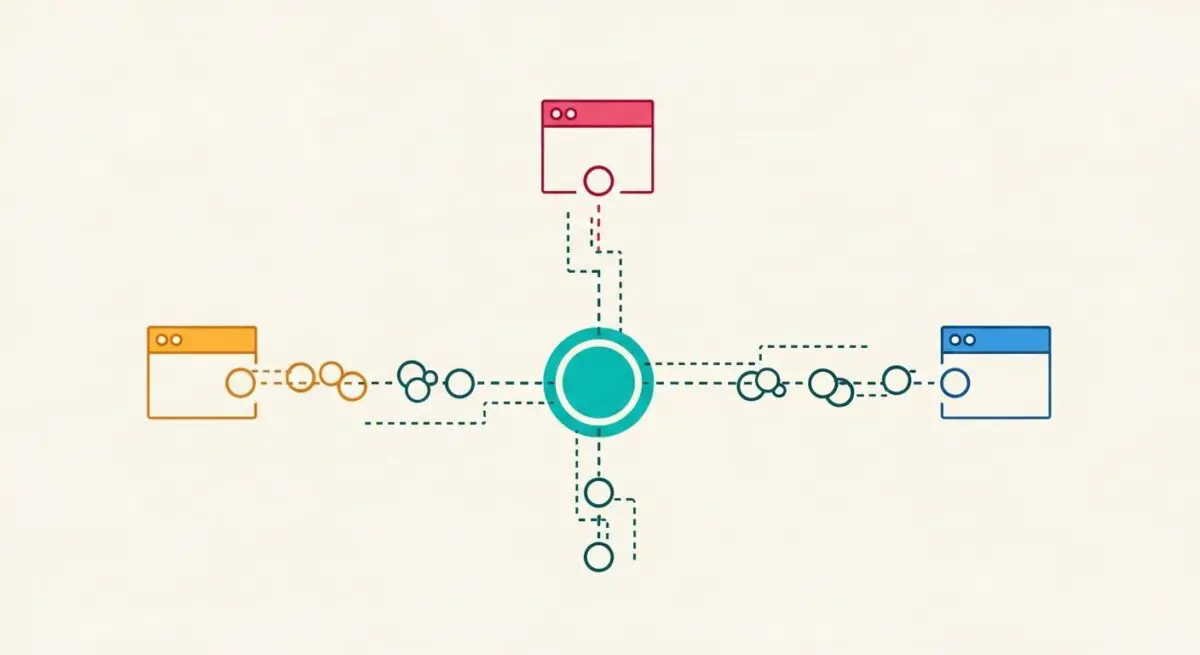
A Personalization Engine is a sophisticated software architecture designed to collect, analyze, and leverage user data in real-time to deliver tailored experiences across digital touchpoints. Unlike static rule-based systems, modern personalization engines utilize machine learning (ML) algorithms and natural language processing (NLP) to interpret complex behavioral signals. In the ecosystem of AI automations, these engines function as the central intelligence hub, processing incoming data streams—often via webhooks or REST APIs—to determine the most relevant content, product, or action for a specific user profile.
From a technical perspective, a personalization engine operates by synthesizing first-party data, session behavior, and historical context into a unified user state. This state is then queried by autonomous agents or programmatic SEO pipelines to generate dynamic responses. The engine manages the logic for collaborative filtering, content-based filtering, and hybrid recommendation models, ensuring that every automated interaction is optimized for conversion and engagement without manual intervention.
The Real-World Analogy
Think of a personalization engine as a world-class concierge at a high-end, private members’ club. Instead of providing every visitor with the same generic brochure, the concierge recognizes each member the moment they walk in. They remember your specific dietary restrictions, your preferred seating, and the fact that you enjoy architectural history. Before you even ask, the concierge hands you a custom-curated itinerary for the evening that aligns perfectly with your known interests. In the digital realm, the personalization engine is that concierge, working behind the scenes to ensure the “club” (your website or app) reshapes itself instantly for every individual guest.
Why is a Personalization Engine Critical for Autonomous Workflows and AI Content Ops?
In the era of stateless automation, a personalization engine provides the persistent context necessary for AI agents to make informed decisions. Without this layer, automated workflows remain generic and fail to meet the high relevance standards required for modern SEO and user experience. By integrating a personalization engine into an AI content operation, developers can execute programmatic SEO at a granular level, generating thousands of unique, high-value pages that address specific user intents rather than broad keywords.
Furthermore, these engines optimize API payload efficiency. By filtering and prioritizing data server-side before it reaches the client or the next node in an automation sequence, they reduce unnecessary compute overhead and latency. This is particularly vital for serverless architectures where execution time directly impacts operational costs. The engine ensures that only the most high-impact data is processed, allowing for hyper-scalable content distribution and real-time interface adaptation.
Best Practices & Implementation
- Leverage Edge Computing: Deploy personalization logic at the edge (e.g., via Cloudflare Workers or Vercel Edge Functions) to minimize the latency between data ingestion and content delivery, ensuring a sub-100ms response time.
- Implement Robust Data Schemas: Use strictly typed JSON payloads and consistent naming conventions across all data sources to ensure the personalization engine can accurately parse and correlate user signals from different platforms.
- Prioritize First-Party Data: Focus the engine’s training and execution on first-party data to remain compliant with evolving privacy regulations (GDPR/CCPA) while maintaining high accuracy in user modeling.
- Utilize Vector Databases: Integrate vector databases like Pinecone or Weaviate to enable semantic search and similarity matching, allowing the engine to understand the “intent” behind user actions rather than just keyword triggers.
- A/B Test Algorithmic Models: Continuously validate the performance of different ML models (e.g., switching from Bayesian networks to Deep Learning) through automated split-testing to ensure the engine evolves with changing user behavior.
Common Mistakes to Avoid
One frequent error is over-reliance on client-side rendering for personalized elements. This often leads to “content flickering” and negatively impacts Core Web Vitals, which can degrade SEO rankings. Another common pitfall is the cold start problem, where the engine fails to provide a meaningful experience for new users due to a lack of historical data; developers must implement fallback “popular” or “trending” logic to mitigate this. Finally, many brands neglect data hygiene, feeding the engine fragmented or duplicate data, which results in inaccurate profiles and irrelevant automated outputs.
Conclusion
A personalization engine is the essential bridge between raw data and meaningful AI-driven interactions. By mastering its technical implementation, organizations can scale autonomous workflows that are both highly efficient and deeply relevant to the end-user.