Executive Summary
- Enables high-fidelity telemetry for training reinforcement learning models and refining autonomous content feedback loops.
- Facilitates the transition from static automation to dynamic, intent-aware workflows via real-time event processing.
- Provides the granular data necessary for Generative Engine Optimization (GEO) by mapping user interaction patterns to LLM response accuracy.
What is User Behavior Analytics?
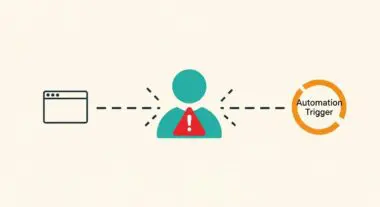
User Behavior Analytics (UBA) is the systematic collection, processing, and interpretation of granular interaction data generated by users across digital interfaces. Unlike traditional web analytics that focus on aggregate traffic metrics, UBA focuses on the “how” and “why” of individual sessions, capturing events such as clickstream paths, scroll depth, hover states, and conversion bottlenecks. In the context of AI automations, UBA serves as the primary telemetry layer, providing the raw data required to fuel machine learning models and autonomous decision-making engines.
From a technical perspective, UBA involves the deployment of event listeners and server-side tracking mechanisms that transmit JSON payloads to a centralized data warehouse or real-time processing stream. These data points are then normalized and analyzed to identify patterns, anomalies, and intent signals. For organizations leveraging AI Content Ops, UBA provides the empirical evidence needed to programmatically adjust content structures, metadata, and internal linking architectures based on actual user engagement rather than heuristic assumptions.
The Real-World Analogy
Imagine a sophisticated physical library where the floor tiles are pressure-sensitive and the bookshelves are equipped with infrared sensors. Instead of only knowing which books were checked out at the front desk (the conversion), the head librarian can see exactly which aisles visitors walked through, which books they pulled off the shelf to read the back cover, and where they stood looking confused before leaving. This level of detail allows the librarian to automatically rearrange the library’s layout every night, placing the most sought-after information exactly where the next visitor is most likely to look. User Behavior Analytics provides this same level of “environmental awareness” to your digital infrastructure, allowing AI agents to rearrange your content strategy in real-time.
Why is User Behavior Analytics Critical for Autonomous Workflows and AI Content Ops?
In the era of stateless automation and serverless architectures, UBA acts as the connective tissue between user intent and programmatic execution. For AI Content Ops, UBA data is essential for Retrieval-Augmented Generation (RAG) systems; by understanding which content segments drive the highest engagement or solve specific user queries, automations can prioritize those segments in future LLM prompts. Furthermore, UBA is the backbone of Generative Engine Optimization (GEO). As search engines evolve into answer engines, understanding how users interact with AI-generated summaries versus traditional links allows technical teams to optimize content for maximum visibility in synthetic search environments.
Best Practices & Implementation
- Implement Server-Side Tagging: Move beyond client-side JavaScript trackers to server-side tagging (e.g., via Google Tag Manager Server-Side) to ensure data integrity, bypass ad-blockers, and reduce client-side latency.
- Standardize Event Schemas: Define a strict JSON schema for all behavioral events to ensure seamless integration between your analytics platform and downstream AI automation tools like Make.com, Zapier, or custom Python scripts.
- Leverage Vector Embeddings for Behavior: Convert sequence-based user actions into vector embeddings. This allows your AI models to perform similarity searches and predict future user actions based on historical behavioral clusters.
- Prioritize First-Party Data: Focus on building a robust first-party data pipeline to mitigate the impact of third-party cookie deprecation and ensure compliance with global privacy regulations like GDPR and CCPA.
Common Mistakes to Avoid
A frequent error is the collection of “dark data”—gathering massive amounts of behavioral information without a defined pipeline for processing or actioning it within the automation stack. Another common pitfall is relying on vanity metrics, such as pageviews, which fail to capture the nuance of user intent or the technical friction points that hinder autonomous conversion paths.
Conclusion
User Behavior Analytics is the essential feedback mechanism that transforms static digital assets into self-optimizing, autonomous ecosystems. By integrating high-fidelity interaction data into AI workflows, technical teams can ensure their content operations remain hyper-relevant in an increasingly algorithmic search landscape.