Key Points
- Eradicating Shadow Accounting: Real-time ICM automation eliminates the 10 to 15 hours sales reps spend manually verifying commissions, instantly boosting actual selling time.
- No-Code Logic Deployment: Modern platforms allow RevOps teams to deploy complex, multi-tiered commission structures in minutes without relying on fragile Excel macros.
- Bidirectional Data Integrity: Seamless pipelines between CRMs and financial systems prevent revenue leakage by automatically adjusting for clawbacks and canceled deals.
Table of Contents
The Core Friction of Shadow Accounting
Imagine a local baker trying to fulfill hundreds of WhatsApp orders while manually writing down every ingredient cost on a flour-dusted notepad. Now, scale that chaos to an enterprise level where thousands of sales representatives are closing complex deals globally. This is the reality for many organizations still relying on legacy systems to calculate commissions.
The result is a phenomenon known as shadow accounting. Sales professionals are forced to spend 10 to 15 hours every month building private spreadsheets to verify their own earnings. This lack of transparency breeds mistrust and pulls top performers away from their primary goal of generating revenue.
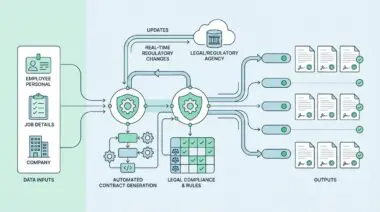
The ultimate solution to reclaim this lost time is Real-time Incentive Compensation Management (ICM) Automation. By transforming a reactive, manual chore into an invisible, instant workflow, businesses can eliminate calculation errors entirely. This technological shift empowers everyone from solo operators to massive development teams to scale operations with absolute financial clarity.
Extracting Market Insights from Complex Data Streams
Market Intelligence & Data
Administrative Drain
According to CaptivateIQ’s 2025 State of Incentive Compensation Management Report, companies still spend an average of 89 hours every month manually managing commission payouts.
Manual Error Rate
A December 2025 Fheri industry study found that manual commission spreadsheets maintain a consistent error rate of 3% to 5%, leading to significant fiscal overages or underpayments.
Sales Turnover Link
According to 2026 benchmarks from Visdum, the average turnover rate for sales positions is 35%, driven largely by mistrust in opaque and delayed commission structures.
Actual Selling Time
The 2026 Salesforce State of Sales report indicates that reps spend only 28% of their workweek actually selling, with the remainder consumed by administrative tasks like verifying commission verification and CRM data management.
The numbers above paint a stark picture of operational drag within modern finance departments. Despite advancements in CRM technology, organizations consistently spend an average of 89 hours every month manually managing commission payouts. This administrative bottleneck drains resources that should be dedicated to strategic forecasting and territory optimization.
However, companies embracing Real-time Incentive Compensation Management (ICM) Automation are seeing immediate, tangible returns on their investment. For example, a recent industry analysis highlighted how one automotive enterprise achieved a 99% accuracy rate and saved 172 administrative hours in a single month. This shift proves that modernizing your compensation architecture is not just about speed, but about securing fundamental financial accuracy.
The Daily Friction
Sales representatives in large organizations frequently experience severe payout anxiety. When commission tracking is relegated to a manual black box, reps only see their actual earnings weeks after a deal has closed. This opacity leads directly to the shadow accounting practices that drain productivity.
When employees cannot trust their paychecks, morale plummets. Data shows this environment leads to a 35% higher turnover rate compared to automated, transparent workplaces. Replacing top sales talent is an incredibly expensive consequence of clinging to outdated spreadsheet workflows.
Modern tools like Qobra and Spiff are solving this by providing real-time visibility. These platforms offer dynamic dashboards that update instantly the moment a deal reaches the Closed Won stage in the CRM. Reps can finally trust the system, put down their private spreadsheets, and focus entirely on their next pitch.
The No-Code & Low-Code Revolution
Historically, altering a commission plan required submitting IT tickets and waiting weeks for custom development. Finance teams were trapped managing fragile Excel macros that would break with a single misplaced keystroke. This rigid architecture made it nearly impossible to adapt to sudden market changes.
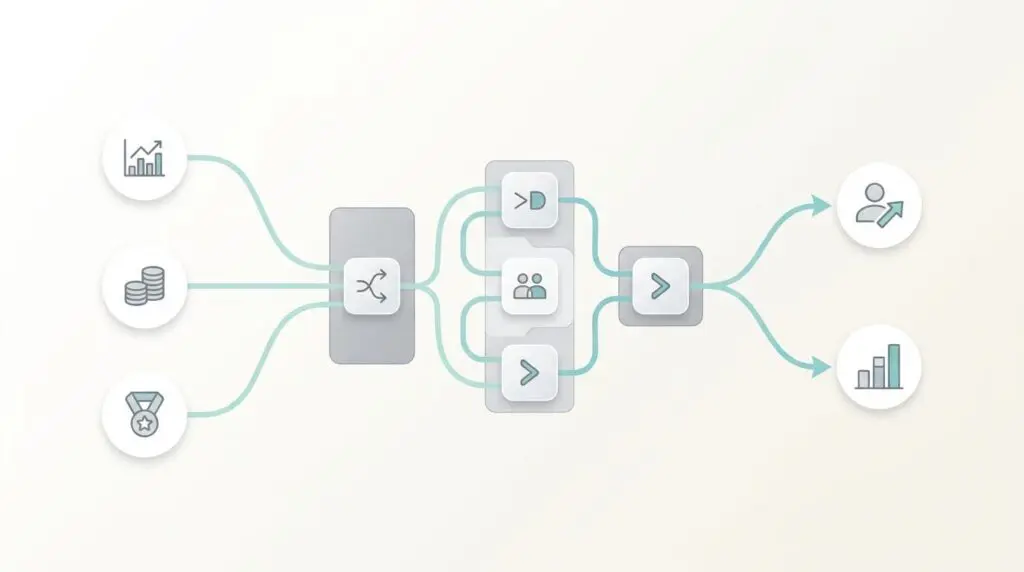
Today, platforms like CaptivateIQ and Everstage have introduced logic-based visual modelers. These intuitive interfaces allow Revenue Operations teams to build complex, multi-tiered commission structures without writing a single line of code or SQL. You can seamlessly add accelerators, caps, and bonuses using simple drag-and-drop mechanics.
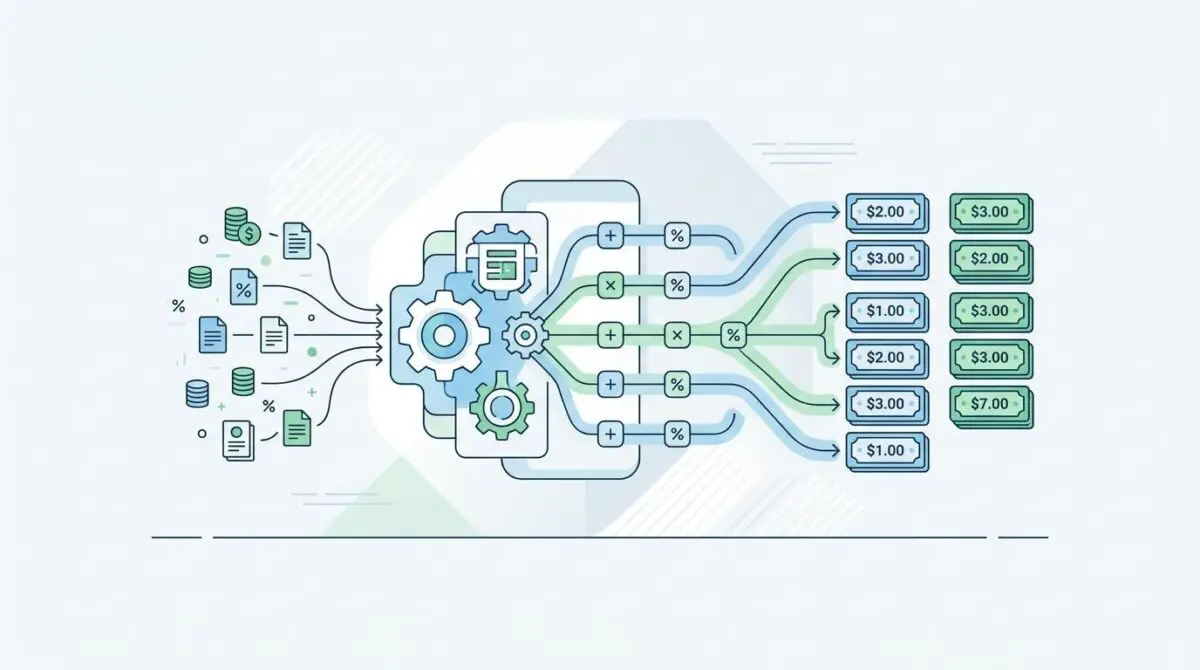
This shift to no-code RACE (Real-time Automated Commission Engine) platforms reduces deployment time from weeks to mere minutes. RevOps can now test and launch new incentive programs instantly, ensuring the sales team is always aligned with the company’s most current revenue targets.

Data Synchronization & Pipelines
A commission engine is only as powerful as the data feeding into it. Disconnected systems frequently cause revenue leakage, a scenario where commissions are paid out on deals that were eventually canceled. Paying reps for revenue the company never collected is a massive fiscal liability.
To solve this, organizations must establish a bidirectional sync between their CRM platforms like Salesforce or HubSpot, and their financial systems like NetSuite. Integrations using powerful middleware like Workato or native connectors maintain absolute data integrity across the entire Lead-to-Cash lifecycle. The moment a customer churns or a payment is reversed, the system knows.
This automated pipeline ensures that clawbacks are triggered instantly and accurately without human intervention. By synchronizing these data silos, finance teams protect the bottom line while maintaining a mathematically perfect ledger of all incentive payouts.

The Hidden Costs of Manual Work
The administrative burden of manual commission processing is staggering. Costing the average enterprise approximately 89 hours of tedious data entry per month, it forces highly skilled professionals to act as human calculators. This is a profound waste of human capital and operational budget.
Implementing Real-time Incentive Compensation Management (ICM) Automation reduces this administrative burden by up to 90%. When the machine handles the repetitive math, the entire operational dynamic shifts. Finance and Sales Ops teams are finally liberated from the spreadsheet grind.
This newfound time allows RevOps to focus on high-value, strategic initiatives. Instead of verifying cell formulas, they can dedicate their expertise to territory optimization, complex quota modeling, and analyzing overall sales performance to drive scalable growth.
The Future Horizon
The high volume of commission-related Slack messages and email queries currently overwhelms Finance teams during the critical end-of-month closing period. Reps constantly demand explanations for their payouts, creating a chaotic internal support desk. This reactive model is rapidly approaching obsolescence.
By late 2026, Agentic Sales Performance Management systems will autonomously handle these commission disputes. Using advanced AI, these agents will analyze complex contract terms against established payout rules in milliseconds. They will provide instant, personalized explanations directly to the reps, reducing human intervention by 70%.
The transition from reactive dashboards to predictive payout agents will redefine sales motivation. These systems will forecast total annual earnings based on real-time pipeline health and suggest specific deal-closing actions to maximize personal revenue. The future of ICM is not just calculating the past, but actively engineering future success.
Conclusion
Relying on manual spreadsheets to calculate complex sales commissions is a guaranteed path to operational friction and lost revenue. Real-time Incentive Compensation Management (ICM) Automation transforms this chaotic process into a streamlined, error-free engine. By adopting these modern workflows, businesses can eliminate shadow accounting, boost sales morale, and reclaim countless hours of administrative time.
The shift toward no-code platforms and AI-driven predictive agents represents the next frontier of revenue operations. Organizations that embrace this automation will scale faster, retain top talent, and maintain absolute financial integrity across their entire sales ecosystem.
Navigating the intersection of technology, workflows, and operational efficiency requires a sharp strategy. To future-proof your business architecture and scale with precision, connect with Andres at Andres SEO Expert.
Frequently Asked Questions
What is shadow accounting in sales organizations?
Shadow accounting is a phenomenon where sales professionals spend 10 to 15 hours each month creating private spreadsheets to verify their earnings. This typically occurs when legacy systems lack transparency, leading to mistrust and decreased productivity.
How many hours do companies typically lose to manual commission management?
According to market intelligence, companies spend an average of 89 hours every month manually managing commission payouts. This administrative bottleneck drains resources that could otherwise be used for strategic forecasting and territory optimization.
What is the average error rate for manual commission spreadsheets?
Manual commission spreadsheets maintain a consistent error rate of 3% to 5%. These inaccuracies often result in significant fiscal overages or underpayments, creating financial risk for the organization.
How does automated Incentive Compensation Management (ICM) impact sales turnover?
Automated ICM provides real-time visibility and transparency, which directly addresses the 35% turnover rate often seen in sales teams caused by opaque or delayed commission structures. Trust in the payout process is a key factor in talent retention.
What is a No-Code RACE platform in revenue operations?
A No-Code Real-time Automated Commission Engine (RACE) allows Revenue Operations teams to build complex commission structures—including accelerators and caps—using visual modelers instead of custom code or SQL, reducing deployment time from weeks to minutes.
Why is bidirectional synchronization between CRM and financial systems important?
Bidirectional sync ensures data integrity across the Lead-to-Cash lifecycle. It prevents revenue leakage by automatically triggering clawbacks if a customer churns or a payment is reversed, protecting the company’s bottom line.