Key Points
- Automated License Reclamation: Connecting identity providers directly to billing APIs eliminates the manual spreadsheet lag that costs enterprises millions annually.
- Semantic Usage Auditing: Agentic AI evaluates the depth of user interaction rather than binary logins to automatically downgrade underutilized premium seats.
- Zero-Touch Offboarding: Multi-step workflows instantly revoke access across all platforms to synchronize financial cost-cutting with strict security mandates.
Table of Contents
The Silent Drain of Abandoned Software
Picture this: a fleet of rental cars sitting completely empty in a parking lot, but the engines are still running for months. This is exactly the scenario playing out inside modern enterprise networks every single day. Employees change roles, leave the company, or simply abandon tools—yet the software billing meter just keeps spinning.
The manual hunt for these abandoned licenses is a soul-crushing exercise in spreadsheet matching. IT administrators spend countless hours comparing disjointed logs, trying to figure out who actually needs their expensive software seats. This reactive approach guarantees that companies bleed capital long before an audit even begins.
The ultimate solution to this operational friction is SaaS Management Platform (SMP) Lifecycle Orchestration. By connecting identity providers directly to billing APIs, organizations can instantly detect and reclaim inactive seats. This continuous automation reclaims lost time, eliminates manual errors, and scales IT operations seamlessly.
The Financial Reality of Idle Licenses
Market Intelligence & Data
Annual Enterprise Loss
According to a 2026 Quantumrun report, the average large enterprise wastes this amount annually on software licenses that remain completely untouched.
Global SaaS Spend Waste
As of May 2026, OpenLM research confirms that nearly one-third of total software expenditures are lost to idle or non-reclaimed licenses.
Immediate Cost Reduction
CloudNuro’s 2026 analysis indicates that organizations adopting automated SaaS governance achieve these savings within the first 12 months of implementation.
Projected Management Automation
According to 2026 data from BetterCloud, nearly three-quarters of all routine SaaS management tasks are on track to be fully automated by 2028.
The staggering $18 million annual loss to untouched licenses highlights a severe disconnect between procurement and daily operations. When IT teams lack real-time visibility, expensive enterprise tiers sit dormant across the organization. This capital drain stifles innovation budgets and inflates operational overhead unnecessarily.
Seeing 30% of global SaaS spend evaporate into the void of idle licenses is a wake-up call for financial directors. This waste is the direct result of fragmented software adoption where shadow IT runs rampant. Reclaiming this capital requires shifting from reactive, manual audits to proactive, continuous system monitoring.
Organizations that implement automated governance see an immediate 23-30% reduction in software spend, proving that the ROI of automation is both rapid and substantial. By cutting the dead weight of unused subscriptions, companies instantly free up critical cash flow. Furthermore, these automated orchestration systems reduce the average time to provision a new user by 78%, creating a massive compounding effect on overall productivity.
The projection that 73% of routine SaaS management will be automated by 2028 signals a permanent shift in IT operations. Human administrators will no longer waste hours cross-referencing login logs with billing dashboards. Instead, they will oversee intelligent workflows and deployments of Agentic AI, such as ServiceNow’s SAM Pro AI, to handle the heavy lifting.
Core Thematic Workflows
Escaping the Manual Spreadsheet Trap
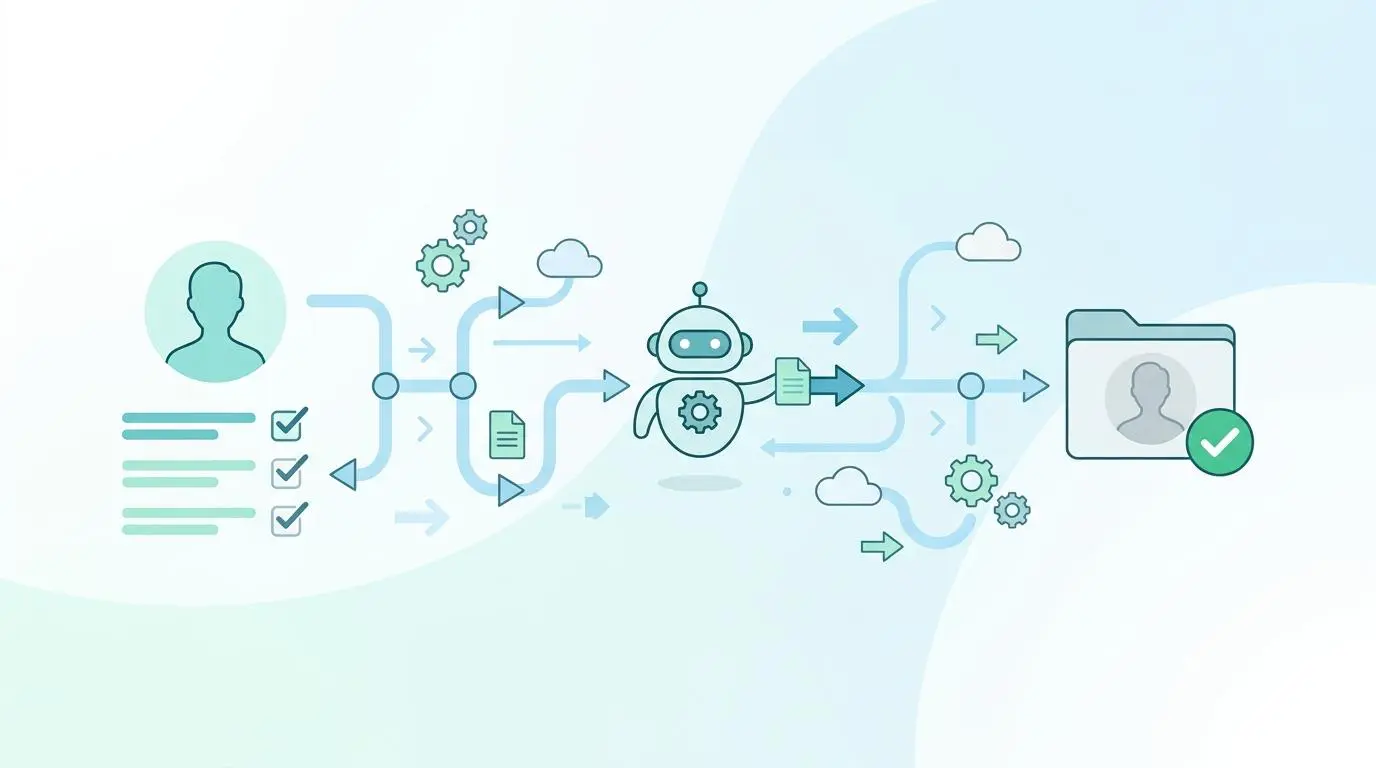
IT teams traditionally rely on manual CSV exports from SSO providers like Okta to compare against billing dashboards in apps like Adobe or Salesforce. This manual reconciliation of usage logs across hundreds of siloed dashboards creates a massive operational lag. Redundant billing often persists for months before anyone notices the discrepancy.
The sheer volume of data makes it impossible for human administrators to keep up with dynamic workforce changes. Every time an employee shifts departments, their software needs change, but their old licenses are rarely revoked. This creates a bloated inventory of active seats that no one is actually using.
Automation tools like Torii or Zylo are changing the game by triggering automated reclaim workflows. These platforms rely on real-time API telemetry to monitor user activity continuously across the entire tech stack. If a user registers zero logins over a 30-day threshold, the system automatically revokes the license.
Once the license is revoked, the SMP seamlessly reallocates it to a central pool for future use. This ensures that new hires can be provisioned instantly without the company needing to purchase additional seats. It is a closed-loop system that completely eliminates the manual spreadsheet trap.
Building No-Code Offboarding Bots
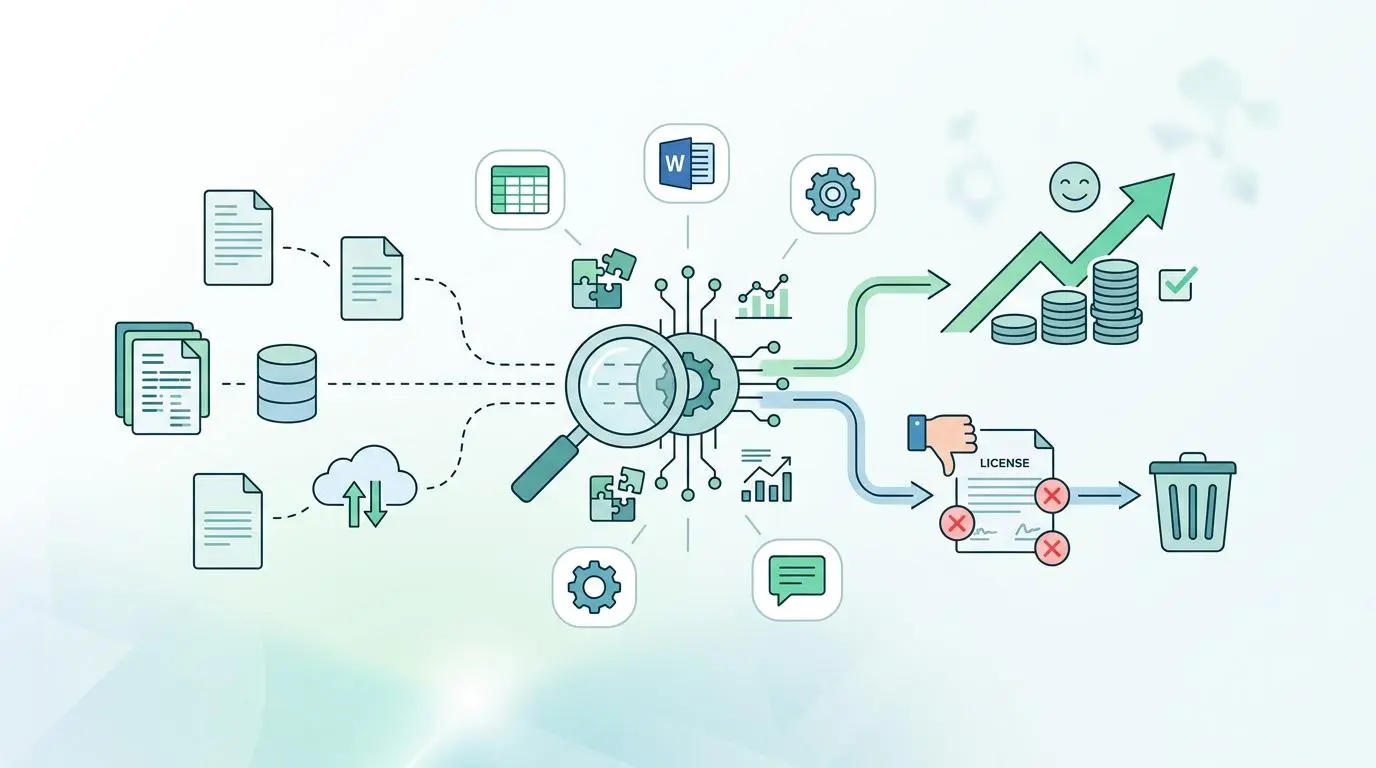
The lack of native cross-app communication has historically required IT staff to manually log into a dozen different admin consoles to deprovision a single user. This fragmented process is not only tedious but highly prone to human error. A missed toggle in one dashboard can leave a costly seat active indefinitely.
Today, platforms like BetterCloud and Josys allow IT managers to build multi-step offboarding bots without writing a single line of code. These visual builders connect disparate APIs to orchestrate complex teardowns in seconds. IT teams can map out entire lifecycle journeys using simple drag-and-drop interfaces.
A single trigger can now automatically execute a sequence of critical events:
- Slack Deactivation: Instantly revoking messaging access to secure internal communications.
- Jira Reclamation: Pulling back expensive developer licenses into the central pool.
- Finance Notification: Pinging the accounting team via Relay.app to update billing forecasts.
By automating these repetitive tasks, organizations drastically reduce the administrative burden on their technical staff. Engineers can finally step away from routine ticketing and focus on building scalable infrastructure. The result is a leaner, faster, and far more accurate offboarding process.
The Rise of Semantic Usage Auditing
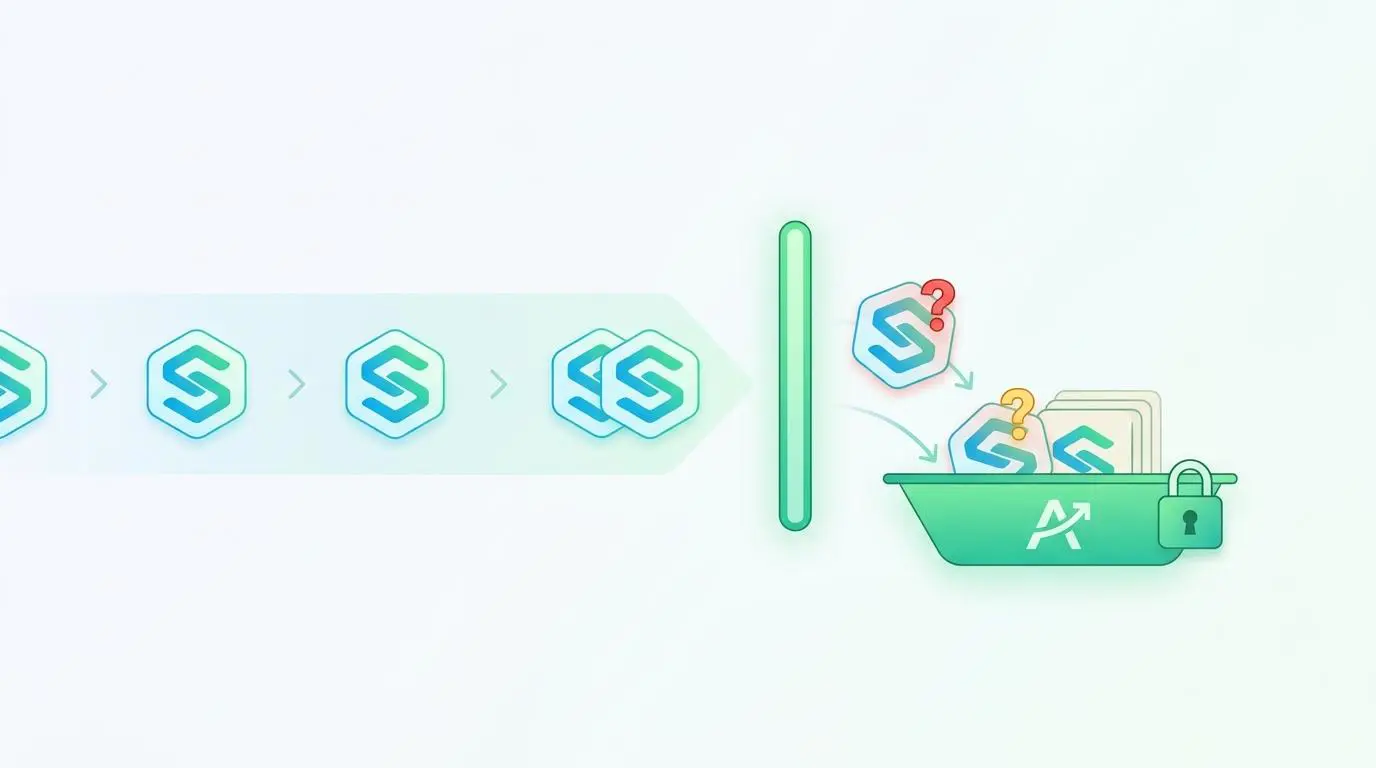
Binary usage metrics, such as a simple login timestamp, often mask the reality of how software is truly utilized. Users might technically be active because they open an app, but they never actually use its premium features. This creates a massive blind spot where expensive tier-one licenses are wasted on read-only users.
By 2026, agentic AI systems are performing what is known as semantic usage auditing. Instead of just checking for logins, these agents analyze if the user is performing value-added actions. They can distinguish between an employee editing a complex project versus merely viewing a shared dashboard.
If the activity is deemed superficial, the AI agent automatically suggests or executes a downgrade to a free tier. This granular level of insight ensures that companies only pay for the features their employees actively leverage. It transforms software auditing from a blunt instrument into a precision scalpel.
Furthermore, ServiceNow’s 2026 release of SAM Pro AI utilizes generative models to automatically extract complex license clauses from vendor PDFs. This innovation reduces the manual data entry required for compliance by an astounding 70 percent. AI is not just monitoring usage; it is actively interpreting the legal boundaries of software contracts.
Stopping the Offboarding Leakage

The mental load and high error rate of IT admins managing seat counts via static spreadsheets is a massive hidden cost. Relying on manual calendar reminders to revoke access inevitably leads to human failure. This administrative burden distracts highly skilled engineers from strategic infrastructure projects.
Recent data shows that 54% of organizations still lack lifecycle automation, leading to severe offboarding leakage. Ex-employees frequently retain access to expensive licenses long after their departure. This leakage directly contributes to the estimated $45 billion in global SaaS waste.
When companies fail to automate offboarding, they essentially pay a recurring tax on organizational inefficiency. Every forgotten license compounds over time, draining resources that could be allocated to growth initiatives. Stopping this leakage requires treating offboarding as an automated, non-negotiable workflow.
SMP lifecycle orchestration guarantees that the moment an HR system registers a termination, the offboarding cascade begins. There are no delays, no forgotten accounts, and no wasted funds. It is a foolproof mechanism for preserving enterprise capital.
Synchronizing Security with Cost Control
A massive security gap is created when financial cost-cutting is not tightly synchronized with identity management. Reclaiming seats to save money is only half the battle; revoking access to protect data is the true priority. When these two processes are siloed, enterprise networks remain highly vulnerable.
Automated reclamation is now increasingly viewed as a strict security mandate. Shockingly, 33% of organizations report that ex-employees were not offboarded within 24 hours of departure. Leaving these accounts active exposes sensitive corporate data to credential theft and malicious breaches.
By integrating SMPs with centralized identity providers, companies create a unified defense mechanism. The same automated workflow that reclaims a $100 software license also severs the user’s access to proprietary databases. Cost control and cybersecurity become two sides of the exact same automated coin.
This synchronized approach acts as a vital compliance safety net for modern enterprises. During security audits, IT teams can instantly generate logs proving that all access was revoked the second an employee departed. Automation replaces frantic manual checks with undeniable cryptographic proof.
Proving ROI with Instant Capital Recovery
Historically, it has been difficult to justify the cost of dedicated SaaS management tools without clear, real-time data. Executives want to see exactly how much license capital is being recovered to validate the software investment. Without automated tracking, proving this ROI is a frustrating guessing game.
Modern automated SaaS governance changes this dynamic by providing immediate, verifiable cost reductions. Dashboards now show the exact dollar amount saved every time an inactive seat is reclaimed. This transparency turns IT from a perceived cost center into a proactive driver of enterprise profitability.
When IT directors enter budget negotiations, they no longer rely on estimates or anecdotal evidence. They can point to automated ledgers that detail exactly how many thousands of dollars were recovered in the last quarter. This hard data makes it incredibly easy to secure funding for further automation initiatives.
Ultimately, instant capital recovery empowers organizations to reinvest their software budget intelligently. Instead of funding zombie accounts, companies can deploy those reclaimed dollars toward cutting-edge tools that actually drive revenue. Automation ensures that every dollar spent on software delivers maximum business value.
The Shift to Per-Second SaaS Billing
The future of software management is moving rapidly toward Just-in-Time (JIT) provisioning. In this upcoming paradigm, AI agents will dynamically assign licenses the exact moment a user opens an application. The second that browser tab is closed, the license will be instantly harvested and returned to the pool.
This fluid orchestration effectively transitions the industry from rigid per-seat contracts to highly efficient per-second billing models. Organizations that embrace this level of automation will operate with unprecedented agility and zero software waste. The era of paying for idle software is coming to a definitive end.
Navigating the intersection of technology, workflows, and operational efficiency requires a sharp strategy. To future-proof your business architecture and scale with precision, connect with Andres at Andres SEO Expert.
Frequently Asked Questions
How much money do enterprises lose to unused software licenses?
Large enterprises lose an average of $18 million annually on untouched software licenses. Research indicates that approximately 30% of global SaaS spend is wasted on idle or non-reclaimed licenses, primarily due to manual tracking inefficiencies and shadow IT.
What is SaaS Management Platform (SMP) Lifecycle Orchestration?
SMP Lifecycle Orchestration is the process of connecting identity providers directly to billing APIs to automate the detection and reclamation of inactive software seats. It replaces manual spreadsheet tracking with real-time telemetry to manage the entire user lifecycle from onboarding to offboarding.
How does automated SaaS offboarding improve cybersecurity?
Automated offboarding closes security gaps by ensuring employee access is revoked across all platforms the moment a departure is registered. This synchronization prevents “offboarding leakage,” where ex-employees retain access to sensitive corporate data and proprietary systems.
What is semantic usage auditing in AI-driven SaaS management?
Semantic usage auditing uses Agentic AI to analyze the quality of software interactions rather than just binary login data. It distinguishes between value-added actions and superficial activity, allowing organizations to downgrade users from premium to free tiers based on actual feature utilization.
What is the expected ROI of automated software license reclamation?
Organizations implementing automated SaaS governance typically see an immediate 23-30% reduction in software expenditures within the first year. Additionally, automation can reduce the average time to provision new users by 78%, significantly increasing overall operational productivity.
What is Just-in-Time (JIT) provisioning in SaaS management?
Just-in-Time (JIT) provisioning is an emerging model where AI agents dynamically assign software licenses the moment a user opens an application and harvest them once the session ends. This shift moves the industry toward per-second billing models, eliminating the cost of idle per-seat contracts.