Executive Summary
- Customer retention is a primary driver of the LTV/CAC ratio, directly influencing the efficiency of capital allocation in marketing budgets.
- Advanced retention frameworks utilize RFM (Recency, Frequency, Monetary) modeling and predictive churn analytics to identify high-risk segments before attrition occurs.
- Successful retention strategies require a unified data architecture, typically involving a Customer Data Platform (CDP) to synchronize behavioral triggers across the MarTech stack.
What is Customer Retention?
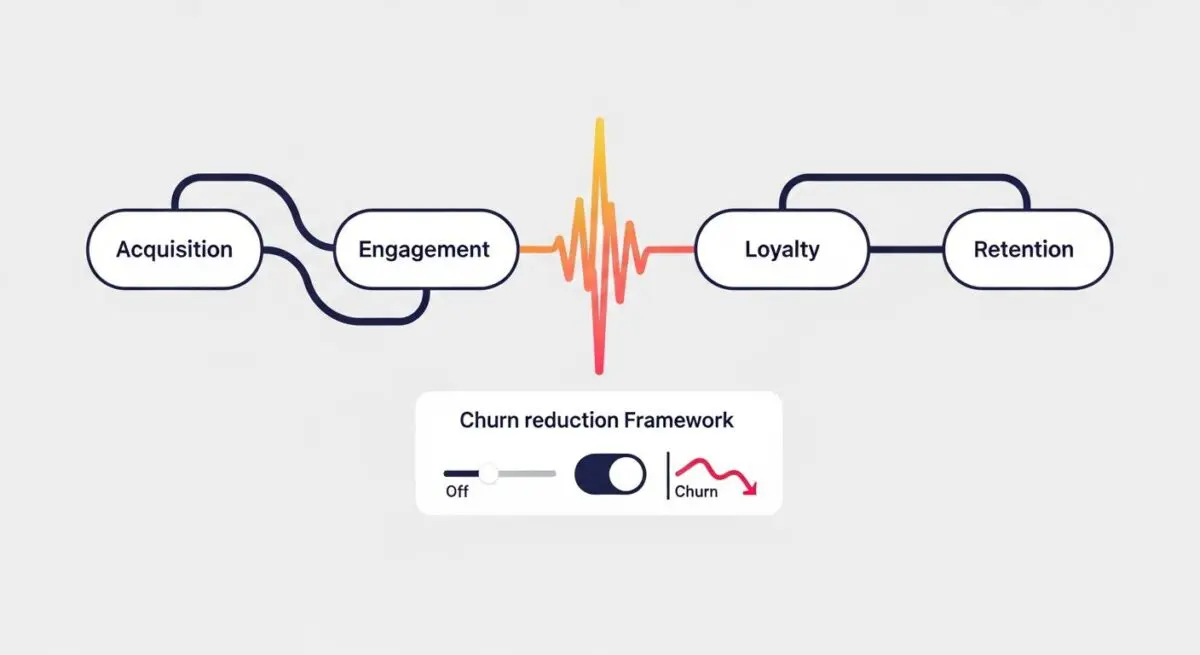
Customer retention refers to the strategic process and metric-driven framework by which an organization maintains its existing customer base over a defined temporal period. In the context of modern Marketing Technology (MarTech) and Data Science, retention is not merely a loyalty metric but a critical component of the unit economics that dictate a firm’s scalability. Technically, the Customer Retention Rate (CRR) is calculated using the formula: CRR = ((E-N)/S) x 100, where ‘E’ represents the number of customers at the end of a period, ‘N’ represents the number of new customers acquired during that period, and ‘S’ represents the number of customers at the start of the period. This metric provides a granular view of brand health and product-market fit, serving as a leading indicator for long-term revenue stability and predictable cash flow. Within a sophisticated data architecture, customer retention is managed through the integration of Customer Data Platforms (CDPs) and Customer Relationship Management (CRM) systems. These systems facilitate the collection of first-party behavioral data, allowing marketers to build deterministic and probabilistic models of customer behavior. By analyzing touchpoints across the customer journey—from initial acquisition to post-purchase engagement—organizations can identify the specific drivers of churn and the characteristics of high-value, loyal segments. In the era of Generative Engine Optimization (GEO) and AI-driven search, retention data becomes even more vital, as search algorithms increasingly prioritize entities with high user engagement and authority, which are direct outcomes of successful retention strategies. Furthermore, retention is deeply linked to Cohort Analysis, where customers are grouped by their acquisition date to observe how their behavior evolves over time, allowing for the identification of specific ‘churn cliffs’ in the product lifecycle. From a statistical perspective, retention can be modeled using Survival Analysis, specifically the Kaplan-Meier estimator, to predict the probability of a customer remaining active over time. This allows for the calculation of the ‘half-life’ of a customer cohort, providing deep insights into the long-term viability of different acquisition channels.
The Real-World Analogy
To conceptualize customer retention for executive stakeholders, consider a sophisticated irrigation system designed to maintain a high-yield vineyard. Customer acquisition is the process of pumping water from an external source into the reservoir. However, if the reservoir has structural leaks—representing customer churn—the system becomes inefficient, requiring more energy and resources to maintain the same water level. Customer retention is the engineering process of identifying, sealing, and reinforcing those leaks. A vineyard with a sealed reservoir requires significantly less external water to thrive, allowing the owner to reinvest the saved resources into expanding the vineyard’s acreage or improving the quality of the grapes. In business terms, a high retention rate ensures that the ‘water’ (revenue and customers) stays within the ecosystem, compounding over time rather than constantly needing replacement through expensive acquisition efforts. A perfectly retained customer base acts as a self-sustaining aquifer, providing the stability needed for long-term strategic growth and resilience against market fluctuations.
How Customer Retention Impacts Marketing ROI & Data Attribution?
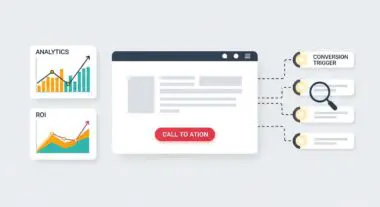
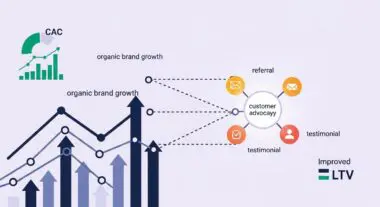
The impact of customer retention on Marketing Return on Investment (ROI) is primarily realized through the optimization of the Lifetime Value (LTV) to Customer Acquisition Cost (CAC) ratio. A standard benchmark for healthy growth is an LTV/CAC ratio of 3:1 or higher. Because the cost of retaining an existing customer is statistically significantly lower than the cost of acquiring a new one—often cited as five to twenty-five times less expensive—retention acts as a force multiplier for marketing efficiency. When retention rates improve, the LTV of the average customer increases, which in turn allows the organization to justify a higher CAC, providing a competitive advantage in programmatic advertising auctions and high-intent search environments. This creates a ‘virtuous cycle’ where higher retention funds more aggressive acquisition, leading to market dominance. Furthermore, the concept of Negative Churn—where expansion revenue from existing customers exceeds the revenue lost from churning customers—represents the pinnacle of retention success. Achieving negative churn requires a technical focus on upselling and cross-selling workflows integrated directly into the product experience. From a data attribution perspective, customer retention complicates and enriches the understanding of the conversion path. Traditional last-click attribution models fail to account for the ongoing value generated by retained customers. Advanced attribution frameworks, such as time-decay or position-based models, must be integrated with cohort analysis to accurately assign value to the various touchpoints that contribute to long-term retention. For instance, a technical SEO strategy that improves the user experience for existing customers (e.g., through optimized documentation or portal speed) may not show immediate ‘new’ conversions but will manifest in higher retention rates and increased expansion revenue. Data-driven organizations use these insights to move beyond simple acquisition metrics, focusing instead on Net Revenue Retention (NRR), which accounts for churn, contraction, and expansion revenue within the existing customer base. NRR is often considered the ‘gold standard’ metric for SaaS and subscription-based enterprises, as an NRR over 100% indicates that the company can grow even without acquiring a single new customer.
Strategic Implementation & Best Practices
- Deploy Predictive Churn Modeling: Utilize machine learning algorithms, such as Random Forest or Gradient Boosting Machines (GBM), to analyze historical customer data and identify behavioral patterns that precede churn. By assigning a ‘propensity to churn’ score to each customer, marketing teams can trigger automated, personalized intervention workflows via API integrations before the customer reaches the point of exit. This proactive approach is significantly more effective than reactive ‘save’ attempts.
- Implement RFM Segmentation: Execute Recency, Frequency, and Monetary (RFM) analysis to categorize the customer base into distinct tiers. This technical segmentation allows for the delivery of hyper-personalized content and offers tailored to the specific lifecycle stage of the customer, ensuring that high-value ‘champions’ are rewarded while ‘at-risk’ segments are re-engaged with precision. RFM data should be synced in real-time across the MarTech stack to ensure consistency in messaging.
- Optimize the Post-Purchase UX/UI: Ensure that the technical infrastructure of the customer portal or application is optimized for speed and usability. High latency and friction in the post-purchase experience are leading technical causes of churn. Implementing Core Web Vitals optimizations and streamlined authentication processes (e.g., SSO) can significantly enhance the perceived value of the service. Technical debt in the customer-facing interface is a direct contributor to customer dissatisfaction and eventual attrition.
- Leverage Automated Lifecycle Orchestration: Use marketing automation platforms to build complex, event-driven communication sequences. These sequences should be triggered by specific user actions (or inactions) within the product, providing timely education and support that reinforces the product’s value proposition and encourages habitual usage. This includes ‘dunning management’ for automated handling of failed credit card transactions, which is a critical component of reducing passive churn.
Common Pitfalls & Strategic Mistakes
One of the most prevalent mistakes in enterprise marketing is the ‘Acquisition Bias,’ where disproportionate budget and focus are allocated to top-of-funnel activities while the post-purchase experience remains underfunded. This leads to a ‘leaky bucket’ scenario where high churn rates negate the gains made through aggressive acquisition. Another technical pitfall is the existence of data silos; when customer support data, product usage data, and marketing engagement data are stored in disparate systems, the organization lacks the Single Source of Truth (SSOT) necessary to execute effective retention strategies. Without a unified view, interventions are often mistimed or irrelevant. Finally, many brands fail to distinguish between ‘active churn’ (customers choosing to leave) and ‘passive churn’ (customers leaving due to technical or billing failures). Passive churn can often be mitigated through simple technical solutions like automated card updater services, yet it is frequently overlooked in favor of more complex behavioral interventions.
Conclusion
Customer retention is the cornerstone of sustainable, data-driven growth, requiring a sophisticated blend of behavioral psychology, technical data integration, and rigorous analytical modeling. By prioritizing the LTV/CAC ratio and eliminating technical friction in the customer journey, organizations can build a resilient marketing architecture that thrives on compounding value rather than constant acquisition.