Executive Summary
- Focuses on immediate, quantifiable conversion events through precise calls-to-action and trackable response channels.
- Integrates deeply with MarTech stacks via Conversion APIs and server-side tracking to ensure data integrity in a cookieless environment.
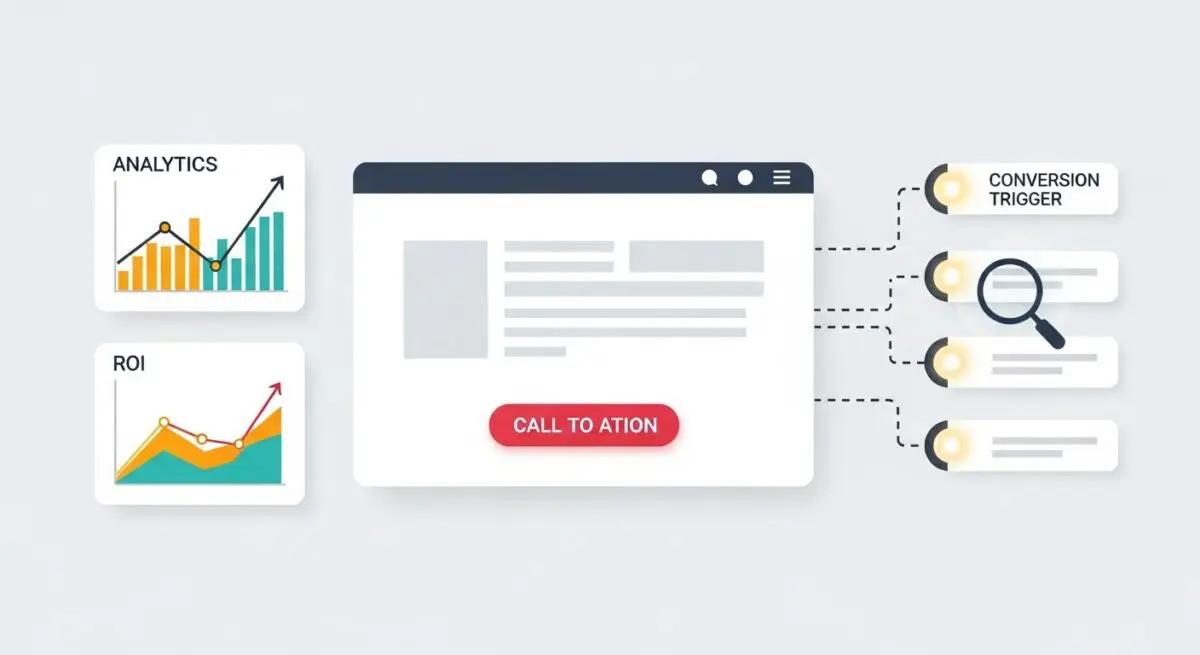
- Enables granular ROI analysis by linking specific marketing expenditures directly to individual customer acquisition actions.
What is Direct Response Marketing?
Direct Response Marketing (DRM) is a strategic methodology within the broader performance marketing ecosystem designed to elicit an immediate, measurable response from a target audience. Unlike brand-oriented marketing, which focuses on long-term equity and sentiment, DRM operates on a closed-loop feedback system where every impression is intended to drive a specific action—such as a lead submission, a purchase, or a whitepaper download. In the modern MarTech stack, DRM is the primary engine for data generation, providing the high-velocity signals required for machine learning algorithms to optimize bidding strategies in real-time. It relies heavily on the Offer, the Information, and the Call to Action (CTA), all of which are treated as variables in a continuous optimization cycle.
From a technical perspective, DRM is characterized by its reliance on unique identifiers, such as UTM parameters, click IDs (GCLID, FBCLID), and server-side event tracking, which allow marketers to map a user’s journey from the initial touchpoint to the final conversion event. This granularity is essential for building robust data pipelines that feed into Customer Data Platforms (CDPs) and Business Intelligence (BI) tools, enabling a level of transparency that is often missing in traditional awareness campaigns. Furthermore, DRM is increasingly being integrated with AI-Search and Generative Engine Optimization (GEO), where the focus shifts from broad visibility to providing direct, actionable answers that prompt immediate user engagement. By leveraging behavioral triggers and psychological principles like urgency and scarcity, DRM minimizes the friction between intent and action, making it a cornerstone of scalable growth for enterprise-level organizations.
The Real-World Analogy
To understand Direct Response Marketing, consider the difference between a high-end luxury car commercial aired during a major sporting event and a specialized vending machine located in a high-traffic airport terminal. The commercial is brand marketing; it aims to build desire, prestige, and long-term memory, but it cannot immediately measure how many viewers walked into a dealership the next day. The vending machine, however, represents Direct Response Marketing. It presents a specific offer (a cold beverage), provides all the necessary information (price and selection), and has a clear call to action (insert payment and press a button). The transaction is immediate, the result is binary (either a sale occurred or it didn’t), and the operator knows exactly which machine, at which time, and for which product the consumer responded. In a business context, DRM is that vending machine—a precise, automated system where every dollar of input is designed to produce a specific, measurable output, allowing the organization to calculate its efficiency with mathematical certainty.
How Direct Response Marketing Impacts Marketing ROI & Data Attribution?
The impact of Direct Response Marketing on Marketing ROI is profound, primarily because it shifts the focus from vanity metrics (like impressions or reach) to hard performance indicators like Customer Acquisition Cost (CAC) and Return on Ad Spend (ROAS). By establishing a direct link between a marketing stimulus and a consumer response, DRM allows for the implementation of sophisticated attribution models. While many organizations still rely on simplistic last-click attribution, a technical DRM framework facilitates the transition to multi-touch attribution (MTA) and data-driven attribution (DDA). This is achieved by capturing granular event data at every stage of the funnel, which can then be analyzed using probabilistic or deterministic modeling to assign value to each touchpoint.
In the era of privacy regulations like GDPR and CCPA, DRM has adapted by utilizing server-side tracking and Conversion APIs (CAPI). These technologies allow for the secure transmission of conversion data directly from a company’s server to the advertising platform, bypassing the limitations of client-side cookies and ensuring that ROI calculations remain accurate despite browser-level tracking preventions. Furthermore, the high-volume data generated by DRM campaigns provides the necessary sample size for rigorous A/B and multivariate testing. This iterative process of testing and refinement leads to incremental gains in conversion rates, which, when compounded over time, significantly lowers the overall CAC. For Analytics Engineering, this means DRM is not just a marketing tactic but a critical data source that informs the entire customer lifecycle model, from initial acquisition to Lifetime Value (LTV) projections. By quantifying the marginal utility of every marketing dollar, DRM empowers Chief Marketing Officers (CMOs) to make data-backed decisions regarding budget allocation, scaling profitable channels while ruthlessly cutting underperforming ones.
Strategic Implementation & Best Practices
- Deploy Server-Side Tracking: To mitigate the impact of Intelligent Tracking Prevention (ITP) and ad-blockers, implement server-side tracking via Google Tag Manager or similar platforms. This ensures that conversion signals are accurately captured and attributed, providing a cleaner data set for ROI analysis.
- Optimize the Technical Offer: The Offer in DRM should be treated as a technical product. Use dynamic creative optimization (DCO) to tailor the offer based on user behavior, geographic data, or previous interactions stored in the CDP. This increases the relevance and the likelihood of an immediate response.
- Implement Robust Lead Scoring: For B2B or high-ticket B2C DRM, integrate the response mechanism directly with the CRM. Use automated lead scoring algorithms to categorize responses based on intent signals, ensuring that the sales team prioritizes the highest-value opportunities generated by the DRM engine.
- Utilize Statistical Significance in Testing: Avoid making decisions based on small sample sizes. Use frequentist or Bayesian statistical models to determine the winner of A/B tests on CTAs, landing pages, and copy, ensuring that optimizations are based on reliable data rather than noise.
- Align DRM with GEO Strategies: As search evolves into generative AI responses, ensure your DRM assets (like landing pages) are structured with schema markup and clear, direct answers that LLMs can easily parse and present as actionable solutions to user queries.
Common Pitfalls & Strategic Mistakes
One of the most common pitfalls in Direct Response Marketing is the Last-Click Bias, where marketers over-attribute success to the final touchpoint, ignoring the top-of-funnel activities that warmed the prospect. This can lead to an imbalanced budget that starves the brand of new leads. Another significant error is the neglect of the post-click experience. A high-performing DRM ad is useless if the landing page has high latency, poor mobile optimization, or a friction-heavy checkout process. Technical debt in the conversion path directly translates to lost revenue in DRM. Finally, many enterprise brands fail to account for Ad Fatigue. Because DRM is often aggressive and repetitive, the response rate can decay rapidly if the creative is not refreshed or if the frequency is not managed through sophisticated capping logic within the programmatic platform.
Conclusion
Direct Response Marketing remains the most effective framework for driving immediate revenue and generating the granular data necessary for modern marketing analytics. By focusing on measurable actions and technical optimization, organizations can build a scalable, high-ROI acquisition engine that thrives in a data-driven landscape.