Executive Summary
- Facilitates the acquisition of zero-party data through a structured value-exchange mechanism, reducing reliance on third-party cookies.
- Serves as a critical identification point in multi-touch attribution models, transitioning anonymous sessions into identifiable CRM records.
- Optimizes the Customer Acquisition Cost (CAC) by increasing Top-of-Funnel (ToFu) conversion efficiency through high-utility technical assets.
What is a Lead Magnet?
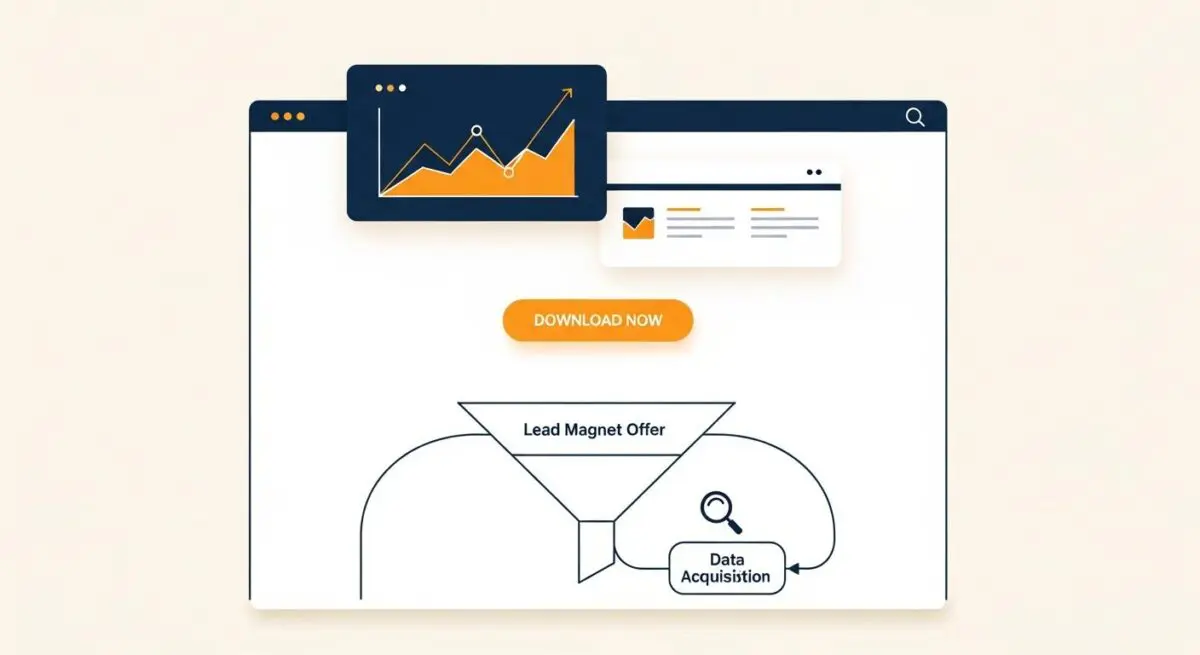
In the context of a modern MarTech stack, a Lead Magnet is a high-value, gated asset or utility offered to a prospective user in exchange for their contact information and explicit consent for further communication. Technically, it functions as the primary catalyst for the ‘Identification’ phase of the customer journey. By providing a tangible benefit—such as a technical whitepaper, a proprietary dataset, or a specialized software tool—the organization initiates a value exchange that transforms anonymous web traffic into actionable data points within a Customer Data Platform (CDP) or Customer Relationship Management (CRM) system.
From an architectural perspective, a Lead Magnet is not merely a piece of content; it is a conversion node integrated with API endpoints, lead-capture forms, and automated delivery workflows. It plays a pivotal role in data hygiene and regulatory compliance, as the opt-in process typically serves as the legal basis for processing personal data under frameworks like GDPR and CCPA. The effectiveness of a lead magnet is measured not just by volume, but by the quality of the data captured and the subsequent velocity of the lead through the marketing funnel.
The Real-World Analogy
Consider a Lead Magnet as a high-security digital keycard exchange at a private research facility. Imagine a visitor standing outside the facility (your website). They can see the building and understand its purpose, but they cannot access the specialized laboratories (your deep-funnel content or product) without identification. To receive a keycard (the Lead Magnet), the visitor must provide their credentials at the security desk (the lead capture form). Once the credentials are verified, the visitor receives the keycard, granting them access to specific areas, while the facility management now has a record of who is inside, their professional background, and their specific interests. This exchange ensures that only qualified individuals enter the facility, while the management gains the data necessary to facilitate a productive visit.
How Lead Magnet Impacts Marketing ROI & Data Attribution?
The implementation of sophisticated Lead Magnets directly influences the efficiency of the marketing budget by lowering the cost per lead (CPL) and improving the overall Return on Ad Spend (ROAS). In a landscape where privacy regulations and browser restrictions (like the deprecation of third-party cookies) make tracking difficult, Lead Magnets provide a reliable method for establishing first-party and zero-party data. This data is essential for accurate multi-touch attribution, as it allows marketers to link early-stage awareness interactions with late-stage conversion events, even across different devices and sessions.
Furthermore, Lead Magnets enable advanced lead scoring and segmentation. By analyzing which specific assets a user interacts with, an Analytics Engineering team can assign weights to different behaviors, allowing the sales team to prioritize high-intent prospects. This reduces the waste of resources on low-probability leads and accelerates the sales cycle, thereby increasing the Lifetime Value (LTV) to CAC ratio. Without a robust lead magnet strategy, the marketing funnel remains leaky, with high-intent traffic bouncing before the brand can establish a persistent connection.
Strategic Implementation & Best Practices
- Implement Progressive Profiling: Instead of requesting extensive data upfront, use dynamic forms that ask for different pieces of information over multiple interactions. This reduces friction and increases conversion rates while gradually building a comprehensive user profile.
- Leverage API-Driven Delivery: Ensure the Lead Magnet is delivered instantly via automated workflows. Use webhooks to sync lead data in real-time between the capture form, the CRM, and the email service provider (ESP) to minimize latency in the follow-up sequence.
- Optimize for Search Intent (SEO/GEO): Align the Lead Magnet with specific high-intent keywords and Generative Engine Optimization (GEO) queries. The asset should solve a technical problem or answer a complex question that the user is actively researching.
- A/B Test Delivery Mechanisms: Experiment with different formats, such as interactive calculators, PDF whitepapers, or video series, and measure the downstream conversion rate of each format to identify which provides the highest quality leads.
- Ensure Data Validation: Integrate real-time email validation APIs within the capture form to prevent the entry of ‘disposable’ or ‘fake’ email addresses, maintaining the integrity of the marketing database.
Common Pitfalls & Strategic Mistakes
One of the most frequent errors in enterprise marketing is the ‘Value Gap,’ where the perceived value of the Lead Magnet does not justify the amount of data requested. High-friction forms with excessive fields often lead to high abandonment rates. Another critical mistake is the failure to integrate the Lead Magnet into a broader automated nurturing sequence; capturing the lead is useless if there is no immediate, relevant follow-up that moves the prospect toward a purchase decision.
Additionally, many organizations suffer from data silos, where the information captured by a Lead Magnet is stored in a standalone tool and never synced with the primary CRM. This lack of integration prevents a unified view of the customer and leads to fragmented marketing efforts. Finally, neglecting the mobile user experience for gated content can significantly depress conversion rates, as mobile users are less likely to complete complex forms or download large files.
Conclusion
A Lead Magnet is a foundational element of a data-driven marketing architecture, serving as the bridge between anonymous engagement and identified customer relationships. By prioritizing high-utility assets and seamless technical integration, brands can optimize their attribution models and significantly enhance long-term ROI.