Executive Summary
- Reduces computational overhead by grouping multiple data transactions into a single execution cycle.
- Optimizes API rate limits and minimizes network latency in high-volume AI content pipelines.
- Enhances system stability through scheduled, non-interactive background processing of stateless workloads.
What is Batch Processing?
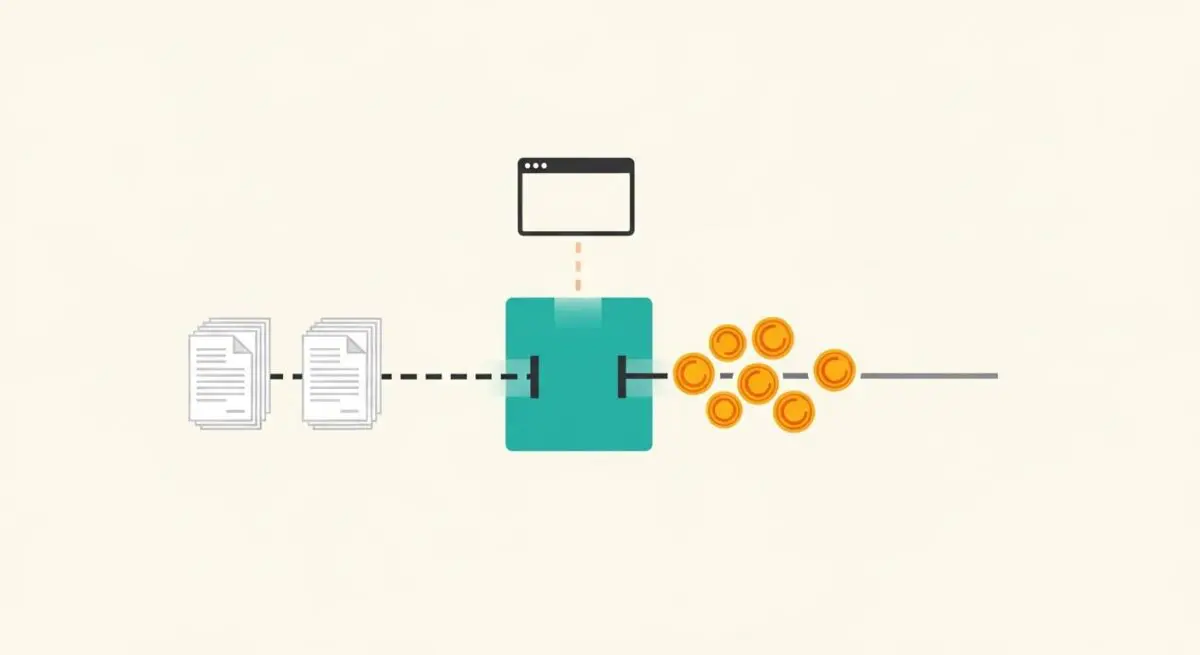
Batch processing is the automated execution of a series of data-intensive tasks grouped together as a single unit, processed without manual intervention. In the context of AI automations and programmatic SEO, it involves collecting large volumes of data—such as LLM prompts, image generation requests, or metadata updates—and executing them during specific intervals or when a predefined threshold is met. This architectural pattern is designed to maximize throughput and resource utilization by minimizing the overhead associated with individual transaction starts and stops.
Technically, batch processing operates on a non-interactive basis, meaning the system does not wait for user input once the sequence begins. This is essential for high-scale operations where processing thousands of JSON payloads individually would lead to significant network latency and inefficient use of compute cycles. By aggregating these payloads, developers can leverage bulk API endpoints, which are often more cost-effective and resilient than their real-time counterparts.
The Real-World Analogy
Consider the operation of a commercial laundry service. Instead of running a full industrial washing machine for every single shirt as it arrives, the service waits until they have a full load of similar fabrics. This approach saves water, electricity, and detergent while ensuring the machinery operates at peak efficiency. In automation, batch processing is that full load, ensuring that every cycle of your server or API usage is fully utilized rather than wasted on single, tiny tasks.
Why is Batch Processing Critical for Autonomous Workflows and AI Content Ops?
Batch processing is the backbone of scalable AI content operations because it addresses the primary bottleneck of modern automation: API rate limiting. Most high-tier LLM providers and SEO tools impose strict limits on the number of requests per minute (RPM). By batching requests, engineers can stay within these limits while processing massive datasets. Furthermore, batching facilitates stateless automation, where the system can recover from failures more gracefully by re-running specific batches rather than restarting an entire stream.
In programmatic SEO, batching allows for the bulk injection of data into headless CMS architectures. Instead of sending 5,000 individual POST requests to create pages—which could trigger server-side security blocks or database locks—a batched approach sends larger, structured payloads that the database can ingest in a single transaction, significantly reducing the risk of data corruption and downtime.
Best Practices & Implementation
- Optimize Batch Size: Determine the optimal number of records per batch by benchmarking memory consumption against network latency to avoid out-of-memory (OOM) errors.
- Implement Idempotency: Ensure that if a batch is processed twice due to a network retry, the resulting state remains the same, preventing duplicate content or data entries.
- Use Dead Letter Queues (DLQ): Route failed items within a batch to a separate queue for manual inspection or automated retries, ensuring one bad payload doesn’t halt the entire pipeline.
- Monitor Checkpointing: Save the state of a batch process at regular intervals so that in the event of a system crash, the process can resume from the last successful checkpoint.
Common Mistakes to Avoid
A frequent error is failing to account for timeout configurations; large batches often require longer execution windows than standard API calls, and default settings may kill the process prematurely. Another mistake is the lack of atomic transactions, where a partial failure in a batch leaves the database in an inconsistent state. Finally, many developers ignore the impact of batching on real-time data visibility, failing to communicate to stakeholders that there will be a delay between data ingestion and output.
Conclusion
Batch processing is an indispensable strategy for engineering high-performance AI automations, providing the necessary structure to scale data pipelines while maintaining cost efficiency and system reliability.