




Executive Summary
- Standardizes execution environments to ensure consistency across development, staging, and production for AI-driven workflows.
- Facilitates horizontal scaling and resource isolation for high-volume programmatic SEO and data processing pipelines.
- Optimizes CI/CD integration by packaging code, dependencies, and configurations into immutable, portable units.
What is Containerization?
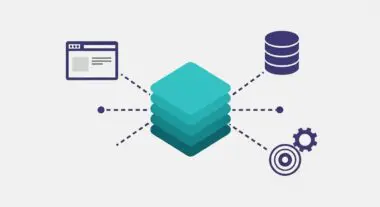
Containerization is a lightweight form of virtualization that involves packaging an application’s code, libraries, dependencies, and configuration files into a single, isolated unit called a container. Unlike traditional virtual machines that emulate an entire hardware layer and include a full guest operating system, containers share the host system’s kernel. This architectural efficiency results in significantly lower overhead, faster startup times, and higher density on physical or cloud infrastructure.
In the context of AI Automations and SEO operations, containerization ensures that complex scripts—such as those used for large-scale web scraping, LLM orchestration, or automated content generation—run identically regardless of the underlying infrastructure. By abstracting the execution environment from the host OS, engineers eliminate the it works on my machine problem, enabling seamless deployment across distributed cloud environments like AWS ECS, Google Kubernetes Engine (GKE), or Azure Container Instances.
The Real-World Analogy
Imagine a global shipping system. Before the invention of the standard shipping container, goods were loaded onto ships in various shapes and sizes—barrels, crates, and sacks—making the loading process slow and prone to damage. Containerization in software is like the standard intermodal shipping container. It doesn’t matter if the cargo is electronics, clothing, or machinery; as long as it is inside the standard container, it fits perfectly onto any ship, truck, or train in the world. Similarly, a software container packages your automation code so it fits and runs perfectly on any server, regardless of what else is installed there.
Why is Containerization Critical for Autonomous Workflows and AI Content Ops?
Containerization is the backbone of modern stateless automation. In AI content operations, workflows often require specific versions of Python, Node.js, or specialized machine learning libraries like PyTorch or TensorFlow. Managing these dependencies on a single server leads to dependency conflicts. Containers isolate these environments, allowing multiple disparate automation tasks to run concurrently without interference.
Furthermore, containerization enables rapid horizontal scaling. When a programmatic SEO campaign requires processing 100,000 API calls to an LLM, container orchestrators can instantly spin up hundreds of identical container instances to handle the load, then terminate them once the task is complete. This elasticity ensures high availability and cost-efficiency, as resources are consumed only during active processing cycles, supporting a truly serverless-first architecture.
Best Practices & Implementation
- Utilize Multi-Stage Builds: Minimize image size by separating the build environment from the production runtime, reducing the attack surface and deployment latency.
- Implement Stateless Architecture: Ensure containers do not store persistent data locally; use external databases or cloud storage to maintain state, allowing containers to be destroyed and recreated without data loss.
- Enforce Least Privilege: Run container processes as non-root users to mitigate security risks within the automation pipeline.
- Version Control Images: Use a private container registry to tag and version images, enabling instant rollbacks if an automated deployment fails.
Common Mistakes to Avoid
One frequent error is treating containers like persistent virtual machines, leading to bloated image sizes and configuration drift. Another mistake is hardcoding sensitive API keys or environment variables directly into the container image rather than using secure secrets management tools. Finally, failing to monitor container resource limits can lead to noisy neighbor issues where one runaway automation script consumes all host CPU and RAM, crashing adjacent services.
Conclusion
Containerization provides the essential infrastructure for scalable, portable, and reliable AI automations. By decoupling software from hardware, it allows agencies to deploy complex data pipelines with absolute environmental consistency.