




Executive Summary
- Systematic identification of all brand-consumer interaction nodes to eliminate data silos and tracking gaps across the MarTech stack.
- Optimization of multi-touch attribution (MTA) frameworks to accurately calculate Customer Acquisition Cost (CAC) and marketing efficiency.
- Alignment of cross-channel messaging and UX consistency to reduce friction and improve Lifetime Value (LTV) through data-driven insights.
What is Touchpoint Audit?
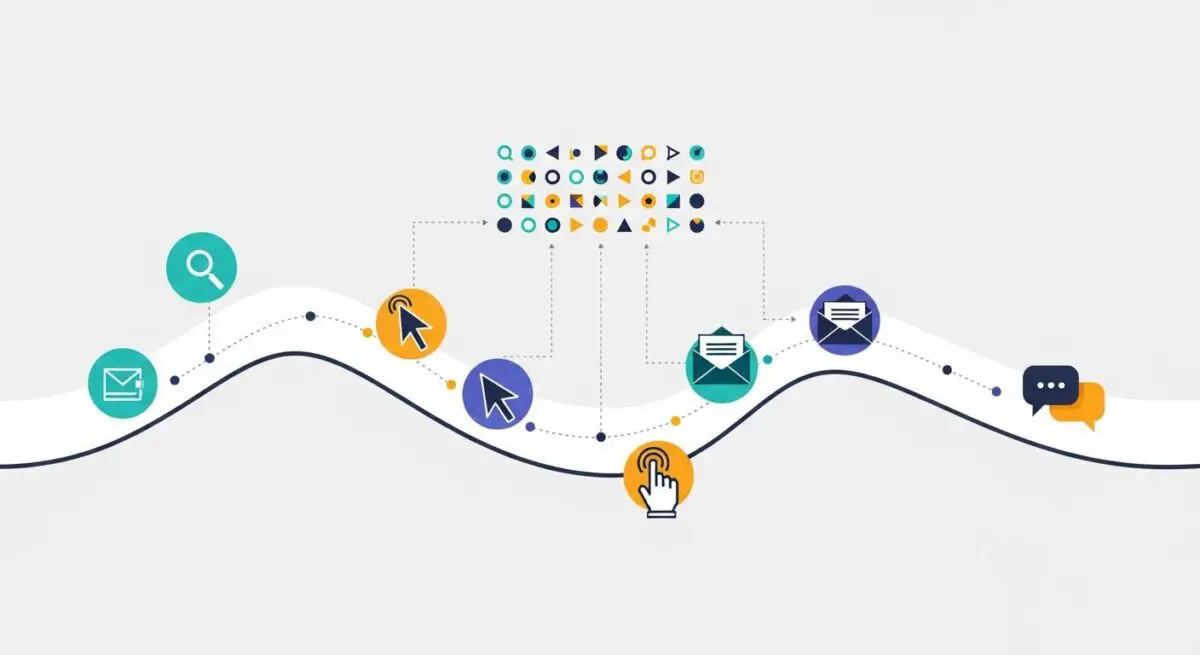
A Touchpoint Audit is a rigorous, systematic diagnostic process used to identify, map, and evaluate every discrete interaction a consumer has with a brand throughout the entire customer lifecycle. In the context of modern MarTech stacks, this audit transcends simple journey mapping; it involves a technical deep-dive into the data pipelines, API integrations, and tracking mechanisms that record these interactions. From an initial organic search impression (SEO) to post-purchase support tickets in a CRM like Salesforce or HubSpot, every touchpoint must be scrutinized for data integrity, messaging consistency, and technical performance.
From a technical standpoint, a Touchpoint Audit serves as the foundation for identity resolution and cross-device tracking. It requires an examination of how events are fired in Google Tag Manager (GTM), how user IDs are reconciled in a Customer Data Platform (CDP), and how server-side tracking is implemented to mitigate the impact of ITP (Intelligent Tracking Prevention) and cookie deprecation. By auditing these nodes, organizations can ensure that their attribution models are fed with high-fidelity data, allowing for a granular understanding of the path to conversion. This process is essential for maintaining a unified view of the customer in an increasingly fragmented digital ecosystem.
The Real-World Analogy
Imagine a high-security, automated smart building designed to guide visitors from the entrance to a specific executive suite. A Touchpoint Audit is equivalent to a comprehensive engineering inspection of that building. The inspector doesn’t just look at the signs on the walls; they test every motion sensor, verify that the keycard readers communicate correctly with the central server, ensure the elevators respond to the correct floor requests, and check that the lighting remains consistent across different hallways. If a sensor fails to trigger or a door remains locked when it should be open, the visitor’s journey is interrupted, and the building management loses data on where that visitor went. Similarly, a Touchpoint Audit ensures that every digital ‘sensor’ and ‘doorway’ in your marketing architecture is functioning correctly to guide the user toward a conversion without technical or psychological friction.
How Touchpoint Audit Impacts Marketing ROI & Data Attribution?
The primary impact of a Touchpoint Audit on Marketing ROI lies in its ability to refine Multi-Touch Attribution (MTA) models. Without a comprehensive audit, marketing teams often rely on flawed ‘Last-Click’ or ‘First-Click’ models that oversimplify the conversion path. By identifying every touchpoint—including ‘dark social’ interactions, email opens, and micro-conversions—the audit allows for the implementation of sophisticated data-driven attribution. This ensures that budget is allocated to the channels that actually drive incremental value, rather than those that simply appear at the end of the funnel. Consequently, this leads to a significant reduction in Customer Acquisition Cost (CAC) by eliminating spend on redundant or non-performing touchpoints.
Furthermore, the audit enhances data integrity by identifying ‘leaky’ stages in the conversion funnel. For instance, if a mobile app touchpoint fails to pass a GCLID (Google Click Identifier) to the backend CRM, the resulting sale might be misattributed to ‘Direct’ traffic. This misattribution skews ROI calculations and leads to poor strategic decision-making. By fixing these technical gaps, the audit ensures that the Lifetime Value (LTV) of customers acquired through specific channels is accurately tracked, providing a clearer picture of long-term profitability. In the era of AI-driven bidding and programmatic advertising, feeding clean, audited data into machine learning algorithms is the only way to maintain a competitive edge and maximize return on ad spend (ROAS).
Strategic Implementation & Best Practices
- Comprehensive Inventory and Mapping: Begin by cataloging every possible interaction point, categorized by stage (Awareness, Consideration, Conversion, Retention). This includes digital assets (social media, organic search, paid ads, email, webinars) and physical assets (in-store kiosks, direct mail, events). Use a visual mapping tool to document the data flow between these points and your central data warehouse.
- Technical Tagging and Event Validation: Audit your Google Tag Manager containers and server-side tracking setups. Ensure that every touchpoint triggers a standardized event with consistent naming conventions. Validate that parameters like UTM source, medium, and campaign are being passed correctly through redirects and cross-domain transitions to prevent session breakage.
- Heuristic and UX Evaluation: Beyond data tracking, evaluate the qualitative performance of each touchpoint. Use heatmaps (e.g., Hotjar or Microsoft Clarity) and session recordings to identify friction points. Ensure that the brand voice, visual identity, and value proposition are consistent across all platforms to reduce cognitive load and build trust.
- Identity Resolution Integration: Implement a robust identity resolution strategy within your CDP or CRM. Ensure that touchpoints occurring on different devices (mobile, desktop, tablet) are stitched together using deterministic or probabilistic matching. This allows for a holistic view of the customer journey, preventing the over-counting of unique visitors and providing a more accurate path-to-purchase analysis.
Common Pitfalls & Strategic Mistakes
One of the most frequent errors in a Touchpoint Audit is the neglect of offline or non-digital interactions. Enterprise brands often focus solely on web analytics, ignoring the impact of phone calls, physical store visits, or word-of-mouth. This creates a massive blind spot in attribution. Another common mistake is failing to account for the ‘Messy Middle’—the complex loop of exploration and evaluation that occurs between the first and last touch. If the audit only focuses on the bookends of the journey, the brand misses opportunities to influence the customer during critical decision-making phases.
Additionally, many organizations treat the Touchpoint Audit as a one-time project rather than a continuous process. As MarTech stacks evolve and new channels emerge (such as AI-search interfaces or voice assistants), the audit must be updated. Data silos remain a persistent threat; if the social media team’s data isn’t integrated with the email marketing team’s data, the audit will yield fragmented insights that lead to inefficient budget allocation and a disjointed customer experience.
Conclusion
A technical Touchpoint Audit is the prerequisite for any sophisticated data-driven marketing strategy, ensuring that attribution models are accurate and user experiences are seamless. By systematically eliminating data silos and friction points, organizations can optimize their MarTech architecture for maximum ROI and scalable growth.