Key Points
- Agentic Finance Shift: The transition to Large Action Models enables systems to execute complex workflows like tax-loss harvesting without manual intervention.
- Infrastructure Disruption: Capital is aggressively targeting AI-native aggregators and private blockchain rails that reduce settlement latency to under 10 milliseconds.
- Zero-Click Wealth: The future of personal finance relies on biometric-secured background agents and integrations that dynamically adjust to user health data.
Table of Contents
The Financial Tech Friction
The era of passive budgeting applications is officially dead. The global personal finance app market has surged to $38.2 billion as users abandon simple trackers. They are moving toward comprehensive AI-driven financial operating systems that manage household net worth autonomously.
This massive liquidity shift represents a fundamental rewiring of how individuals interact with their capital.
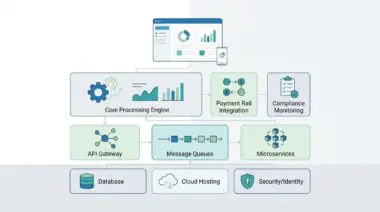
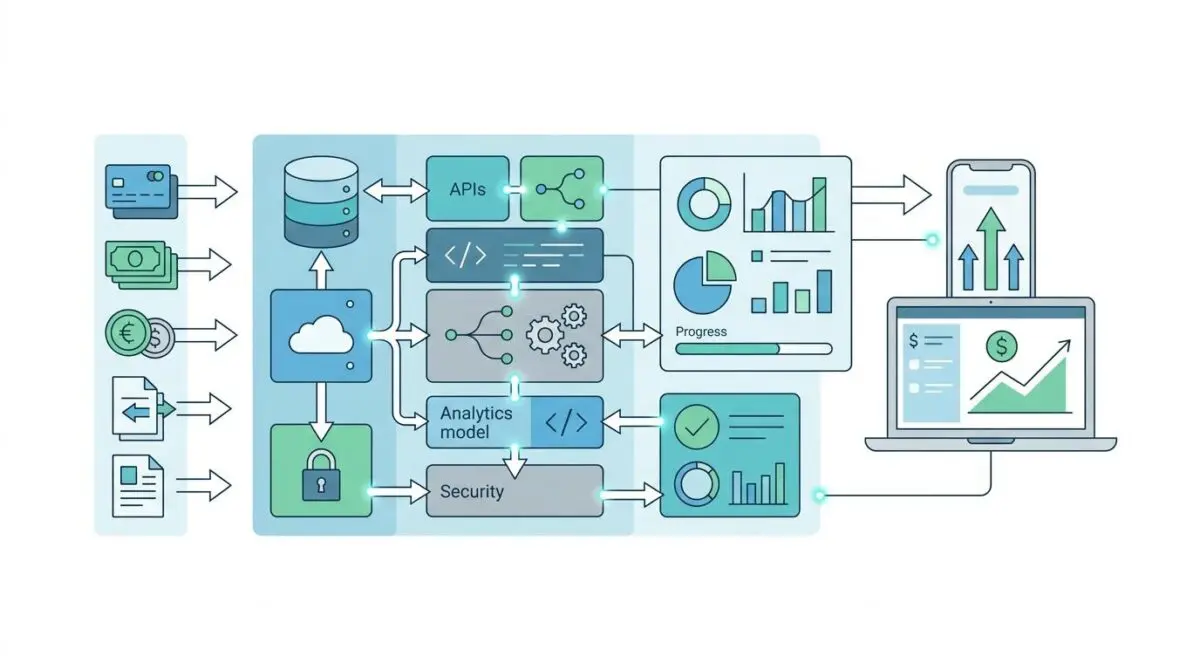
At the center of this disruption are Autonomous Personal Financial Operating Systems (AP-FOS). These systems are not merely dashboards for viewing balances. They are proactive orchestration layers designed to execute complex financial strategies.
They represent the ultimate FinTech stack for modern investors who demand institutional-grade capabilities in their personal lives.
Historically, retail investors have suffered from hyper-fragmented personal assets spread across multiple isolated platforms. This fragmentation created a severe mental tax. It also resulted in manual reconciliation errors and asset idle-time.
By deploying an AP-FOS, users eliminate this friction entirely. This allows smart money to flow seamlessly across borders and asset classes.
Market Intelligence & Capital Flow
Market Intelligence & Data
AI Research Adoption
An incredible 78% of active global investors now utilize AI agents for market research and data gathering before executing trades, according to BridgeWise’s 2026 report.
Stablecoin Trust
A 2025-2026 survey by YouGov for BVNK found that 77% of consumers would open a stablecoin wallet if their primary bank or fintech app integrated it into their personal stack.
Settlement Latency
Private blockchain-based settlement layers developed by J.P. Morgan’s Onyx division have reduced cross-border friction to under 10 milliseconds as of early 2026.
Churn Reduction
Wealth management firms using AI-based CRM and agentic onboarding tools have seen client churn rates drop by up to 30%, based on 2026 benchmarks from Altruist.
The data clearly illustrates a rapid migration toward AI-driven financial autonomy. Market dominance is shifting rapidly toward AI-native aggregators like Monarch. These platforms are reporting staggering year-over-year growth.
Meanwhile, legacy leaders are being forced to pivot. They are rapidly building dedicated agentic wealth divisions to stay relevant.
Smart money is aggressively targeting this infrastructure to capture early market share. Venture capital funding for agentic AI startups reached $1.1 billion in the first five months of 2026 alone.
Nearly 45% of that capital flowed directly into new market entrants. These startups specialize entirely in financial orchestration.
Investors clearly understand that the ultimate FinTech stack is no longer a luxury. It is now a baseline requirement for capital preservation.
As institutional capital pours into these orchestration layers, the barrier between retail wealth and algorithmic trading continues to dissolve.
The FinTech Deep Dive
Agentic Finance and LAMs
The personal finance landscape has transitioned entirely to Agentic Finance stacks driven by Large Action Models. Unlike traditional language models, LAMs are designed to execute complex workflows across disparate financial APIs.
These systems handle real-time tax-loss harvesting and autonomous bill negotiation. They also manage predictive liquidity routing without any manual user intervention.
This level of automation requires unprecedented trust in machine intelligence. It is no surprise that 78% of active global investors now utilize AI agents for market research as they build out their personal tech architectures.
The ability to process vast amounts of unstructured market data is redefining retail investing. These systems instantly translate that data into executable trades.
Global adoption metrics are painting a fascinating picture of this technological shift. Recent data reveals that the Middle East currently leads global adoption of autonomous finance.
Remarkably, 58% of younger investors are using AI every single time they seek investment information.
Private Blockchain Rails and RWAs
Cutting-edge stacks now integrate sub-10ms settlement via private blockchain rails. These networks are fully ISO 20022 compliant.
This underlying infrastructure unifies traditional brokerage accounts with tokenized real-world assets on a single decentralized ledger. The result is a frictionless environment where capital can move instantly between fiat and digital assets.
Consumer demand for this seamless integration is skyrocketing. In fact, adoption is accelerating because 77% of consumers would open a stablecoin wallet if their primary bank or fintech app integrated it directly into their personal ecosystem.
This bridges the gap between decentralized finance and everyday utility.
While global regulatory frameworks continue to adapt to tokenized asset classes, the technological foundation is already deployed.
Compliance is embedded directly into the smart contracts governing these transactions. This ensures that anti-money laundering and know-your-customer requirements are met instantaneously during settlement.
Eliminating the Mental Tax
AP-FOS stacks are designed to eliminate the mental tax associated with managing hyper-fragmented personal assets. By providing a unified orchestration layer, these systems solve the profound friction of manual reconciliation and asset idle-time.
Historically, this inefficiency cost retail investors between 1% and 2% in annual performance drag.
Furthermore, AI-driven automation in middle-office functions has drastically reduced the cost of wealth management. Operational costs for personal wealth management have plummeted by 25%.
This efficiency allows retail users to access institutional-grade advice at a fraction of traditional advisory fees.
The democratization of high-level financial strategy means that users no longer need to be hedge fund managers to optimize their portfolios.
The AP-FOS acts as a personal Chief Financial Officer. It continuously monitors the macroeconomic environment and adjusts asset allocations in real-time to maximize yield and minimize risk.
The Strategic Action Plan
Strategic Trajectory
- Transition to ‘Zero-Click’ wealth management where UIs are secondary to biometric-secured background agents.
- Integrate ‘Bio-Finance’ capabilities to dynamically adjust life insurance premiums and spending based on wearable-linked health data.
- Anticipate the emergence of fully tokenized IPOs on public blockchains by late 2026.
- Provide retail users with instant, fractional access to private equity markets directly from personal stacks.
The next 12 to 24 months will dictate the winners and losers in the personal finance space. Founders and institutions must prepare for the rise of zero-click wealth management.
In this paradigm, traditional user interfaces will become secondary. Biometric-secured background agents will operate silently on behalf of the user.
We are also witnessing the dawn of Bio-Finance, a radical integration of health and wealth. Wearable-linked health data will soon dynamically adjust life insurance premiums and discretionary spending limits within the AP-FOS.
This creates a holistic ecosystem where physical well-being directly influences financial liquidity.
Finally, the tokenization of traditional financial instruments will unlock unprecedented access for retail investors. The first fully tokenized IPOs settled on public blockchains are projected to emerge soon.
This will offer retail users instant, fractional access to private equity markets directly from their personal stacks. It bypasses legacy institutional gatekeepers entirely.
Conclusion
The deployment of Autonomous Personal Financial Operating Systems represents the most significant leap in wealth management since the invention of the mutual fund.
By integrating Large Action Models, private blockchain rails, and tokenized assets, the ultimate FinTech stack is no longer a concept. It is a highly executable reality.
Those who fail to adopt these orchestration layers will be left managing fragmented, inefficient portfolios. Meanwhile, the smart money automates its way to generational wealth.
Navigating the intersection of financial technology, institutional capital, and market psychology requires a sharp strategy. To future-proof your FinTech architecture and scale with precision, connect with Andres at Andres SEO Expert.
Frequently Asked Questions
What are Autonomous Personal Financial Operating Systems (AP-FOS)?
Autonomous Personal Financial Operating Systems (AP-FOS) are proactive orchestration layers designed to execute complex financial strategies. Unlike passive budgeting apps, an AP-FOS autonomously manages household net worth, unifies fragmented assets, and eliminates the manual reconciliation errors common in retail investing.
How do Large Action Models (LAMs) differ from traditional AI in finance?
While traditional models are designed for language tasks, Large Action Models (LAMs) are built to execute multi-step workflows across disparate financial APIs. In the 2026 landscape, LAMs handle autonomous bill negotiation, tax-loss harvesting, and predictive liquidity routing without user intervention.
What role do private blockchain rails play in personal finance?
Private blockchain rails provide the infrastructure for sub-10ms settlements and ISO 20022 compliance. They allow for the seamless movement of capital between traditional fiat accounts and tokenized real-world assets (RWAs) within a single decentralized ledger.
How much can AI-driven automation reduce wealth management costs?
By automating middle-office functions and utilizing agentic onboarding tools, AI-driven systems have reduced the operational costs of personal wealth management by up to 25%. This democratization allows retail users to access institutional-grade strategies at a lower price point.
What is Bio-Finance and how does it work?
Bio-Finance is the integration of wearable-linked health data with financial operating systems. This technology allows the AP-FOS to dynamically adjust discretionary spending limits and life insurance premiums in real-time based on the user’s physical well-being data.
When will retail investors gain access to tokenized IPOs?
The first fully tokenized Initial Public Offerings (IPOs) settled on public blockchains are projected to emerge by late 2026. This advancement will provide retail users with instant, fractional access to private equity markets directly from their personal financial stacks.