



Key Points
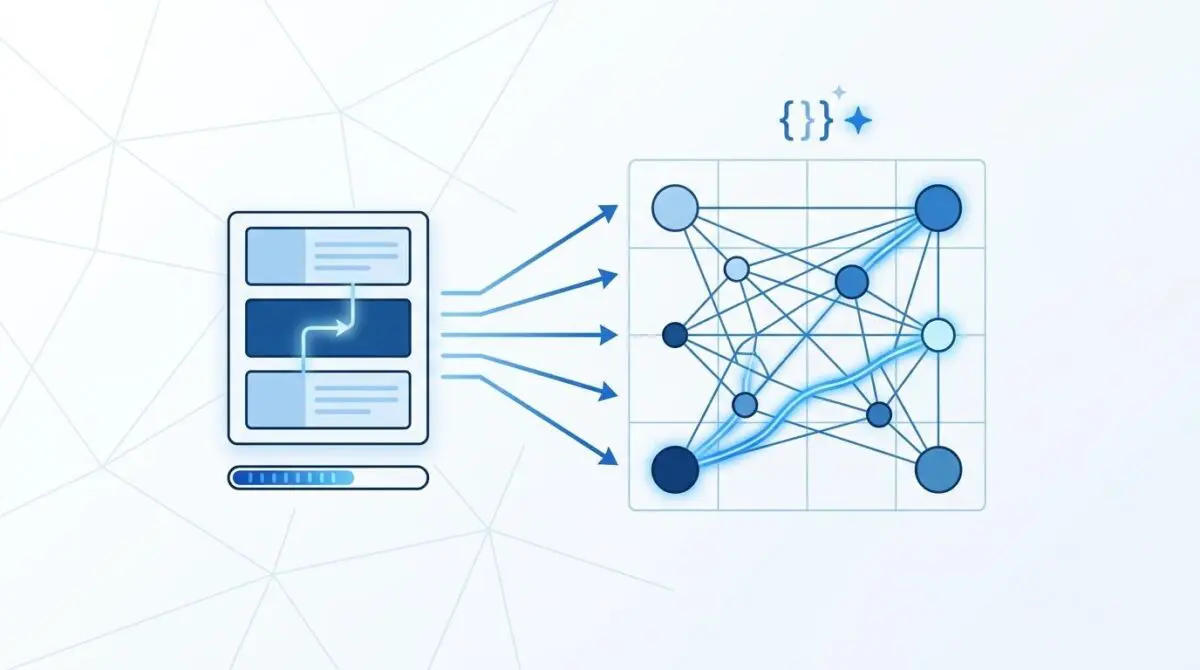
- Edge-Level DOM Manipulation: Execute link toggling via edge workers under 50ms to bypass render-blocking without degrading Time to First Byte.
- WP REST API Decoupling: Asynchronously fetch mobile-nav namespaces to cut initial payload size and optimize Core Web Vitals.
- PageRank Preservation: Utilize CSS containment strategies while strictly staying under Google’s 40% hidden link threshold to avoid indexation penalties.
Table of Contents
The Mobile Parity Tax
The invisible cost of maintaining deep site architectures today is paid directly from your mobile performance budget. Every time you push a massive mega-menu to satisfy desktop crawlers, your mobile users suffer through bloated DOMs and sluggish render times. This creates the mobile link parity paradox, forcing a brutal compromise between search engine accessibility and Core Web Vitals.
To break this cycle, enterprise sites are turning to dynamic internal link sculpting. This architectural shift decouples link delivery from traditional server-side templating. By manipulating the DOM intelligently before it hits the browser, we can serve high-density link graphs to bots while keeping the mobile viewport pristine.
This is not about cloaking or deceiving the crawler. It is about acknowledging that a six-inch screen cannot process the same cognitive or computational load as a desktop monitor. Dynamic internal link sculpting bridges this gap by routing the right structural data to the right user-agent at the edge layer.
Quantifying the Render Bottleneck
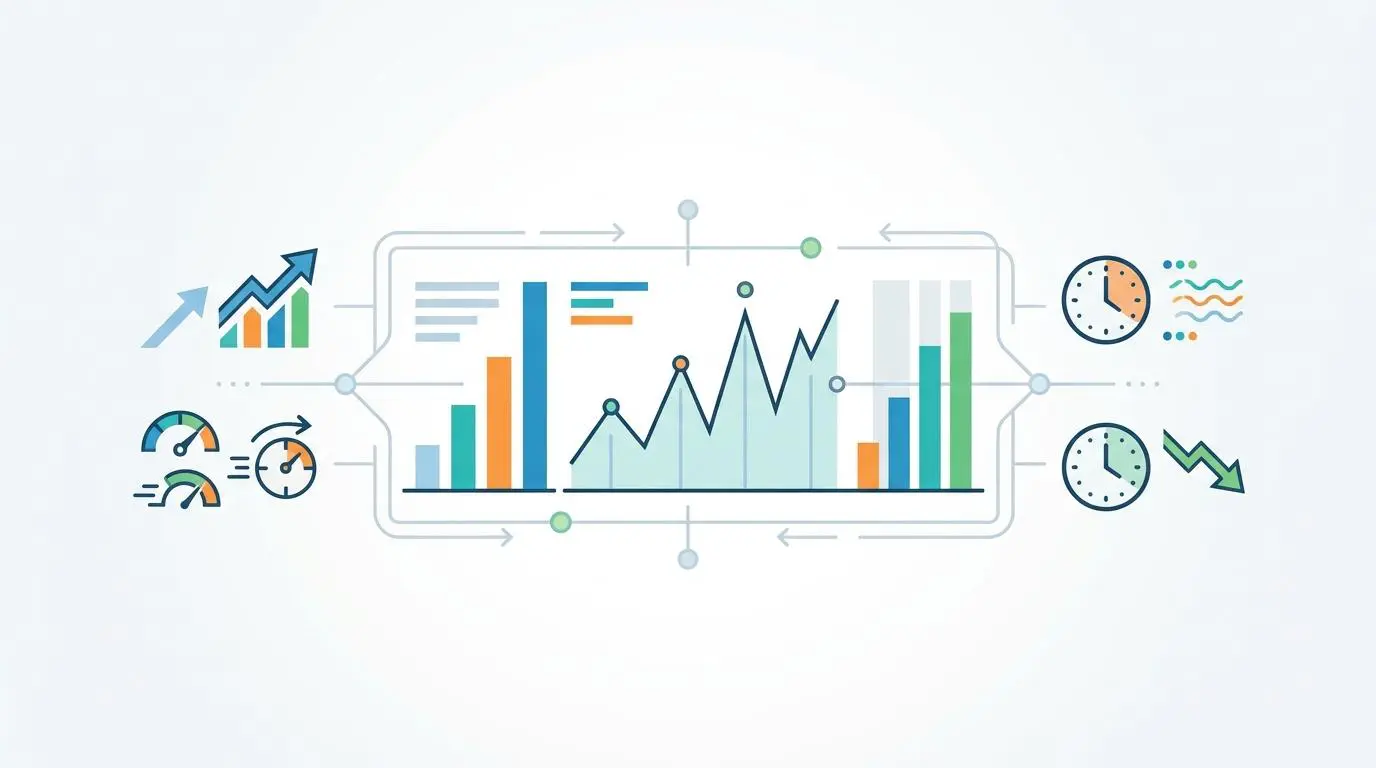
Understanding this architectural pivot requires looking at the raw performance data shaping modern SEO. Automattic’s 2026 Enterprise Performance Report highlights a massive inefficiency in traditional WordPress rendering. They confirm that offloading mobile-link logic to custom API endpoints reduces Time to First Byte by an average of 340ms for high-authority publishers.
This reduction occurs because the origin server no longer wastes cycles processing massive HTML nodes for users who will never see them. Beyond the initial server response, the client-side rendering experience also sees dramatic improvements. The 2026 HTTP Archive Core Web Vitals study provides critical context on how JavaScript DOM manipulation affects Interaction to Next Paint scores.
According to the study, sites using CSS-based link hiding instead of heavy JavaScript DOM manipulation see an 18% improvement in INP scores. Furthermore, managing this logic at the edge using tools like Cloudflare Workers and the HTMLRewriter API allows engineers to modify the DOM based on client hints before the HTML even reaches the user. This creates a frictionless rendering pathway that satisfies both the browser and the crawler.
Edge-Layer DOM Manipulation
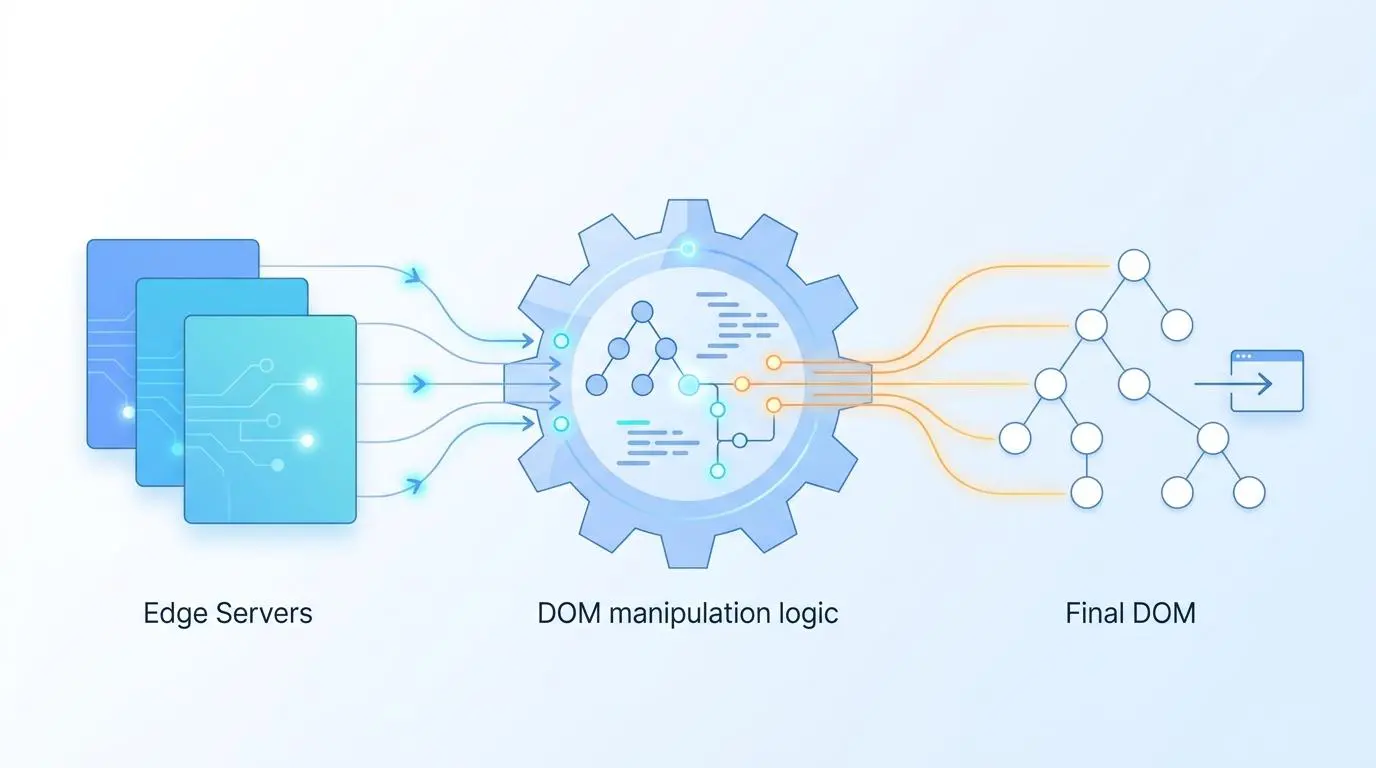
Pushing link logic to the edge transforms how servers communicate with mobile devices. By intercepting the request, we can read the client hint headers to determine the device type instantly. This allows the edge worker to dynamically inject or toggle CSS classes before the payload is fully assembled.
The result is a highly tailored HTML document that perfectly matches the user’s viewport requirements. Instead of sending a massive block of navigation links and hiding them with client-side JavaScript, the edge worker strips or modifies the nodes in transit. This drastically reduces the total byte size of the initial document download.
However, this server-side automation introduces a new layer of real-world friction. The primary bottleneck is the latency overhead added by the edge logic execution itself. If the edge worker execution exceeds 50ms, it can entirely negate the SEO benefits of a leaner mobile DOM.
Engineers must write hyper-efficient worker scripts to ensure the routing logic remains practically invisible to the end user. Streaming the HTML response and parsing it in chunks is mandatory to keep latency low. Poorly optimized edge scripts will quickly turn a performance enhancement into a crawling nightmare.
Decoupling with WP REST API
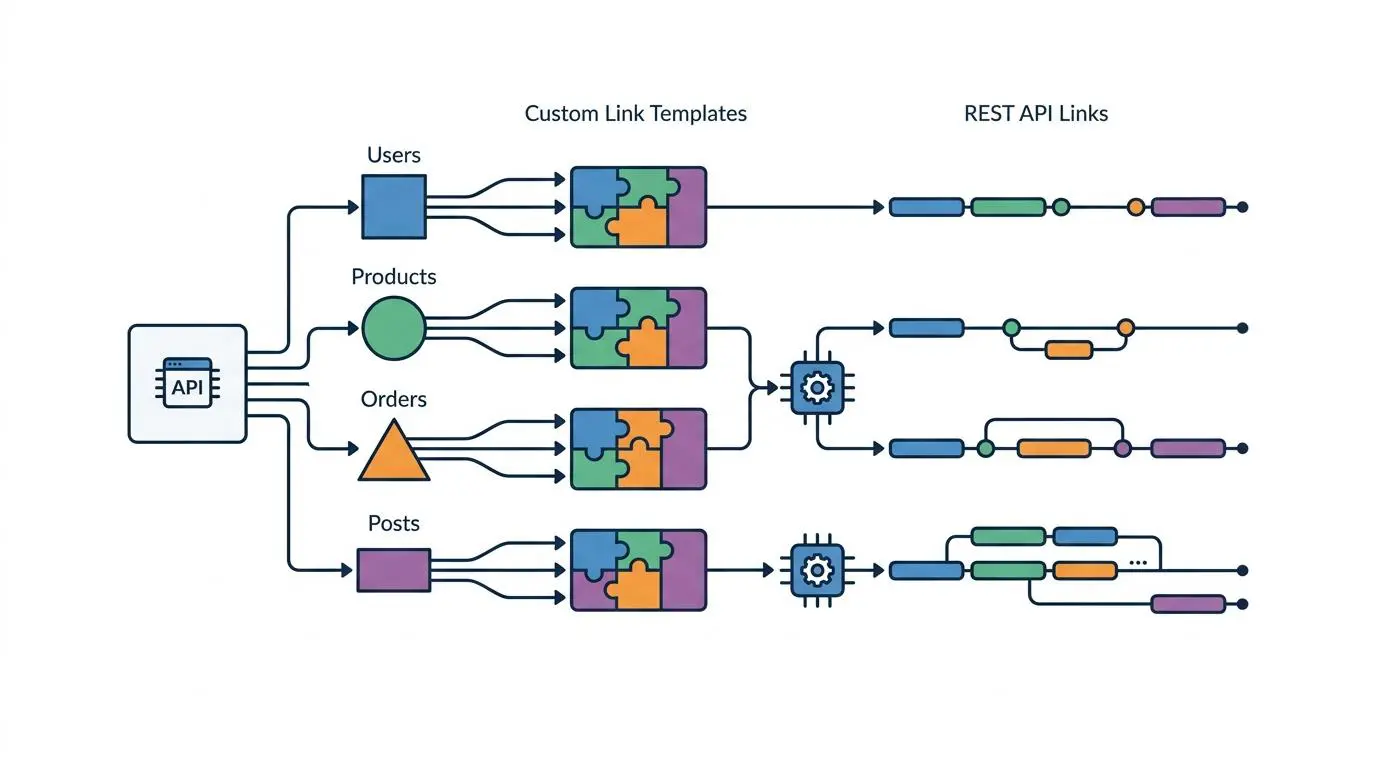
Traditional PHP-templated render-blocking is a massive liability for complex site architectures. Leveraging custom namespaces within the WP REST API allows us to asynchronously fetch link structures. We can build dedicated endpoints that serve purely navigational data decoupled from the main page template.
These lightweight JSON payloads are then rendered via client-side CSS visibility logic, bypassing the heavy initial page load. This programmatic approach ensures the mobile browser only processes what is immediately necessary for the user experience. The secondary links are hydrated into the DOM only after critical rendering paths are cleared.
Yet, synchronizing this decoupled link database state between the WordPress MySQL backend and the edge cache is notoriously difficult. This disconnect often leads to ghost links, where the mobile-optimized menu references deleted pages or outdated slugs. When a crawler encounters these ghost links, it wastes valuable crawl budget on dead ends.
Implementing aggressive cache invalidation rules is mandatory to maintain index integrity. Webhooks must be configured to purge the specific API endpoint caches the moment a post is updated or deleted in WordPress. Without this synchronization, the programmatic architecture becomes a structural liability.
Smart Hiding and PageRank
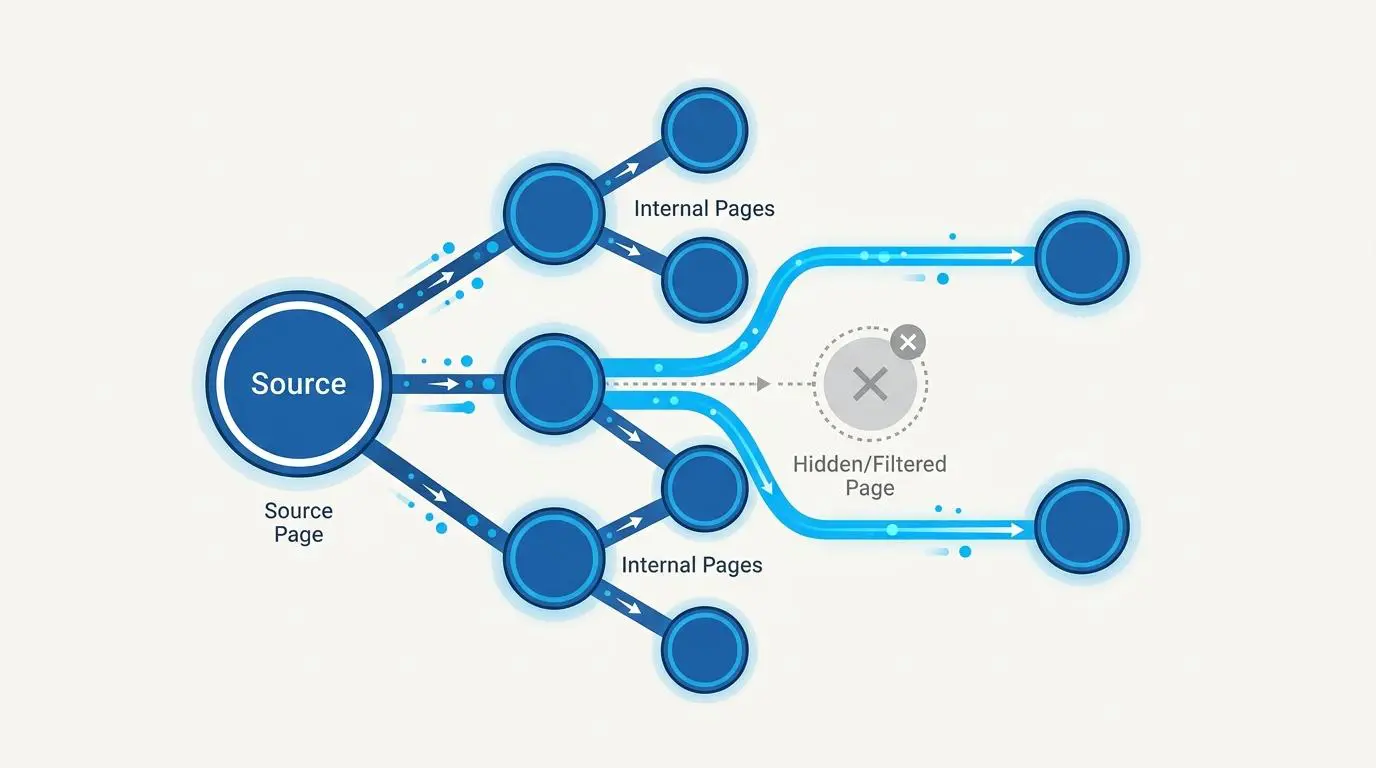
Preserving PageRank flow without cluttering the mobile interface requires a technique known as smart hiding. Links are kept in the source code for search engine crawlers but effectively removed from the render tree for human users. This is achieved by combining specific CSS display properties with modern containment rules.
A 2026 technical analysis by Search Engine Journal reveals a critical shift in how these hidden nodes are treated by search engines. Googlebot-Mobile now prioritizes link discovery in sections utilizing modern CSS containment properties. However, it actively ignores link weight from nodes that have been hidden via CSS for more than 180 consecutive days on mobile-first indexed sites.
This underscores the danger of aggressive, unmonitored link sculpting. Google’s 2026 rendering engine has become incredibly sensitive to content mismatch between what the bot sees and what the user experiences. Over-optimizing this balance can trigger algorithmic flags.
If more than 40% of links are hidden from mobile users but present in code, the site risks a helpful content devaluation for deceptive user experience. Technical SEOs must audit their DOM structures regularly to ensure the ratio of visible to hidden links remains within safe thresholds. Smart hiding is a scalpel, not a sledgehammer.
Crawl Budget and Bot Routing
Managing crawl budget efficiently means treating human users and search bots as entirely different traffic streams. We can automate the delivery of high-density internal link blocks strictly to the crawler user-agent. Meanwhile, standard mobile browsers receive a streamlined, CSS-truncated version of the site architecture.
This precise bot management minimizes the main-thread work required during page load for actual humans. By feeding the crawler exactly what it needs to map the site, we accelerate indexation of deep-tier pages. The crawler moves efficiently through the architecture without bogging down the server’s user-facing resources.
The technical friction here lies entirely in the HTTP header implementation. Relying on user-agent variations can severely fragment CDN caches. When the cache is split by thousands of different user-agent strings, the hit rate plummets.
If not handled via modern cache-control extensions, this fragmentation leads to catastrophic cache-miss storms that crash origin servers. Server architectures must utilize normalized cache keys to group traffic into broad buckets like mobile, desktop, and bot. This ensures that bot-specific rendering does not degrade the cache hit ratio for standard human traffic.
Predictive Edge Injection
By 2027, the concept of static internal link optimization will be entirely obsolete. We are rapidly shifting toward predictive edge injection, where link modules are no longer just hidden or shown based on device type. Instead, these link graphs will be dynamically generated in the edge layer on a per-request basis.
This generation will rely on the individual user’s real-time click-stream data and semantic relevance. The architecture of tomorrow will serve a completely personalized, highly optimized link structure for every single session. Crawlers will receive a mathematically perfect graph, while users will see links tailored strictly to their immediate journey.
Navigating the intersection of technical SEO, programmatic architecture, and workflow automation requires a sharp strategy. To future-proof your site’s architecture and scale with precision, connect with Andres at Andres SEO Expert.
Frequently Asked Questions
What is the mobile parity tax in SEO?
The mobile parity tax is the performance cost of maintaining large desktop-style site architectures on mobile devices. It results in bloated DOM sizes and slower render times, forcing a trade-off between accessibility for search engine crawlers and a high-quality user experience as measured by Core Web Vitals.
How does edge-layer DOM manipulation improve Core Web Vitals?
By using edge workers (such as Cloudflare Workers), engineers can modify or strip HTML nodes before they reach the user’s browser. This reduces the initial document byte size and Time to First Byte (TTFB), which directly improves Interaction to Next Paint (INP) scores by lowering the computational load on the mobile device.
Does hiding links with CSS impact PageRank and indexation?
Yes. While smart hiding keeps links in the source code for crawlers, Googlebot-Mobile may ignore link weight from nodes hidden via CSS for more than 180 consecutive days. If more than 40% of links are hidden from users but visible to bots, the site risks a helpful content devaluation due to deceptive user experience flags.
What are ghost links in a decoupled WordPress architecture?
Ghost links occur when the state of a decoupled link database (served via the WP REST API) is not synchronized with the WordPress backend. This leads to navigational menus referencing deleted pages or outdated URLs, causing search crawlers to waste crawl budget on dead ends or 404 errors.
How can cache fragmentation be prevented when using bot-specific routing?
To prevent cache fragmentation and catastrophic cache-miss storms, servers should use normalized cache keys. This involves grouping traffic into broad buckets like mobile, desktop, and bot rather than caching by individual user-agent strings, ensuring a high cache hit ratio while delivering customized link graphs.