Executive Summary
- Provides a comprehensive framework for identifying macro-environmental variables that influence long-term strategic planning and market entry.
- Facilitates risk mitigation by categorizing external pressures into Political, Economic, Social, Technological, Legal, and Environmental domains.
- Enables data-driven decision-making in MarTech by aligning internal capabilities with external regulatory and technological shifts.
What is PESTLE?
PESTLE is a strategic analytical framework used by enterprise organizations to monitor and evaluate the macro-environmental (external) factors that impact business performance and strategic viability. In the context of a modern MarTech stack and data-driven marketing, PESTLE serves as a foundational audit tool for environmental scanning. It expands upon the traditional PEST model by incorporating Legal and Environmental factors, ensuring a 360-degree view of the landscape in which a brand operates. For SEO and Digital Marketing Directors, PESTLE is not merely a theoretical exercise; it is a technical requirement for identifying shifts in search engine algorithms, data privacy regulations, and consumer behavior patterns that are driven by forces outside the immediate control of the marketing department.
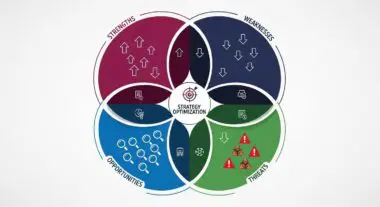
From a technical standpoint, PESTLE analysis informs the “External” component of a SWOT analysis (Strengths, Weaknesses, Opportunities, Threats). By systematically breaking down the environment into Political, Economic, Social, Technological, Legal, and Environmental segments, organizations can quantify risks and opportunities. In the era of AI-Search and Generative Engine Optimization (GEO), the “Technological” and “Legal” components of PESTLE are particularly critical, as they dictate the evolution of Large Language Models (LLMs) and the regulatory frameworks (such as GDPR or CCPA) that govern data collection and attribution. We at Andres SEO Expert utilize PESTLE to ensure that long-term SEO strategies are resilient against macro-shifts, such as changes in trade policies affecting international e-commerce or economic fluctuations impacting B2B procurement cycles.
The Real-World Analogy
Imagine a high-performance racing team preparing for a multi-day endurance rally across diverse terrains. The car and the driver represent the internal business operations (the “Micro” environment). However, the team cannot control the weather, the quality of the fuel available at remote checkpoints, the local traffic laws of the countries they pass through, or the sudden fluctuations in the price of spare parts. PESTLE is the equivalent of the team’s advanced meteorological and geopolitical intelligence suite. It doesn’t tell the driver how to steer, but it provides the critical data needed to decide which tires to use, how much fuel to carry, and which routes might be closed due to political instability or environmental hazards. Without this intelligence, even the fastest car (the best marketing campaign) can be sidelined by a predictable storm or a sudden change in local regulations.
How PESTLE Impacts Marketing ROI & Data Attribution?
The application of PESTLE analysis directly influences Marketing ROI by optimizing resource allocation based on external constraints and opportunities. For instance, the “Economic” factor—such as inflation rates or currency fluctuations—can significantly alter the Customer Acquisition Cost (CAC) and the Lifetime Value (LTV) of a customer segment. If a target market is entering a recession, a data-driven marketing team might pivot from high-cost acquisition keywords to lower-funnel retention strategies, thereby protecting the overall ROI. Without a PESTLE-informed strategy, brands often waste budget on campaigns that are fundamentally misaligned with the current economic reality.
Furthermore, PESTLE is indispensable for maintaining data integrity and attribution accuracy. The “Legal” and “Technological” factors are currently reshaping the attribution landscape through the deprecation of third-party cookies and the rise of privacy-centric tracking. A technical PESTLE analysis allows marketing architects to anticipate these shifts and implement server-side tracking or first-party data strategies before traditional attribution models fail. By understanding the macro-drivers behind these changes, organizations can build more robust data pipelines that account for external “noise,” ensuring that conversion paths are analyzed within the correct environmental context. This leads to more accurate budget modeling and a clearer understanding of how external variables—rather than just internal campaign performance—influence the bottom line.
Strategic Implementation & Best Practices
- Integrate Macro-Data into Analytics Dashboards: Move beyond static annual reports by integrating external data feeds (e.g., economic indicators, regulatory updates) directly into your marketing business intelligence tools. This allows for real-time adjustments to bidding strategies and content focus based on PESTLE factors.
- Weighting and Scoring Factors: Not all PESTLE factors carry equal weight for every brand. Implement a technical scoring system to quantify the impact and probability of each factor. For a SaaS company, “Technological” and “Legal” might carry a 40% weight, while “Environmental” might carry 5%, depending on the industry and stakeholder requirements.
- Cross-Functional Data Gathering: PESTLE analysis should not be siloed within the marketing department. Collaborate with legal, finance, and product development teams to ensure that the “Legal” and “Economic” data points are technically accurate and reflect the organization’s broader risk profile.
- Scenario Modeling for AI and GEO: Specifically within the “Technological” pillar, conduct scenario modeling on how advancements in LLMs and AI-driven search will impact organic visibility. Use PESTLE to forecast the shift from traditional SERPs to generative responses and adjust your technical SEO roadmap accordingly.
Common Pitfalls & Strategic Mistakes
One of the most frequent errors in enterprise PESTLE analysis is treating it as a static, one-time document. Macro-environments are dynamic; a PESTLE analysis conducted six months ago may be obsolete in the face of a sudden regulatory change or a technological breakthrough like a new AI model. Another common pitfall is “Confirmation Bias,” where marketing teams only look for external data that supports their existing strategy, rather than objectively identifying threats that could disrupt their current growth trajectory. Finally, many brands fail to bridge the gap between high-level macro observations and actionable technical implementation, leading to a “strategy-execution gap” where the insights never reach the campaign level.
Conclusion
PESTLE is a critical diagnostic framework that enables data-driven marketers to navigate the complexities of the macro-environment with technical precision. By systematically analyzing external forces, organizations can build resilient MarTech architectures that maximize ROI and maintain competitive positioning in an increasingly volatile global market.