Executive Summary
- SQLs represent the critical transition point in the revenue funnel where marketing-generated interest is validated for direct sales intervention.
- Technical qualification relies on multi-dimensional lead scoring models integrating firmographic, demographic, and behavioral data points.
- Optimizing the MQL-to-SQL conversion rate is fundamental to reducing Customer Acquisition Cost (CAC) and improving Marketing-Sales alignment.
What is Sales Qualified Lead (SQL)?
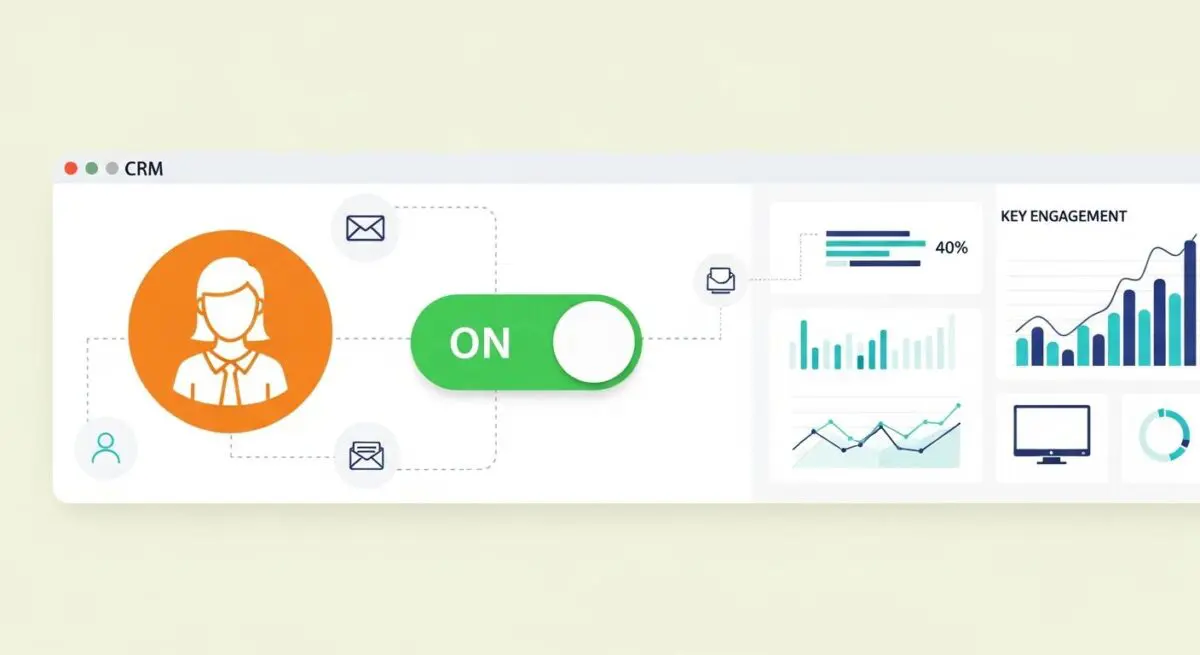
A Sales Qualified Lead (SQL) is a prospective customer who has been researched and vetted—first by an organization’s marketing department and then by its sales team—and is deemed ready for the next stage in the sales process. In the context of a modern MarTech stack, an SQL represents a specific lifecycle stage within a Customer Relationship Management (CRM) system, such as Salesforce or HubSpot. Unlike a Marketing Qualified Lead (MQL), which is primarily identified through engagement metrics like whitepaper downloads or webinar attendance, an SQL has demonstrated a higher level of intent and meets specific criteria that suggest a high probability of conversion into a paying customer.
The identification of an SQL typically involves a rigorous lead scoring framework. This framework utilizes both explicit data (information provided by the lead via forms, such as job title, company size, and budget) and implicit data (behavioral signals like visiting pricing pages, requesting a demo, or frequent interactions with high-intent content). From a technical perspective, the transition from MQL to SQL is often governed by automated workflows within a Marketing Automation Platform (MAP). These workflows trigger notifications to Sales Development Representatives (SDRs) or Account Executives (AEs) once a lead crosses a predefined scoring threshold, ensuring that sales resources are allocated to the most promising opportunities.
In the era of AI-driven marketing and Generative Engine Optimization (GEO), the definition of an SQL is becoming increasingly data-dense. Advanced organizations are now leveraging predictive lead scoring, which uses machine learning algorithms to analyze historical conversion data and identify patterns that correlate with successful outcomes. This allows for a more dynamic and accurate qualification process that moves beyond static frameworks like BANT (Budget, Authority, Need, Timeline) to include real-time intent signals and competitive intelligence.
The Real-World Analogy
To understand the distinction between various lead stages, consider the process of high-end real estate acquisition. An individual who walks into an open house out of curiosity or browses listings online is a Marketing Qualified Lead (MQL); they have shown interest in the category but their intent and capacity are unverified. However, a prospect who arrives with a mortgage pre-approval letter, a specific list of requirements, and a defined move-in timeline is a Sales Qualified Lead (SQL). The real estate agent (the Sales team) does not need to convince this person that they need a house; rather, the conversation shifts to the technical specifics of the transaction and the closing of the deal. The SQL has already passed the initial vetting process and has proven they have both the means and the immediate intent to purchase.
How Sales Qualified Lead (SQL) Impacts Marketing ROI & Data Attribution?
The SQL metric is a cornerstone of performance marketing and data attribution. By tracking the volume and quality of SQLs, organizations can calculate the true efficiency of their marketing spend. While top-of-funnel metrics like impressions and clicks provide a baseline for reach, the SQL serves as a high-fidelity signal of lead quality. A high volume of MQLs that fail to convert into SQLs indicates a “leaky bucket” in the funnel, often caused by a misalignment between marketing messaging and sales requirements, or by targeting low-intent keywords in SEO and PPC campaigns.
From a data attribution perspective, SQLs are essential for closed-loop reporting. By integrating CRM data back into advertising platforms like Google Ads or Meta via Offline Conversion Tracking (OCT) or APIs, marketers can optimize their bidding strategies for “down-funnel” events. Instead of optimizing for a cheap lead (CPL), the algorithm can be trained to find users most likely to become SQLs. This shift significantly improves the Return on Ad Spend (ROAS) and lowers the overall Customer Acquisition Cost (CAC). Furthermore, analyzing the source of SQLs allows for more accurate multi-touch attribution, revealing which content clusters and channels are actually driving revenue-ready prospects rather than just vanity traffic.
Strategic Implementation & Best Practices
- Establish a Service Level Agreement (SLA): Define a clear, documented agreement between marketing and sales that outlines the exact criteria for an SQL. This should include specific behavioral triggers and firmographic requirements to eliminate subjectivity.
- Implement Dynamic Lead Scoring: Move beyond static points systems. Use a matrix that weights recent high-intent actions (e.g., viewing a demo) more heavily than older, low-intent actions (e.g., reading a blog post from six months ago).
- Automate the Handoff Process: Use API-driven integrations between your MAP and CRM to ensure that once a lead reaches SQL status, it is routed to the correct sales representative instantly. Speed-to-lead is a critical factor in conversion rates.
- Continuous Feedback Loops: Sales teams should provide structured feedback on SQL quality. If a lead is rejected, the reason must be captured in the CRM to allow marketing to refine their targeting and lead scoring parameters.
- Leverage Intent Data: Integrate third-party intent data providers (like 6sense or Bombora) to identify when target accounts are researching solutions in your category, allowing you to fast-track these leads to SQL status.
Common Pitfalls & Strategic Mistakes
One of the most frequent errors in enterprise marketing is the “premature handoff,” where leads are promoted to SQL status based solely on a single action, such as a single ebook download. This overwhelms the sales team with low-quality prospects, leading to friction between departments and wasted resources. Conversely, a “delayed handoff” occurs when marketing nurtures a lead for too long, allowing a competitor to engage the prospect first. Another significant pitfall is the existence of data silos, where the sales team’s interactions with an SQL are not fed back into the marketing analytics platform, preventing the optimization of future campaigns based on actual sales outcomes.
Conclusion
The Sales Qualified Lead (SQL) is the fundamental metric for measuring the efficacy of a data-driven revenue engine. By aligning marketing qualification with sales readiness through technical integration and rigorous data analysis, organizations can maximize their ROI and ensure sustainable, scalable growth in a competitive digital landscape.