Executive Summary
- Utilizes Static Site Generation (SSG) to decouple the WordPress administrative environment from the public-facing frontend.
- Eliminates traditional server-side vulnerabilities by removing the PHP runtime and MySQL database from the production edge.
- Leverages serverless architecture and global CDN distribution to achieve near-instantaneous Time to First Byte (TTFB).
What is Shifter?
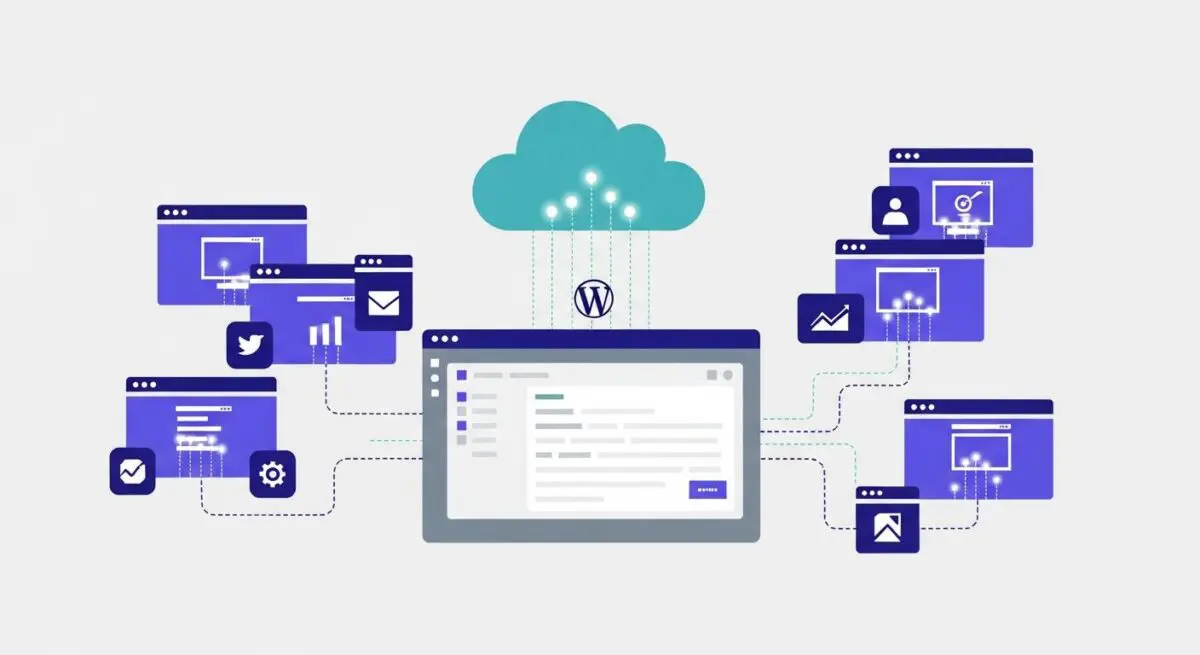
Shifter is a specialized serverless hosting solution and static site generator (SSG) designed specifically for the WordPress ecosystem. Unlike traditional managed WordPress hosting that relies on a persistent LAMP or LEMP stack, Shifter operates by containerizing the WordPress core, database, and PHP environment. This administrative environment is only active when a user needs to manage content or modify the site architecture. Once changes are finalized, Shifter generates a static HTML version of the entire site, which is then deployed to a global Content Delivery Network (CDN).
From a technical standpoint, Shifter represents a shift toward Jamstack principles while maintaining the familiar WordPress editorial interface. By converting dynamic PHP-driven pages into flat HTML, CSS, and JavaScript files, it removes the need for real-time database queries and server-side processing during a visitor’s request cycle. This architecture effectively mitigates common WordPress scaling issues and provides a robust framework for high-traffic enterprise applications that require maximum uptime and security.
The Real-World Analogy
Imagine a high-end restaurant that operates in two distinct phases. During the day, a team of chefs works in a private, high-tech kitchen (the WordPress Dashboard) to prepare elaborate, pre-packaged gourmet meals. Once the meals are perfected, they are moved to a series of automated vending kiosks (the Static Site) located all over the city. Customers do not interact with the chefs or the kitchen; they simply grab the finished product from the nearest kiosk. This ensures that even if the kitchen is closed for cleaning or the chefs are busy, the customers still get their food instantly, and there is no risk of a customer accidentally wandering into the kitchen and causing a fire.
How Shifter Impacts Server Performance & Speed Engineering?
Shifter fundamentally reengineers the WordPress request-response lifecycle. In a standard hosting environment, every visitor triggers a series of PHP executions and MySQL queries to render a page. Shifter eliminates this overhead entirely at the edge. Because the production site consists of pre-rendered assets, the Time to First Byte (TTFB) is significantly reduced, as the server only needs to serve static files without waiting for backend processing. This architecture also inherently solves the problem of ‘render-blocking’ database latency, as there is no database to query on the frontend.
Furthermore, Shifter enhances global performance through its native CDN integration. Since the site is static, it can be cached and served from edge locations with 100% cache hit rates, regardless of the complexity of the original WordPress theme. This results in superior Core Web Vitals, particularly for Largest Contentful Paint (LCP), as the server-side processing time is effectively zeroed out for the end-user.
Best Practices & Implementation
- Decouple Dynamic Functionality: Replace native WordPress comments and contact forms with third-party, API-driven services like Disqus, Algolia for search, or specialized serverless form handlers to maintain interactivity on a static frontend.
- Optimize Build Triggers: Utilize Shifter’s Webhooks to automate the static generation process only when critical content updates are published, ensuring efficient resource usage during the deployment phase.
- Media Offloading: While Shifter handles media well, for massive libraries, consider using a dedicated Media Delivery Network or S3-compatible storage to keep the static build size manageable and the deployment times fast.
- Environment Management: Use the Shifter dashboard to stop the WordPress container when not in use, which minimizes the attack surface and reduces the potential for unauthorized access to the administrative backend.
Common Mistakes to Avoid
A frequent error is assuming that all WordPress plugins will function out-of-the-box. Any plugin that relies on server-side PHP processing at the moment of a page load—such as dynamic poll results, native WooCommerce carts, or membership login redirects—will fail in a static environment without architectural adjustments. Another mistake is neglecting the ‘Generate’ step; changes made in the WordPress dashboard are not live until the static site generation process is manually or programmatically triggered, which can lead to discrepancies between the staging and production environments.
Conclusion
Shifter provides a sophisticated serverless framework that transforms WordPress into a high-performance static engine, offering unparalleled security and scalability. By isolating the CMS from the delivery layer, it establishes a modern architecture suitable for security-conscious enterprises and performance-driven SEO strategies.