Executive Summary
- Sustainable content focuses on high-utility, low-maintenance digital assets that minimize content decay and maximize long-term organic compounding.
- Technical implementation involves optimizing for information gain, semantic durability, and crawl budget efficiency to reduce the digital carbon footprint.
- Strategic alignment with LLM and RAG systems ensures content remains a viable data source for AI-driven search engines and generative experiences.
What is Sustainable Content?
Sustainable content is a strategic framework in digital marketing and SEO that prioritizes the creation of high-value, durable digital assets designed to maintain relevance, traffic, and conversion potential over extended temporal horizons with minimal iterative maintenance. Unlike ephemeral or trend-based content, sustainable content functions as a long-term capital investment within a MarTech stack. It is engineered to withstand algorithmic shifts by focusing on core user intent, comprehensive topical authority, and technical robustness. From a data science perspective, sustainable content minimizes the rate of content decay—the measurable decline in organic performance over time—thereby stabilizing the data inputs used for attribution modeling and performance forecasting.
In the context of modern Search Engine Optimization (SEO) and Generative Engine Optimization (GEO), sustainable content is characterized by its high information gain and semantic density. It avoids the redundancy common in mass-produced AI content, instead providing unique insights that search engines prioritize for their index efficiency. By reducing the need for frequent, low-value updates, organizations can optimize their crawl budget and server resource allocation, effectively lowering the technical debt associated with managing large-scale content repositories. This approach aligns with broader corporate sustainability goals by reducing the energy consumption associated with redundant data processing and storage.
The Real-World Analogy
To understand sustainable content, consider the difference between a high-efficiency solar power installation and a portable diesel generator. A diesel generator provides immediate power but requires a constant, expensive supply of fuel (representing the continuous spend and effort required for trend-based or paid-media-dependent content). If the fuel stops, the power stops. In contrast, a solar power installation requires significant upfront technical engineering, strategic placement, and quality materials. Once established, it generates consistent, renewable energy for decades with minimal maintenance. Sustainable content is the solar installation of your marketing ecosystem; it is a structural asset that leverages the natural “light” of search intent to produce ongoing value without the constant injection of additional resources.
How Sustainable Content Impacts Marketing ROI & Data Attribution?
The impact of sustainable content on Marketing Return on Investment (ROI) is primarily observed through the lens of Customer Acquisition Cost (CAC) amortization. Because sustainable content continues to attract and convert leads long after the initial production cost has been incurred, the effective CAC decreases over time. This creates a compounding effect where the organic channel becomes increasingly efficient, offsetting the rising costs of paid acquisition channels. In a technical attribution environment, sustainable content provides a stable baseline for multi-touch attribution models. It often serves as the initial touchpoint in the customer journey, capturing top-of-funnel (ToFu) intent and maintaining a persistent presence in the user’s consideration set.
Furthermore, sustainable content enhances data integrity within a brand’s analytics framework. By focusing on evergreen topics and stable URL structures, marketers avoid the data fragmentation caused by frequent redirects or the sunsetting of short-lived campaign pages. This stability allows for more accurate longitudinal studies of user behavior and conversion paths. In the era of AI-driven search, sustainable content acts as a high-quality training signal for Large Language Models (LLMs) and Retrieval-Augmented Generation (RAG) systems. When a brand’s content is consistently cited as a primary source by AI agents, it reinforces the brand’s topical authority and secures its position in the future of zero-click search environments.
Strategic Implementation & Best Practices
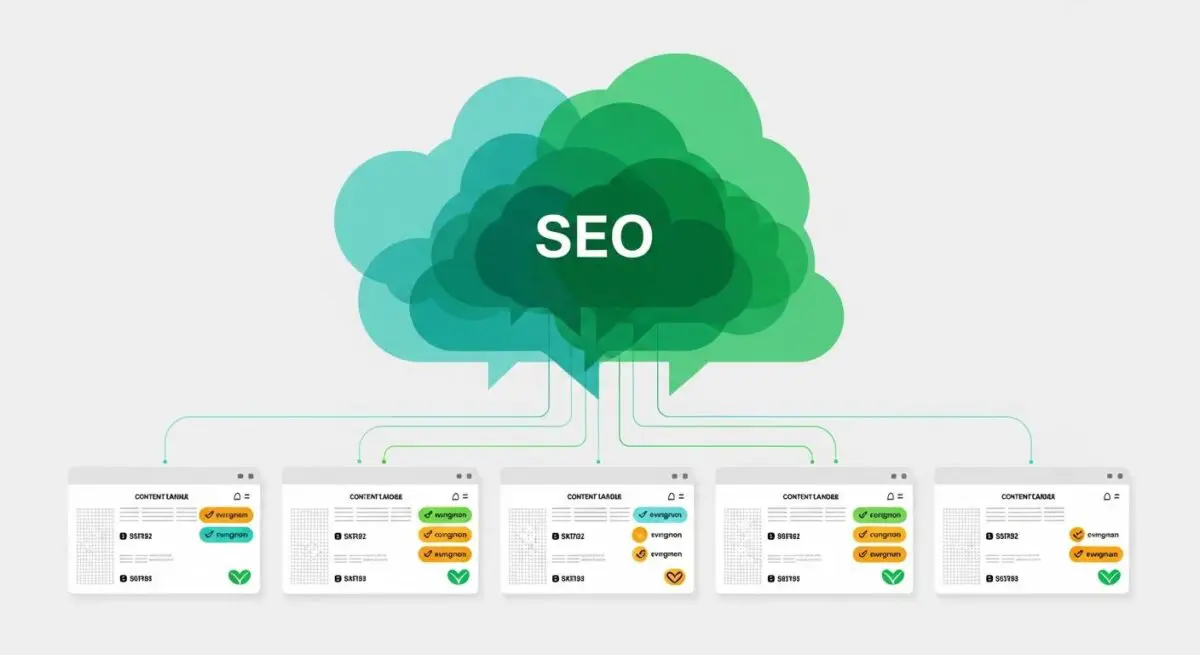
- Implement Modular Content Architecture: Design content using a decoupled or headless approach where core information is stored in structured fragments. This allows for programmatic updates to specific data points across multiple pages without requiring a full manual rewrite, ensuring technical accuracy at scale.
- Prioritize Information Gain Scores: When conducting keyword research, move beyond volume and difficulty metrics. Analyze the existing SERP to identify gaps in technical depth or unique data perspectives. Content that provides high information gain is more likely to be retained in the primary index and prioritized by AI synthesizers.
- Optimize for Semantic Durability: Use standardized taxonomies and Schema.org structured data to define entities and relationships clearly. By grounding content in established semantic frameworks, you ensure that search engines can interpret the context and relevance of your assets even as natural language processing algorithms evolve.
- Automate Content Decay Monitoring: Utilize API-driven dashboards to track performance metrics such as click-through rate (CTR) stability, bounce rate trends, and keyword ranking volatility. Set up automated alerts for assets that fall below a specific performance threshold, allowing for surgical interventions rather than broad, inefficient content refreshes.
Common Pitfalls & Strategic Mistakes
One of the most frequent errors in enterprise content strategy is the confusion of “evergreen” content with “static” content. Even sustainable assets require periodic technical audits to ensure that outbound links, internal cross-linking, and underlying code remain functional. Neglecting this leads to technical debt and a degraded user experience. Another significant mistake is the over-reliance on high-volume, low-intent keywords. While these may drive initial traffic, they often fail to provide the long-term conversion value that justifies the initial investment. Finally, many brands fail to account for the “digital waste” created by duplicating content across different subdomains or international versions, which dilutes link equity and confuses search engine crawlers regarding the canonical source of truth.
Conclusion
Sustainable content represents a shift from a transactional marketing mindset to an asset-based engineering approach, ensuring long-term visibility and ROI in an increasingly AI-centric search landscape. By focusing on technical durability and high-quality data signals, organizations can build a resilient digital presence that compounds in value over time.